
By MES Dispatch Staff
The Briefing
- • The First Responder Center for Excellence held its 2026 Mental Wellness Symposium at the University of Iowa in Iowa City beginning June 1, 2026, with sessions running through Wednesday, June 4.
- • The event focused on trauma, resilience, and evidence-based mental health treatment approaches tailored specifically to the needs of first responders, who face elevated rates of PTSD and suicide compared to the general population.
- • Keynote speaker Dr. Craig Bryan, director of the University of Vermont’s Suicide Care Clinic, cautioned that conventional mental health treatment approaches — including common avoidance-based strategies — are frequently ineffective and can worsen trauma symptoms in first responders.
- • The First Responder Center for Excellence is partnering with the University of Iowa’s Scanlan Center for School Mental Health to develop free online wellness modules available to first responders nationwide, covering topics including sleep hygiene, nutrition, and coping skills.
- • First Responder Center for Excellence Managing Director Frank Leeb framed the initiative as a shift from general awareness efforts toward actionable, skills-based tools designed to build long-term resilience within the first responder community.
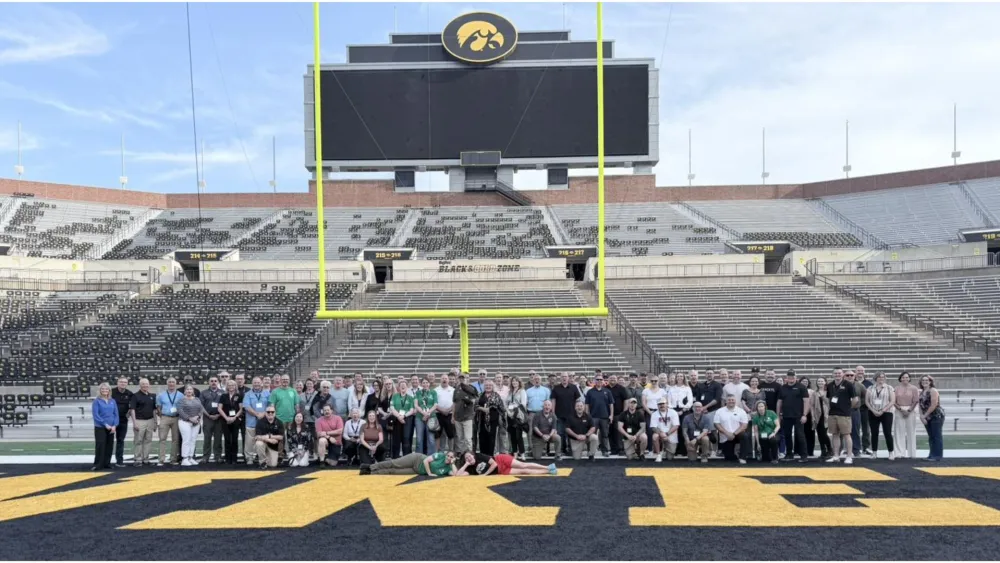
IOWA CITY, Iowa — The First Responder Center for Excellence convened its 2026 Mental Wellness Symposium at the University of Iowa on June 1, 2026, bringing together mental health professionals, fire service leaders, and first responders for a four-day event centered on trauma response, psychological resilience, and practical wellness strategies for emergency personnel.
First Responder Center for Excellence/Facebook
The symposium featured three keynote addresses, including a presentation by Dr. Craig Bryan, director of the University of Vermont’s Suicide Care Clinic. Bryan told attendees that many standard mental health treatment approaches recommended by clinicians — particularly those built around avoidance of stress triggers — are not only ineffective for first responders but can actively worsen trauma symptoms. He characterized the most evidence-supported treatments as those that require courage and direct engagement, rather than avoidance.
First responders — including firefighters, law enforcement officers, and emergency medical technicians — face documented elevated risks of PTSD, substance use disorders, and suicide relative to the general public. Frank Leeb, managing director of the First Responder Center for Excellence, said the symposium was designed to move the conversation from broad awareness to practical application, equipping first responders with concrete tools to sustain their mental health across the course of a career. Leeb described mental health as one of the profession’s “blind-side issues” — risks that new recruits may not fully anticipate when entering the field. “I’m tired of losing my friends,” Leeb said in a statement. “We can do better, and that’s why we’re here.”
As an outgrowth of the symposium, the First Responder Center for Excellence announced an ongoing partnership with the University of Iowa’s Scanlan Center for School Mental Health to develop a series of free, self-directed online wellness modules accessible to first responders across the country. University of Iowa College of Education Dean Dan Clay said the modules will draw on the Scanlan Center’s expertise in developing effective virtual curricula and the First Responder Center’s network of mental health educators and advocates. Topics will include sleep hygiene, nutrition, stress management, and coping skill development, with a core emphasis on helping first responders identify when normal occupational stress has crossed into clinical distress requiring outside support.
Attendees also heard from Scott Moore, a retired EMT and firefighter who now instructs with the National Honor Guard Academy — an organization that trains small public safety agencies in conducting line-of-duty death ceremonies. Moore said he attended the symposium to strengthen the mental health components of his instruction, and observed that the cultural stigma around discussing psychological struggles within the first responder community has begun to diminish, with peer support networks becoming increasingly effective as more personnel are willing to engage openly with colleagues who share similar experiences.