
By MES Dispatch Staff
The Briefing
- Wildfire agencies across the United States are strategically pre-positioning crews, engines, aircraft, and equipment in areas with highest fire risk as the 2026 fire season becomes increasingly deadly and resource-intensive.
- More than 2,000 fires have been confirmed since the beginning of July, with the National Interagency Fire Center raising the national preparedness level to 4 out of 5; four firefighter deaths have been recorded, including three killed in Colorado and one helicopter pilot killed in a crash.
- Over 5,600 square miles—more than Yellowstone and Grand Canyon national parks combined—have burned nationwide in 2026, outpacing the average for the past decade as record-low snowpack, persistent drought, and record heat fuel rapid fire growth.
- Sixteen incident management teams are overseeing approximately 17,000 firefighting personnel deployed across more than a dozen states, including crews relocated from Alaska and California to assist regions experiencing explosive fire activity.
- Fire managers report concerns about firefighter burnout and safety as personnel work extended hours and face consecutive days of red flag warnings, high winds, and extreme fire behavior conditions.
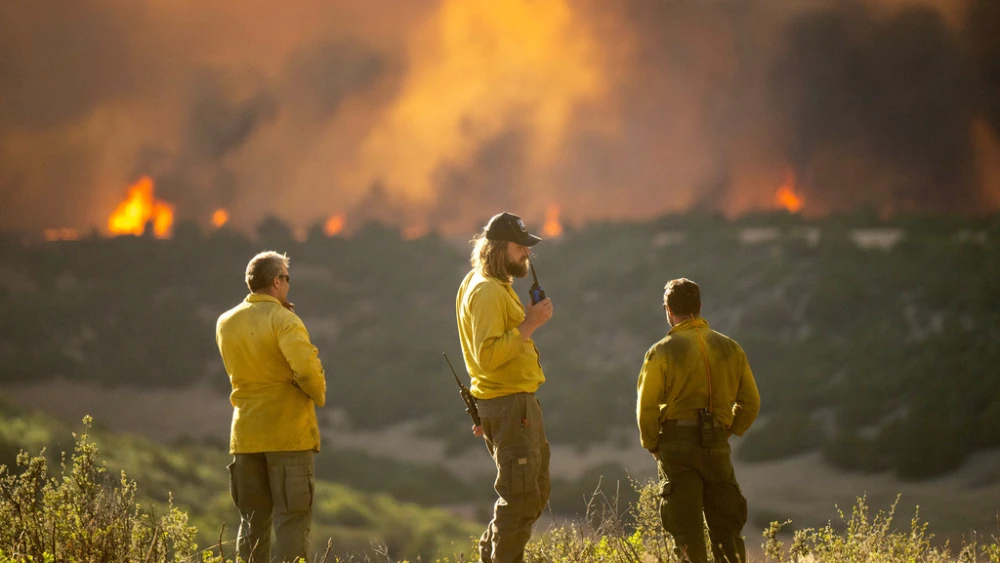
ALBUQUERQUE, N.M. — Wildfire agencies across the nation are strategically deploying thousands of firefighters, hundreds of engines, bulldozers, and fleets of helicopters and air tankers to regions facing the highest risk of catastrophic fire activity as the 2026 fire season becomes increasingly deadly and resource-intensive.
The U.S. Wildland Fire Service stated that resource pre-positioning in high-likelihood activity areas enables more rapid initial attack when fires ignite, frequently resulting in the most effective strategy for containing blazes before they expand to destructive proportions.
The 2026 fire season has already claimed four lives among wildland firefighting personnel and federal agencies. Three firefighters were killed while battling the Snyder Fire in Colorado, and a helicopter pilot died when his aircraft crashed while supporting firefighting operations near the Gold Mountain Fire near Ouray, Colorado.
The National Interagency Fire Center, comprising federal and state agencies supporting ground-level firefighting efforts, raised preparedness levels to 4 out of 5 following a surge of wildfire activity in late June. The escalation triggers mobilization of additional crews, equipment, and incident management personnel to areas experiencing the most significant fire activity.
More than 2,000 fires have been confirmed since July 1 alone, according to the National Fire Center. The explosive fire activity across western states has prompted the deployment of additional highly skilled incident management teams. By Monday, sixteen such teams were overseeing approximately 17,000 firefighting personnel across more than a dozen states.
Over 5,600 square miles—an area larger than Yellowstone and Grand Canyon national parks combined—have burned nationwide in 2026, significantly outpacing the average for the preceding decade. Fire activity has been exacerbated by persistent drought, record-low snowpack levels, and consecutive days of extreme heat, low humidity, and strong winds across western regions.
Geographic area coordination centers nationwide coordinate mobilization of firefighting resources. The Colorado Division of Fire Prevention and Control reported receiving assistance from Alaska-based incident management teams. Officials stated that resource-sharing arrangements have been critical to managing current fire activity. In Utah, firefighting crews were assigned to the Babylon Fire, the largest active blaze in the United States at 166 square miles.
Fire managers are employing aggressive initial attack strategies, directing personnel to suppress every fire as quickly as possible to limit growth, reversing decades-long practices permitting some fires to burn for fuel reduction purposes. Wildfire risk science experts note this represents a shift driven by concerns about firefighter safety and incident expansion under current extreme conditions.
The most recent fire potential outlooks indicate above-normal fire risk continuing through September in areas from the Four Corners region northward to Oregon, Idaho, and Washington.
Christopher Dunn, an assistant professor of wildfire risk science at Oregon State University, described the resource management challenge as requiring delicate balance between sharing resources across regions and maintaining reserve capacity for emergencies. Dunn noted that shared resource deployment creates extended field exposure for firefighting personnel, increasing overtime and risk of burnout.
Camille Stevens-Rumann, a former wildland firefighter and associate professor at Colorado State University, stated that strategic advance positioning of resources proves critical when facing consecutive days of red flag warnings, strong winds, and low humidity conditions. Stevens-Rumann noted that firefighters can be available during evening hours when conditions allow suppression operations but face significant challenges controlling fires during sustained extreme fire weather conditions.
The nation maintains approximately 350 fire lookout towers, many staffed by volunteers due to budget constraints, according to Michael Guerin, chairman of the Forest Fire Lookout Association. Lookout towers located in Colorado were evacuated due to approaching wildfires, while California volunteers positioned themselves to respond when Santa Ana winds arrive. California’s Department of Forestry and Fire Protection announced deployment of the first satellites into orbit as part of a space-based wildfire detection system.