
By MES Dispatch Staff
The Briefing
- Two volunteer firefighters died and 13 emergency responders were injured May 15 when an oxygen-limiting silo exploded at a Searsmont, Maine lumber mill after firefighters applied water into the structure.
- NIOSH investigation determined firefighters directed water through an opening into the silo’s base for more than 30 minutes before the 20-by-60-foot structure containing kiln-dried wood shavings and sawdust exploded violently upward.
- Neither facility employees nor responding firefighters recognized the silo as an oxygen-limiting design or understood that combustible dust posed an explosion hazard; water application introduced oxygen that preceded the catastrophic event.
- Key contributing factors included lack of formal unified command structure with facility expertise, failure to activate accountability systems, and absence of written pre-incident plans identifying silo type and hazards.
- NIOSH recommendations emphasize written hazard-specific pre-incident plans, trained personnel identification of silo types, prohibition of water or foam application into oxygen-limiting silos, and mandatory accountability procedures.
SEARSMONT, MAINE — A National Institute for Occupational Safety and Health investigation into a May 15, 2026, silo explosion at a Maine lumber mill determined that water application into an oxygen-limiting silo preceded the catastrophic event that killed two volunteer firefighters and injured 13 emergency responders.
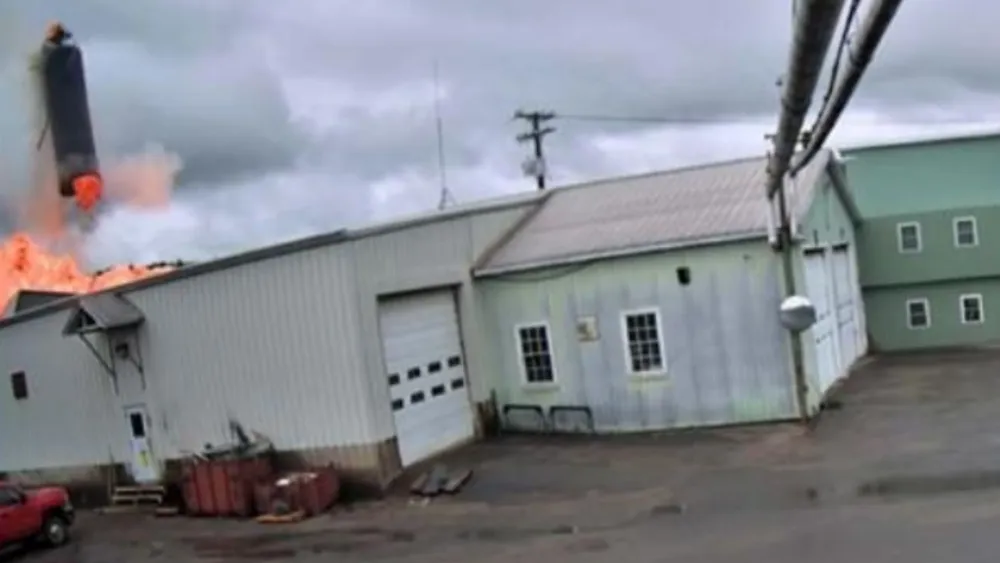
The 20-by-60-foot silo at the lumber mill contained kiln-dried wood shavings and residual sawdust. Approximately 30 minutes into firefighting operations, crews heard a “whoosh” sound as smoke rapidly vented from the structure’s top, then the silo launched vertically into the air as fire erupted below it, according to NIOSH investigation report F2026-07.
Neither facility employees nor responding firefighters recognized the silo as an oxygen-limiting design or identified the combustible dust hazard within its contents. An oxygen-limiting silo uses sealed design to suppress internal fires by limiting oxygen availability; ordinary firefighting actions including water application can introduce oxygen and create dangerous conditions.
Firefighters located a partially melted access panel in a chute beneath the silo shortly after arrival and positioned a nozzle at a three-foot opening beneath the structure, flowing water directly into the base. Additional firefighters continued water application as crews discussed ladder-truck deployment to flow water from above. Approximately 30 minutes of continuous water application preceded the explosion.
NIOSH emphasized that water or foam should never be directed into oxygen-limiting silos because suppression activities introduce oxygen, suspend combustible dust, and contribute to combustible-dust explosions or backdraft-type events.
The investigation identified four critical contributing factors that escalated the incident’s severity. Facility owners and employees remained near the silo and answered firefighters’ questions but were not formally integrated into a unified command structure incorporating facility expertise. A structured exchange of facility information could have identified hazards, operational limitations and appropriate tactics for the high-hazard occupancy.
Firefighters at the participating departments received training on accountability procedures requiring placement of accountability tags on rings at first-arriving apparatus, but that system was not activated. After the explosion, individual departments conducted personnel checks but did not execute a complete accountability process. A missing firefighter was not identified for approximately two hours, when his remains were discovered near the silo beneath burning material.
The first-due fire department participated in annual facility familiarization walks but maintained no formal pre-incident plan documenting the oxygen-limiting silo or combustible-dust hazard. Tactical decisions depended on firefighters’ individual knowledge and memory without a readily accessible document identifying hazards or prohibited tactics.
NIOSH recommended that fire departments train personnel to identify silo types and contents before commencing suppression operations, recognizing visual and operational differences among conventional, oxygen-limiting and modified oxygen-limiting silos. Departments should treat unknown silo contents as significant hazards until verified.
The agency emphasized establishing command, accountability and hazard-zone control at incident initiation. High-hazard industrial responses should integrate knowledgeable facility representatives into unified command while maintaining accountability of all operating members.
NIOSH recommended developing written pre-incident plans for high-hazard occupancies including silo type and contents identification, combustible-dust hazards, suppression-system features, utilities, water supplies, collapse zones, facility contacts and tactics that must not be used.
Departments serving lumber mills, grain facilities and other dust-producing occupancies should coordinate combustible-dust planning with facility operators, inquiring whether facilities completed hazard analyses and communicating those hazards to responders.