
By MES Dispatch Staff
The Briefing
- The FDNY is seeking federal coverage for cardiovascular disease, cognitive decline and other conditions among 9/11 responders as they age, program director Dr. David Prezant said Tuesday.
- A federal petition to add cardiovascular disease to the list of covered World Trade Center-related illnesses was denied a few weeks ago, according to Prezant.
- The FDNY WTC Health Program’s latest five-year report found a “significant association” between Ground Zero exposure and cardiovascular risk, with those who arrived the morning of Sept. 11 facing about a 38% greater risk of a primary cardiovascular event than those who arrived later.
- More than 15,000 firefighters and EMS members are enrolled in the program; more than 10,500 have or have had a certified physical health condition tied to 9/11, including more than 4,700 with cancer.
- FDNY says 343 members died responding to the World Trade Center attack, and an additional 600 firefighters and EMS workers have since died of certified 9/11-related conditions.
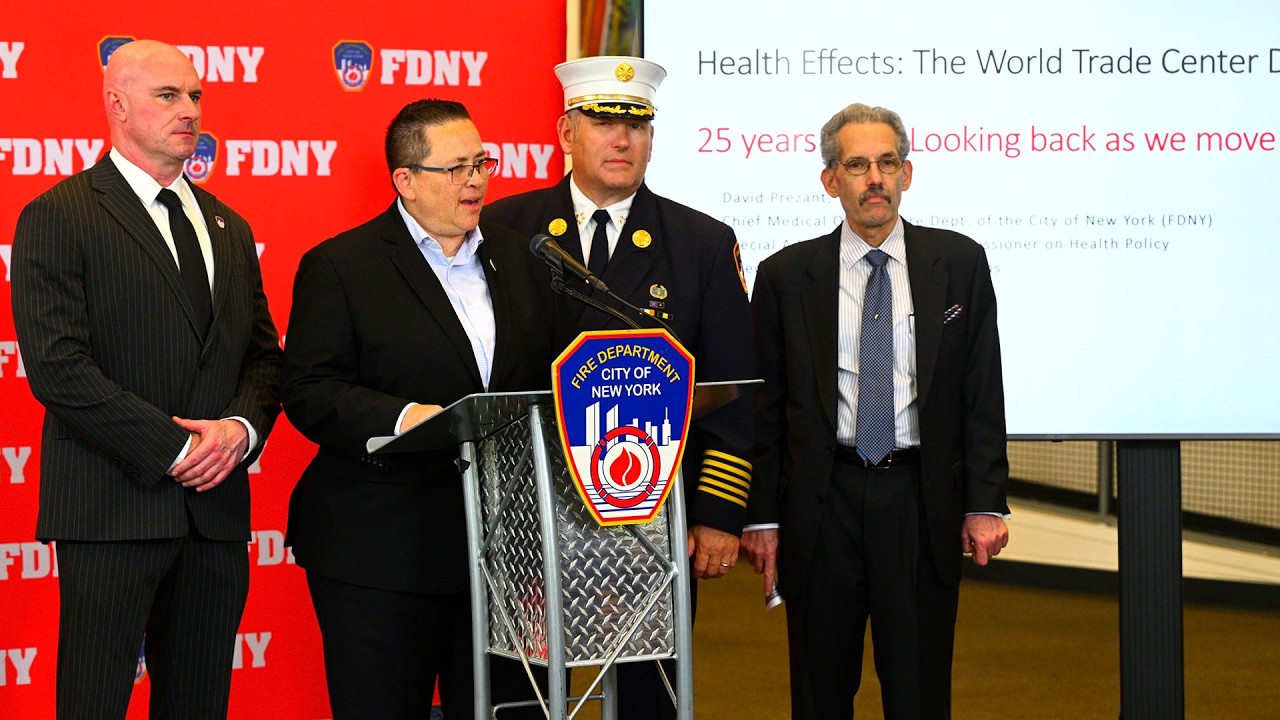
NEW YORK — The FDNY is pushing the federal government to expand the list of illnesses covered under the James Zadroga Act to include cardiovascular disease, cognitive decline and other conditions as firefighters and EMS members who responded to the Sept. 11, 2001, attacks continue to age, officials said at a news conference Tuesday.
Dr. David Prezant, director of the FDNY World Trade Center Health Program, said studies show a higher percentage of FDNY members exposed to toxins at Ground Zero are developing these conditions than the general population. “These diseases have increased over and above what you would expect in aging,” Prezant said. “It is a very high bar the federal government requires for us to leap over to prove that these illnesses are World Trade Center-related.”
The average age of program participants is now 64. A report released by the program Tuesday, updated every five years, found a significant association between World Trade Center exposure and cardiovascular risk; those who arrived at the site the morning of the attack faced about a 38% greater risk of a primary cardiovascular event than those who arrived later. Despite those findings, the federal government denied a petition to add cardiovascular disease to the covered illness list a few weeks ago, according to Prezant.
“We’re going to keep trying,” Prezant said, adding that program participants continue to face health challenges “one way or another” as they age into conditions that take longer to emerge and are not currently covered under federal law.
Fire Commissioner Lillian Bonsignore said the program’s newest findings underscore its value. “Sadly, we know that 9/11 was not a one-day event for our department,” Bonsignore said. “It is a day that continues to sicken our members, with many of them eventually succumbing to a disease related to the heroic work in the rescue and recovery efforts.” She said the program’s data-driven outcomes demonstrate “real, life-saving impacts.”
More than 15,000 firefighters and EMS members, 87% of them now retired, are enrolled in the FDNY WTC Health Program, part of the broader federal World Trade Center Health Program. More than 10,500 participants have or have had a certified physical health condition tied to 9/11, including more than 4,700 diagnosed with cancer. The FDNY lost 343 members who responded to the World Trade Center on Sept. 11, 2001; an additional 600 firefighters and EMS workers have since died of certified 9/11-related conditions.