
By MES Dispatch Staff
The Briefing
- A National Institute for Occupational Safety and Health report details the March 16, 2026, death of a Chicago firefighter who fell through a first-floor apartment floor into a burning basement during a primary search of a seven-unit building.
- NIOSH said the fire was set intentionally and burned undetected for about seven hours before the first 911 call.
- Investigators found ventilation was not coordinated with fire control, the basement fire was not recognized until late, and wind of about 22 mph, gusting to 31 mph, blew toward the entrance.
- The report also cites thermal imagers the department had purchased but not issued, an unmonitored and unrecorded tactical radio channel, and an accountability board located two blocks away.
- NIOSH recommends the department train on ventilation coordination, size up for basements, issue and train on thermal imagers, run accountability at command and add dedicated fireground dispatchers.
CHICAGO — A NIOSH investigation into the March 16 death of a Chicago firefighter found that uncoordinated ventilation, a missed below-grade fire and radio and accountability gaps contributed to a floor collapse at an occupied apartment building
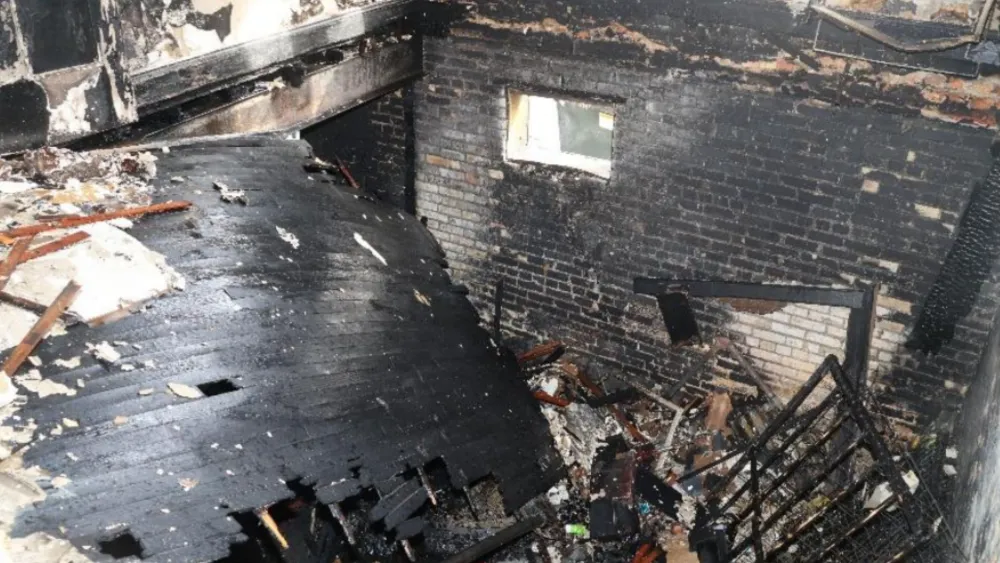
Fire department, NIOSH|Photo
According to the report, the firefighter fell through a first-floor floor into a burning basement while performing a primary search. Crews pulled him from the debris and out a basement window, and he died the next morning. NIOSH said the fire was set intentionally and burned for about seven hours before the first 911 call. The building had a local alarm only; city code exempted it from fire alarm requirements because it had fewer than 16 units, and code violations dating to 1996 remained open.
NIOSH said sustained wind of about 22 mph, gusting to 31 mph, blew toward the Side Alpha entrance, and the fire was ventilation-limited until crews opened the building. Crews in other areas made ventilation decisions without coordinating with command or the basement crews, the report said. Early size-ups described fire on two floors without identifying the seat of the fire. The first crews to search the basement, at about 11:37 a.m., found light smoke and no heat signatures on their thermal imagers, and a deputy district chief spotted fire through a boarded-over basement window at about 11:43 a.m. The floor failed between about 11:51 and 11:53 a.m.
The report said the department had bought thermal imagers for each truck company seat but had not issued them. It noted that neither sounding the floor nor thermal imaging reliably shows floor integrity. The tactical radio channel was non-repeated, unrecorded and unmonitored by a dispatcher, and the command van holding the accountability board was two blocks away. A mayday for a missing member at about 11:50 a.m. was disregarded, and command never heard it. When the actual mayday reached dispatch at about 11:54 a.m., the deputy district chief could not reach the van and found the main channel busy. Crews removed the firefighter from the structure by about 11:56 a.m. Investigators found no evidence that turnout gear or SCBA contributed to the death.
NIOSH recommended that the department train crews to coordinate ventilation with water on the fire, size up for basements and attack from the fire’s level, issue thermal imagers and train on their limits, and keep accountability at command or with a staff aide. It also recommended that dispatch centers staff dedicated dispatchers to monitor fireground channels and mayday traffic, and that cities consider requiring monitored detection in multifamily buildings and adequately staff inspections.