Wednesday, April 22, 2026
Home Blog Page 105

‘It hits home’: 3 children die in N.C. house fire

0

Greensboro responders are grappling with the tragedy, and the fire department deployed its peer-support team to the scene

By Kenwyn Caranna News & Record Distributed by Tribune Content Agency, LLC.

GREENSBORO, N.C. — Three children — all younger than 5 years old — died in a house fire on Monday morning, authorities said.

There was one survivor: the children’s mother, who was alert and conscious when she was taken to Moses Cone Hospital for treatment.

“This is devastating to the fire department, devastating to our community and I know devastating to this family,” said Dwayne Church, Greensboro’s deputy fire chief.

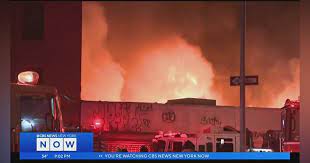
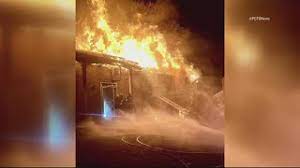
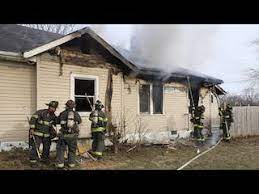
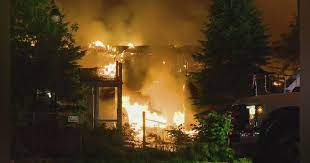
Guilford Metro 911 first received a call about the fire at 7:54 a.m. and were told shortly afterward that there might be three children in the one-story home. When firefighters arrived at 2518 Grimsley St. four minutes later, “there was fire coming out of every window and the front door,” Church described.

Several neighbors also alerted firefighters to the possibility that there might be children in the home with one pointing out the location of their bedroom.

It took firefighters about five minutes of battling the blaze to reach the children. The first child was brought out of the residence at 8:04 a.m., Church said, but it was too late.

Lt. Holly Pate with the Greensboro police said the woman’s three other children have been accounted for and are safe. Officials had no information regarding the children’s father.

It’s not yet known what caused the fire. Grimsley Street was still closed to most traffic late Monday afternoon as authorities continued investigating the fire.

“It is an active investigation with multiple fire investigators on the scene,” Church said.

The two-bedroom home had 672 square feet and was built in 1961, according to Guilford County property records. It is owned by Norman Bennett Boyles Jr., records show. Boyles, who owns a real estate company, could not be reached for comment.

Church said the fire department had its peer-support team come to the scene to talk with the firefighters about the tragedy.

“It hits home a little bit when all of our firefighters here have children at home,” Church said. “I can’t imagine the hurt and the pain that the family is going through at this time.

“Our firefighters are just numb,” Church said. “For some of these firefighters, this is the first time they’ve seen anything like this. We do have some veteran firefighters … who have seen this multiple times, but it never gets easy.”

Church added that responding firefighters — 35 were at the scene on Monday — did not hear any smoke alarms ringing, though that doesn’t mean there weren’t any in the house. “There was a lot of noise going on at first and a lot of fire.”

Church urged residents to make sure they have working smoke alarms in their homes. “It’s so easy because they’re free,” he said. “All you have to do is contact the Greensboro Fire Department and you can get a free smoke alarm — we’ll install it for you.” That number to call is 336-373-2576.

Reflecting on the morning’s events, Church said: “This is something that none of us like to see. This is not the way we want to celebrate Christmas season.”

Updated 1:46 p.m.

GREENSBORO — Three children — all younger than 5 years old — died in a house fire Monday morning, authorities said.

The children’s mother was alert and conscious when she was taken to Moses Cone Hospital for treatment, Greensboro Deputy Fire Chief Dewayne Church said at a news conference.

“This is devastating to the fire department, devastating to our community and I know devastating to this family,” Church said.

Guilford Metro 911 received a call about the fire at 2518 Grimsley St. at 7:54 a.m. and were told shortly afterward that there might be three children in the one-story home. When firefighters arrived four minutes later, “there was fire coming out of every window and the front door,” Church said.

Several neighbors also told firefighters that there might be children in the home and one neighbor pointed out the location of the children’s bedroom.

It took firefighters about five minutes of battling the blaze to reach the children. The first child was brought out of the residence at 8:04 a.m., Church said, but it was too late.

“Neighbors have reported that the mother did have seven kids at some point that lived in the house,” Church said. “We have done secondary search and found no other children in the house.”

He did not know where those other children might have been at the time of the fire and officials had no information regarding the children’s father.

It’s not yet known what caused the fire.

“It is an active investigation with multiple fire investigators on the scene,” Church said. Thirty-five firefighters and nine administrative chief officers were at the scene Monday morning, he said. The children’s bodies will be sent to the Medical Examiner’s Office.

The two-bedroom home had 672 square feet and was built in 1961, according to Guilford County property records. It is owned by Norman Bennett Boyles Jr., records show. Boyles, who owns a real estate company, could not be reached for comment.

Church said the fire department had its peer-support team come to the scene to talk with the firefighters about the tragedy.

“It hits home a little bit when all of our firefighters here have children at home,” Church said. “I can’t imagine the hurt and the pain that the family is going through at this time.

“Our firefighters are just numb,” Church said. “For some of these firefighters, this is the first time they’ve seen anything like this. We do have some veteran firefighters … who have seen this multiple times, but it never gets easy.”

He said responding firefighters did not hear any smoke alarms ringing at the scene, though that doesn’t mean there weren’t any in the house. “There was a lot of noise going on at first and a lot of fire.”

Church urged people to make sure they have working smoke alarms in their homes. “It’s so easy because they’re free,” he said. “All you have to do is contact the Greensboro Fire Department and you can get a free smoke alarm — we’ll install it for you.” That number to call is 336-373-2576.

Reflecting on the morning’s events, Church said: “This is something that none of us like to see. This is not the way we want to celebrate Christmas season.”

——

Posted 10:15 a.m.

GREENSBORO — Three children are dead after a fire broke out at a local residence early Monday morning.

The blaze started around 7:54 a.m. When firefighters arrived minutes later, they found a house at 2518 Grimsley St. engulfed in flames. It took them at least five minutes of battling the blaze to reach the children, all under 5 years old.

The first child was brought out of the residence at 8:04 a.m., but it was too late.

A woman presumed to be their mother was taken to Moses Cone Hospital and is listed in stable condition.

It’s not yet known what caused the fire.

But something else, however, is numbingly clear: A tragedy took place this morning.

“This is devastating to the fire department, to the community and to the family,” Deputy Fire Chief Dwayne Church said.

This is a developing story and will be updated throughout the day.

Driver dies after crashing car into CAL FIRE engine at collision scene

0

The Riverside County engine was parked on the shoulder of 60 Freeway to block traffic

By Hunter Lee The Press-Enterprise Distributed by Tribune Content Agency, LLC.

JURUPA VALLEY, Calif. — A  driver died on Sunday, Dec. 11, after losing control of his car and crashing into a fire engine parked on the side of the 60 Freeway in Jurupa Valley.

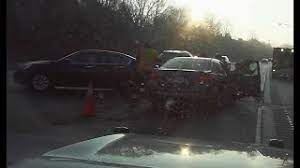
Around 12:30 p.m., CAL FIRE/Riverside County firefighters were responding to a minor collision between two vehicles along the eastbound lanes of the freeway, west of Valley Way, according to CAL FIRE/Riverside spokesperson Tawny Castro. The fire engine had parked on the shoulder to block traffic when a BMW crashed into the rear of the engine.

The BMW was heading east on the freeway when water on the road from the Sunday morning rainfall caused the driver to lose control and veer into the fire truck, California Highway Patrol Sgt. Charles Murray said in an OnScene.TV video.

The driver, who has only been identified as a man, was pronounced dead at the scene. There were no passengers inside the vehicle.

No injuries of first responders were reported, Murray said. CHP officers were continuing their investigation into the afternoon.

Minn. firefighters raising funds to help colleague who suffered severe head injury

0

Minnetonka firefighters are trying to help Tim Tripp, who is in a coma

By Leila Merrill FireRescue1

MINNETONKA, Minn. — Firefighter Tim Tripp was helping to train a new hire by pumping water onto an ice rink earlier this month when he slipped on the ice, fell, and suffered a severe head injury, Fox 9 reported. Now his fellow firefighters are working to help him.

Tripp was transported to Hennepin County Medical Center and placed in a medically-induced coma. Doctors have performed multiple injuries to relieve the pressure on his brain.

“I think this week has been a bit of a roller coaster for us here at the fire department. The news at the beginning was absolutely terrible. That one of our own had gone down,” said Minnetonka firefighter Sara Ahlquist.

“That’s something any one of us could do, walking into our work or our home or into our school on any given day,” said Ahlquist.

As Tripp works part-time in the fire department, Minnetonka Fire has launched a fundraising campaign to help Tripp and his family. So far, nearly $70,000 has been raised of the $100,000 goal. 

Black Calif. firefighter says colleagues set him up to fail; he is suing city

0

Sacramento Firefighter Waris Gildersleeve alleges that his colleagues tried to sabotage his career with damaged or old training resources, which led to injury

By Marcus D. Smith The Sacramento Bee Distributed by Tribune Content Agency, LLC.

SACRAMENTO — A Black Sacramento firefighter is suing the city, alleging that racial discrimination in the Sacramento Fire Department harmed his career, humiliated him and caused him emotional distress.

Firefighter Waris Gildersleeve alleges in the lawsuit that his mostly white colleagues attempted to sabotage his career with damaged or old training resources, which on one occasion caused him a physical injury.

The lawsuit, filed last week in the U.S. District Court for Eastern California, says that Gildersleeve overheard a colleague deprecate Black Lives Matter and learned of other firefighters criticizing the racial justice protests that unfolded in the spring and summer of 2020.

And, the lawsuit states that Gildersleeve’s supervisors set him up to fail a test when they provided him an outdated version of the department’s standard of guidelines to study.

Gildersleeve’s lawsuit follows a high-profile resignation last year by Desmond Lewis, another Black firefighter. He left the department to expose what he called a ‘hostile work environment’. He later rejoined the Fire Department, in part to help change the organization from within.

Only about 3% of the Fire Department’s roughly 650 employees are Black, according to a city audit. That’s about 20 firefighters.

Gildersleeve’s lawsuit states the department’s few Black firefighters sometimes talk with each other and share stories about racist conduct. The lawsuit echoes some of Lewis’ observations, including that a white firefighter discouraged a Black firefighter from socializing with “his own,” meaning other Black firefighters.

Sacramento Fire Department spokesman Capt. Keith Wade said Gildersleeve’s allegations are a part of an ongoing investigation and the department would not comment on the case. The lawsuit also names Capts. David Lauchner and Brian Brust as defendants.

The department — on many occasions — has said it does not tolerate workplace discrimination or harassment.

According to the lawsuit, Gildersleeve felt the department has not lived up to those commitments.

He declined to elaborate on the lawsuit in a phone interview.

“Everything in the court document is accurate and how I feel,” said Gildersleeve.

17 YEARS IN SACRAMENTO FIRE DEPARTMENT

Gildersleeve, 42, joined the Sacramento Fire Department in 2005, and held positions as a fire prevention officer in the fire marshal’s office before switching to the Fire Suppression Division in 2019.

According to Gildersleeve’s court documents, he attended the fire academy from November 2019 to April 2020. Nearing completion, he began working as a probationary firefighter in March 2020, where he would go through a year of supervised training and on-the-job experience.

The lawsuit also alleges:

Gildersleeve worked in different stations during his training, and observed racist remarks at some of them, the lawsuit said.

While assigned to Station 15 located in South Natomas, he overheard a firefighter yell out “F— Black Lives Matter”.

In a separate occurrence, Gildersleeve saw a white firefighter using the N-word at Station 2 in downtown Sacramento.

The department did not discipline the firefighters over their remarks, the lawsuit says.

Gildersleeve’s concerns escalated when he was assigned to Station 6 on Martin Luther King Jr. Boulevard in south Sacramento, where he believed two of his supervisors allowed a racist workplace culture.

On multiple occasions, Gildersleeve alleges that he witnessed firefighters treating civilians differently when responding to calls from the public. Firefighters were more concerned and accommodating to white callers, while showing impatience and disrespect, being dismissive to Black residents, the lawsuit says.

OUTDATED TEST MATERIALS

Gildersleeve believes he was set up to fail his training because he was provided outdated study material during his probationary period.

When it came time to test on standard operating guidelines, the out-of-date study guides caused Gildersleeve to answer test questions incorrectly, according to the lawsuit.

He was ridiculed in the presence of Brust for not knowing an informal term for a pediatric carrier, due to the lack of updated material.

Gildersleeve was verbally abused being called a “f—— —hole” and was told that he sucked as a firefighter by other firefighters. The captains at the station did not discipline firefighters who insulted him, the lawsuit says.

On one occasion, a supervisor yelled at Gildersleeve calling him lazy because he did not move a box, but instead walked around it.

After receiving satisfactory performance reviews at other stations, the lawsuit alleges Gildersleeve faced criticism and disciplinary write-ups at Station 6.

In November 2020, Brust would not sign off on Gildersleeve’s transfer to another station, citing performance shortfalls. Gildersleeve felt the delay was a pretext for racial abuse and discrimination.

In December 2020, Lauchner and Brust allegedly made calls to captains at Station 2, disparaging Gildersleeve’s abilities.

LEAKS IN WATER RESCUE SUITS

A January 2021 training event also raised Gildersleeve’s suspicions that his colleagues intended to harm his career, the lawsuit says.

Gildersleeve picked up a dry suit from Lauchner for a water rescue training session in Coloma. When Gildersleeve went to the training and submerged in water, his suit leaked significantly, causing him to sink in the water.

Gildersleeve opted for a second suit from Lauchner, and the replacement also contained a major leak.

The backup suit became an issue during one of the drills ultimately causing an injury to Gildersleeve’s right shoulder, which forced him to undergo surgery.

According to the lawsuit, Gildersleeve believes none of this would have happened if he were a white firefighter.

‘I wasn’t 100% convinced I was not dead’: Mo. battalion chief finds meaning in Amtrak crash

0

In a matter of minutes, Kansas City Battalion Chief Todd Covington went from survivor to rescuer in June Amtrak train derailment

By Eric Adler The Kansas City Star Distributed by Tribune Content Agency, LLC.

KANSAS CITY, Mo. — All but buried alive, Todd Covington — his body enveloped in dirt, rock and blackness — was unsure if he was living or dead.

A Navy veteran and Kansas City firefighter for 26 years, Covington had only moments before made his way to the restroom in the cafe, downstairs from his seat in the observation car of Amtrak’s Southwest Chief, when he heard the train’s engineer blare his horn.

Instead of the short burst of sound locomotives usually make before a crossing, this blast at what he would come to know was the Mendon crossing seemed longer, more sustained, like the engineer was leaning on the horn, and Covington wondered why.

Then, as he put it, his world literally went sideways, triggering a series of events that would only solidify a Stoic philosophy — life happens, your only choice is in how you respond — that Covington said he has adopted from years of witnessing just how random and fragile life can be.

“As far as change me?” Covington said of the June 27 accident. “If anything, it highlights the fact that life is short, and take nothing for granted. And I do mean nothing. There were 243 of us that were on that train making plans. And then life happened.”

Covington, 49, is a battalion chief, whose duties include safety at the soon-to-open new terminal at Kansas City International Airport. His plan that day, along with firefighting colleague Joseph Disciacca, had been to attend a class in Chicago put on by FEMA, the Federal Emergency Management Agency, relevant to the terminal.

At 42 minutes after noon — carrying 270 passengers and 12 crew — the Southwest Chief slammed at near 89 miles per hour into the side of a dump truck, smashing it into a shower of pieces, and killing its driver.

Covington, who had just entered the restroom on the left side of the train, felt the jolt. The bathroom assembly broke away from the frame of the train. What was a wall became a ceiling. The door flew open.

“At that point,” Covington recalled, “ I told myself, and this is exactly what I said, ‘Holy f- – – , we’re derailing.’ Now the entire world is on its side.”

Even as the train fell over, it plowed forward with momentum. Its toppled 85-foot-long cars, skidding on their right sides, churned up dirt and sharp stones, made scalding hot by the train’s friction.

Covington, at 6-foot-5 and 245 pounds, wearing shorts and sneakers, was trapped. Hot rock and dirt pummeled him, cutting into his legs as debris flooded into the bathroom, slowly mounting, burying him from his ankles to his calves and then his knees.

“It’s hitting me while I’m holding on, one-handed, to the frame of the train trying to pull myself up,” Covington recalled.

The toppled compartment went pitch black and grew hot. The force of the gathering rock was so violent it twisted his body.

“At that point I had to let go or it was going to break my back,” Covington said. Then there was the sound.

“I’ve explained this to a number of people,” he said. “Everyone thinks that when trains derail that there’s this giant screeching of metal and, you know, all this horrific crash noise. And that’s not it at all. That did not happen. There was one loud crunch. And that’s when the train hit the dump truck. And then after that, it was just deafening sound of rock and gravel flying in at me … It was literally deafening.”

He also had a thought: This is how he would die.

He didn’t panic. “There’s nothing I could do about it. It was out of my control,” Covington said.

But he knew that, in the Navy and as a firefighter, he had escaped death a number of times. He’d worked perhaps 1,000 fires. He’d had friends die and been the deliverer of horrible news, telling others their loved-ones were dead. Covington believes in fate and destiny and that there is a God with plans, even if those plans are beyond his understanding.

“And so,” Covington said, “I just figured, ‘Oh, this is how this is going to work out. … This is where my life ends.”

But then the train came to rest. All was black around him. He questioned: Am I alive?

“After the train actually stopped … I wasn’t 100% convinced that I was not dead,” he said.

So he did what he called a quick assessment. Left hand, right hand. His feet and legs were buried, but he could feel them. Then one more thing:

“I actually did slap myself,” he said. Right hand, right cheek.

“I had full-on expected to perish,” Covington explained, “so the fact that I didn’t, I just wanted to make sure.

“I’ve never been dead before. I’ve been close, but not dead. So I gave myself a little smack. And then I felt it. So, I’m like, ‘OK, I’m not dead. Now I have to get out of here.’”

So he did. The dirt was up to his hamstrings. The compartment was hot. There was little oxygen.

“I knew I had to get out of there quick,” Covington said. He could see tiny pinholes of light poking through to the compartment. Using his fingers, he dug, pulling and pushing the dirt until he could pull himself out.

As soon as he did, he saw a woman. She was dead, her body mangled and twisted in the dirt. He knew who she was. He had passed her in the cafe on the way to the restroom. Covington found an emergency window exit, released its latch, and climbed to what was now the top of the train.

“The very first thing that I saw at the top of the train was her daughter,” Covington recalled. “And her daughter says, ‘We have to get my mom. She is right there!’”

Covington was direct. He has had the sad job before of informing people of a loved one’s death.

“There is no easy way to do it,” Covington said.

“I was trying to be as tactful as possible,” he explained, “but, at the same time, you have to be matter-of-fact when it comes to dealing with death. … You definitely don’t want to beat around the bush. You want to make sure they understand that there is no chance of them coming back, because then you’re giving false hope. That’s more emotionally damaging than the actual truth.”

So, he said, he told her: “Honey, your mother is dead. We’re getting off this train.”

“She was beside herself, that poor woman,” Covington recalled. “I mean, she’s like, ‘No, no, she’s not dead. We have to check for a pulse.’ And so I just told her, ‘I’m a Kansas City firefighter. And I can tell you that she has not survived.’”

Once out of the train, Covington went from survivor to rescuer. He looked around and saw “pandemonium.” He didn’t know what other potential hazards existed.

“Everyone’s yelling and screaming that they need a medic, that we had people injured. I mean people are running around. It was utter chaos,” he said. “My number one goal was to start getting everyone off the train.”

Covington quickly tried to assess how much possible rescue equipment — axes, crowbars, ladders — the train might have. He spotted a Boy Scout about to wield a sledgehammer to break a train window. He stopped him cold.

“I told him, ‘If you hit that window you’re going to f- – – ing die,” Covington said. “He said, ‘We need to break these out.’ I told him, ‘Kid, these windows are designed to withstand pressure. So if you hit that, that sledgehammer is going to bounce back and hit you in the head and you’re going to die.’”

A scout master approached. Covington, wearing a green KCFD hat, explained he was a firefighter.

“OK, what do you need?” he said the Scout Leader asked. “I said, ‘That’s the best question someone’s asked me all day.’”

Scouts were dispatched to help people off the trains. Covington came across Disciacca, his firefighting colleague, who also went into emergency mode. They established a staging area. Covington, meanwhile, went from car to car to get a count of injured passengers and crew unable to leave the train.

Among them, Covinginton said, was a man reportedly trapped under the train, a lady who could not feel her legs, another man with blunt force trauma to his abdomen who would be among the three passengers who died of their injuries.

Local firefighters and paramedics soon arrived. Helicopters whirred overhead.

Covington and Disciacca returned to the inside of the train to double check which cars were clear. Atop the train, Covington used a crowbar to etch the letter “X” into the metal of the cars to mark them as empty.

“Finally, an actual battalion chief showed up,” Covington said. “I get down, told him everything, and then, after that, I handed it over to him, grabbed my backpack and walked to the staging area.

“Then I was done with it.”

Mostly done.

“There have been some things,” Covington said. “I don’t want to talk about them with you guys, but, I mean, there’s like with everything, there’s always aftermath that you have to deal with. But I’m working through that, and slowly.”

In July, the Kansas City City Council passed a resolution recognizing both Covington and Disciacca for their heroism.

“I’m somewhat stoical in the fact that it’s a terrible situation,” Covington said. “I couldn’t control the train crashing. I can only control my response to it … make the best of a really, really shitty situation. Nothing more, nothing less.

“All you have is your right now. Live in the minute, because the next one, that is not promised to you, and the last one is gone.

“You don’t get that back.”

Mass. firefighter gets probation for selling drugs while on duty and off

0

“[Joshua] Eisnor was responsible for protecting the Malden community. Instead, he dishonored his noble profession,” said U.S. Attorney Rachael Rollin

By Flint McColgan Boston Herald Distributed by Tribune Content Agency, LLC.

MALDEN, Mass. — The Malden firefighter who pleaded guilty earlier this year to dealing drugs, including at his fire station, has been sentenced to five years of probation.

Joshua Eisnor, 43, of North Reading, pleaded guilty in federal court in Boston this summer to one count of conspiracy to distribute and to possess with intent to distribute controlled substances. He was charged with the crime just a month before.

U.S. District Court Judge Leo T. Sorokin on Tuesday sentenced Eisnor to five years of probation, a $2,000 fine and to forfeit $900, which is the total amount he made, according to the plea agreement, from dealing the drugs including Oxycodone, Adderall and Klonopin to other Malden firefighters, both while on duty and off duty.

“As a firefighter, Mr. Eisnor was responsible for protecting the Malden community. Instead, he dishonored his noble profession and sold drugs while on duty,” said U.S. Attorney Rachael Rollins in a statement following the sentencing.

Joseph Bonavolonta, the special agent in charge of the Boston FBI office, added that “it is dishonorable for a firefighter to break the law and breach the trust of his community that he took an oath to protect.”

At the time of his plea, prosecutors recommended a sentence of 90 days in prison to be followed by two years of supervised release. Sorokin appeared to agree with Eisnor’s defense attorney who, in a Dec. 1 sentencing memo, asked for only probation, citing Eisnor’s acknowledgment of his wrongdoing and acceptance of responsibility even before the plea agreement.

“Admittedly, the present case stems from poor judgment and drug addiction for which Eisnor has admitted and understands the wrongfulness of his conduct,” attorney Stephen Neyman wrote, adding that this was Eisnor’s “only significant encounter with the criminal justice system” other than minor charges from when he was a teenager.

PFAS Act passes House of Representatives, expected to be signed into law

0

The bill creates an online public repository of tools and best practices for firefighters to reduce the release of and exposure to PFAS

By FireRescue1 Staff

WASHINGTON — The Protecting Firefighters from Adverse Substances (PFAS) Act passed the House of Representatives by a vote of 400 to 22 on Dec. 1.

The bill, which unanimously passed the Senate in July 2021, now goes to the president’s desk, where it is expected to be signed into law.

According to the National Volunteer Fire Council (NVFC), which supported the bill, the PFAS Act (S. 231) requires the Department of Homeland Security, in consultation with the U.S. Fire Administration, Environmental Protection Agency, and the National Institute for Occupational Safety and Health, to:

  • Develop and publish guidance for firefighters and other emergency response personnel on training, education programs, and best practices relating to perfluoroalkyl and polyfluoroalkyl substances (commonly referred to as PFAS)
  • Design a curriculum to:
    • Reduce and eliminate exposure to PFAS from firefighting foam and PPE;
    • Prevent the release of PFAS from firefighting foam into the environment; and
    • Educate firefighters and other emergency response personnel on foams and non-foam alternatives, PPE, and other firefighting tools and equipment that do not contain PFAS.

The PFAS Act also creates an online public repository on tools and best practices for firefighters and other emergency response personnel to reduce the release of and exposure to PFAS.

NVFC chair Steve Hirsch praised the passage of this legislation: “Enactment of this important legislation will lead to improved health and safety outcomes for fire, EMS, and rescue personnel. We thank Sen. Gary Peters (D-MI), Sen. Dan Sullivan (R-AK), Rep. Debbie Dingell (D-MI) and Rep. Brian Fitzpatrick (R-PA) for their leadership on this important legislation.”

Cleveland council OKs $2.2M in hiring bonuses, mental health services for first responders

0

With American Rescue Plan Act money, the city plans to offer $3,000 signing bonuses to 550 new hires

By Lucas Daprile cleveland.com Distributed by Tribune Content Agency, LLC.

CLEVELAND, Ohio — Cleveland City Council has approved $2.2 million in spending on two projects to provide benefits to dispatchers and first responders.

The money, which is provided by the American Rescue Plan Act, includes $1.9 million to provide $3,000 signing bonuses for new police officers, firefighters, EMS employees and 911 dispatchers, according to city documents. The goal is to provide bonuses for 550 first responders, at a cost of $1.7 million, with the rest of the money to pay for travel for career development, a marketing firm to assemble a marketing strategy, and for advertising.

Half of the hiring bonuses will be paid after the fourth week of training, which is when many of those who drop out of training do so, according to city documents. The second half of the signing bonus will be paid three months after the employee is hired and remains on staff.

Also approved was a proposal to spend $310,000 on a mental health wellness program for EMS, fire, police and 911 dispatch employees. The wellness program seeks to consolidate fragmented efforts among departments and provide employees with access to therapy, substance abuse counseling, anger/grief management, meditation and yoga, according to city documents. The money includes salary and benefits for two therapists for two years.

The first responder and dispatcher benefits are separate from another recently discussed proposal to use state ARPA money to provide Cleveland police officers with $3,000 retention bonuses.

Also approved Monday night were multiple ARPA-related expenses including retention bonuses for police, grant funding for its crime center and a violence prevention program.

City council was set to consider a $7.5 million ARPA expense to nonprofit Cleveland Development Advisors, Inc. to finance community development projects in low-income neighborhoods, but it will now be held until another meeting. The community development projects would include affordable housing, restoring vacant/abandoned properties, remediating contaminated properties and fixing up commercial properties, according to city documents.

The expenses are the latest, but likely not the last, ARPA expeditures for law enforcement. Two members of the public safety committee, including Chairman Mike Polensek, called for using additional ARPA funds to increase prosecution of homicides.

Another was Councilman Joseph Jones, who has been a vocal advocate for aggressively recruiting more police officers.

“We now need to start turning toward ARPA funds… so we can solve those homicide rates,” Jones said. “We need to send a strong message to crime in this city that if you come over here in the city of Cleveland you’re going to be held accountable. We’re not playing around.”

Solving homicides is worthy in its own right, Jones said, but creating a safer city will also encourage people to come back to Cleveland.

“When you start doing that, you’ll start bringing more people back into the city of Cleveland, more businesses into the city of Cleveland,” Jones said. “Right now they’re leaving the city of Cleveland because they don’t feel safe.”

Ga. firefighter fired after neo-Nazi claims

0

Former Coweta firefighter Hunter Forsyth’s alleged affiliation with a white supremacist group was unearthed

By Chris Joyner The Atlanta Journal-Constitution Distributed by Tribune Content Agency, LLC.

COWETA COUNTY, Ga. — A Coweta County firefighter has been fired following an official investigation that he is a neo-Nazi and a member of White Lives Matter, an online organization that spreads racist and antisemitic propaganda around the nation and internationally.

“We became aware of this unfortunate matter this week and immediately began an investigation,” County Administrator Michael Fouts said in a statement released Wednesday. “We can confirm that as of Dec. 7, Hunter Forsyth is no longer with Coweta County Fire Rescue. Our focus is and always will be providing the best quality care and service to all our citizens and visitors.”

Forsyth’s alleged affiliation with the white supremacist group was unearthed by left-wing activist organization Atlanta Antifascists, which on Tuesday published a lengthy dossier to its website using public records, photographs and social media posts across multiple platforms in its investigation into Forsyth and his alleged connections to White Lives Matter, an international group that espouses that the United States and European countries be “re-purposed” into white-only states where a small number of people of other races would “serve the interests of White People.”

The county placed Forsyth on paid leave Tuesday following the publication of the claims and started its own investigation. He had been a county employee since January. Paperwork provided by the county makes no mention of the allegations, instead noting that he was fired for failing to successfully complete his probationary period. The separation notice is signed by Fouts.

“We’ve received information on the matter,” Fouts said Tuesday when contacted by the Atlanta Journal-Constitution about the allegation. “Obviously, we are concerned about our employees and providing public service.”

Hate group watchdogs say White Lives Matter is behind the spread of racist and antisemitic propaganda in cities around the United States.

The Atlanta Journal-Constitution was able to verify some of Atlanta Antifascists’ documentation by viewing Forsyth’s social media accounts on Facebook and the far-right platform Gab. As a reporter was viewing the Gab profile attributed to Forsyth, material on the page was restricted from public view.

The AJC attempted to reach Forsyth, but the call was not returned.

Forsyth’s alleged Gab profile included the slogan “democracy is death” as well as images of Hitler, numerous antisemitic and racist messages, and references to the “14 words” — a white supremacist slogan referencing alleged threats to the white race.

Forsyth’s Facebook profile is less overt but featured a profile photo including the message “Exposing Friends to Extremist Content” and a Facebook banner picture featuring a Black Sun or “Sonnenrad,” a symbol associated with Nazi Germany and modern-day white supremacists. Both have since been replaced with more generic photographs.

Coweta County Commissioner Al Smith, who is the only Black member of the county board, said Tuesday that the county may need a policy requiring the personnel department to check social media accounts of front-line county workers to make sure extremists are not hired as first responders and other positions of public trust.

“I don’t think we have a protocol that includes checking an applicant’s Facebook page,” he said. “It may need to be codified.”

In 2018, county residents expressed outrage when a neo-Nazi group chose Newnan as the site for a public rally. The event drew hundreds of counter-protesters and an equal number of police, but only a handful of extremists.

Smith said Coweta County isn’t alone in facing problems with far-right ideologies. “This has been prevalent in society at large for over 200 years,” he said. “It’s been this way for so long. I’m not going to say we haven’t made any progress but the progress we have made have been slow to come by.”

FDNY firefighters rescue 2 men who fell down elevator shaft during fight

0

Crews found one of the victims sprawled out on top of the elevator; the other victim was underneath the elevator

By Rocco Parascandola and Thomas Tracy Source New York Daily News Distributed by Tribune Content Agency, LLC.

NEW YORK — A store security guard and a teenage shoplifter were hospitalized with life-threatening injuries Thursday when the pair fell down an elevator shaft of a Target in the Bronx following a violent fight, police and New York City Fire Department officials said.

First responders were called to the third floor of the box store on Exterior Street near East 151st Street in Melrose, not far from Yankee Stadium, around 11:15 a.m. when they learned the two had fallen down an elevator shaft, cops said.

The 29-year-old victim, a loss prevention officer for Target, was fighting with the 16-year-old — who had been caught shoplifting — when they rammed into the closed elevator door, police sources with knowledge of the case said.

The elevator door opened to an empty shaft and the two fell inside and down to a ground-floor dollar store, cops and a witness said.

“It was just like a ‘boom!’” said dollar store employee Omar Felipe. “Two ‘booms!’”

Felipe believed the sounds of the men falling may have been boxes, but when first responders arrived needing to access the shaft, he realized what had happened.

“The police officers just was thinking people was stuck in the elevator. They didn’t know people fell down the elevator,” said Felipe. “The Fire Department, they cut a hole. They needed to get access inside so they can take the guy that was stuck.”

Firefighters found one of the victims sprawled out on top of the elevator, which was below the open doors, FDNY Deputy Assistant Chief John Sorrocco said at a news conference outside the building.

The second victim managed to fall between the elevator and a wall, landing in the shaft pit three stories below.

“The first victim was moved immediately,” Sorrocco said. “The second victim, it was a more difficult operation. He was underneath the elevator. We had to secure the elevator and set the brake. We sent our members down below to treat him while we set up a mechanical advantage to lift that person out of the elevator pit, which was approximately 10 to 15 feet below.”

Felipe recalled a firefighter screaming down the shaft trying to get the fallen victim to speak.

“They said ‘Are you there?’ and screaming and no response,” Felipe said. “He couldn’t talk.”

Firefighters put together a rope system that allowed them to pull the victim out of the shaft. It took an hour to bring him out and put him in an ambulance, Sorrocco said.

It was not immediately disclosed which victim landed in the pit.

The Target loss prevention officer was removed to Lincoln Hospital for treatment. The teen was taken to Harlem Hospital.

Before the fight, the teen had been caught repeatedly sneaking into the Target after he was told to leave, apparently because he had been shoplifting, police said.

When the loss prevention officer escorted the teen out of the building, the struggle began.

No charges were immediately filed.