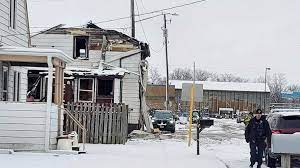
Dec. 9—Three people were found dead following a house fire in Watertown early Friday morning.
Watertown Fire Department Chief Travis Teesch said in a statement that the fire is under investigation by the Watertown fire police departments as well as the State Fire Marshall.
According to the press release, the fire occurred in the 100 block of Western Avenue and was reported around 12:30 a.m. Emergency responders found the home engulfed in flames when they arrived and were told people were trapped inside.
Firefighters attempted to rescue the residents, but were driven back by the intense heat, smoke, and flames, according to the release.
Names and ages of the three who died were not released. The cause of the fire remains under investigation, Teesch said in the release.
Assisting agencies include; fire agencies responding through the Mutual Aid Box Alarm System as well as the Jefferson County Sheriff’s Office and Dodge County Sheriff’s Office.
A Minnesota firefighter is used to attacking flames and extricating patients from wrecked vehicles.
Now, Minnetonka Firefighter Tim Tripp is in another battle — for his life after a freak incident.
Tripp was training a rookie on pump operations when he slipped on the ice and hit his head, FOX 9 reported.
The 14-year part-time firefighter was in a public park pumping water into an ice rink when he fell.
Tripp was taken to Hennepin County Medical Center, where he was placed in a medically induced coma, and doctors performed several surgeries to relieve pressure on his brain.
“I think this week has been a bit of a roller coaster for us here at the fire department. The news at the beginning was absolutely terrible. That one of our own had gone down,” said Minnetonka Firefighter Sara Ahlquist.
Tripp is a part-time firefighter and self-employed. That’s why Minnetonka Fire set up a GoFundMe campaign to help his family pay rent and bills and for his three sons to travel back to help with his recovery.
“Total shock. Very, very surprised. I’ve been in the department for 15 years and never have we had an accident like that, that’s been this devastating for anyone,” she said. “I feel like the community has stepped up to help. His kids all went to school in the area. He went to school in the area. So he’s got a lot of support coming in, and we are excited about that.”
A Dallas Fire Rescue engine rolled into a ditch Friday morning responding to a commercial fire north of downtown.
Firefighters were called to the 11000 block of Harry Hines Boulevard around 7 a.m. and were unable to get into the building because of a large shipment that was received Thursday.
Firefighters moved to a defensive attack at Army Navy Plus store due to limited access and requested a second alarm to bring additional resources, DFR officials told WFAA.com.
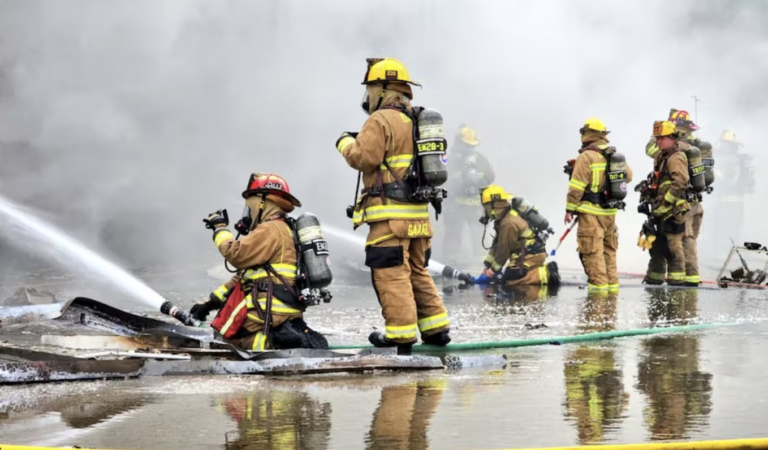
The fire reached four alarms, bring over 100 firefighters to the scene. Crews used aerial ladders and hoseline to bring the fire under control.
Some of the firefighters did not reach the scene after an accident while responding.
An engine company that was responding used the shoulder to pass traffic and ended up rolling into a ditch.
Fire officials said the firefighters were not injured.
“We’re in shock right now,” owner Joan Walker said told the television station. “We don’t know what to think. We don’t know what’s going to happen. It’s part of the family.”
Dec. 9—Acting State Fire Commissioner Charles McGarvey said four line of duty deaths of firefighters in the past week in Pennsylvania underscore the importance and the value of taking fire risks seriously.
“We would like to extend our condolences to their colleagues and families for the loss of their loved ones. Our office has reached out to the appropriate local authorities to offer assistance,” he was quoted in a press release that noted the death of two firefighters from New Tripoli on Wednesday in West Penn Twp.
He said in separate cases last week, a firefighter was struck while directing traffic and a second experienced a heart attack after having responded to an incident.
The man struck was Kurt Keilhofer of the Mapleton Fire Department in Huntington County, according to a news release from Gov. Tom Wolf’s office. The Pittsburgh Post-Gazette said volunteer firefighter Nicholas A. Theofilis, 23, died Nov. 28 “after a heart attack and ambulance crash.”
The deaths “draw attention to a deeply troubling trend of rising line of duty deaths,” McGarvey’s news release said.
Residents can help firefighters limit their risk by ensuring homes are equipped with functioning smoke detectors, having an escape plan and practicing it with their entire families, and once out of a burning structure, not going back in, McGarvey said.
Likewise, the firefighting community cannot become complacent, he said, noting training opportunities exist to mitigate many of the risks associated with “our dangerous line of work.”
He urged motorists to drive safely near the scene of emergency incidents.
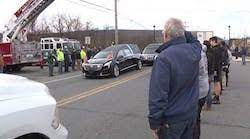
Dec. 9—NEW PHILADELPHIA — Escorted by a column of police vehicles, two hearses containing the bodies of fallen firefighters left the Schuylkill County Coroner’s Office at the Simon Kramer Institute at 2:30 p.m. Thursday.
For Zachary Paris, 36, and Marvin Gruber, 59, it was the beginning of a long journey home to Community Fire Company in New Tripoli, Lehigh County.
Paris, assistant fire chief, and Gruber perished in a devastating fire Wednesday in Clamtown, a village in West Penn Twp.
Rescued from the burning house by specially trained firefighters, they were taken to St. Luke’s Hospital-Miners Campus in Coaldale, where they were pronounced dead Wednesday evening.
The news of their passing in the line of duty spread rapidly through the close-knit volunteer fire company community, and Paris and Gruber were accorded a tribute of a magnitude rarely seen.
The initial column of 18 vehicles that left Simon Kramer Institute was joined by fire, rescue and emergency medical apparatus from across Schuylkill County and beyond.
Headed east on Route 209 toward Tamaqua, the column of an estimated 90 vehicles stretched for about a half-mile.
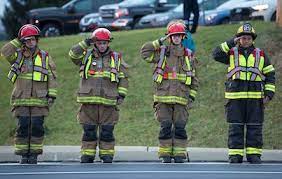
Along Route 209 at MaryD, firefighters in uniform saluted as the entourage passed. At Tuscarora, units from McAdoo and Freeland stood at attention as the hearses passed.
It took about 15 minutes for the column to pass down West Broad Street in Tamaqua. Units from Schuylkill Haven, Orwigsburg, Shenandoah, Tremont, New Philadelphia, Minersville and Cressona passed in a show of respect augmented by people on the sidewalks waving American flags. Among units representing Pottsville was Phoenix’s No. 21 truck.
Tamaqua police cordoned off the left lane of West Broad Street to allow the apparatus to pass.
In a touching tribute, Matt and Linda Yeager sat in front of their West Broad Street house, waving American flags as the firefighters passed.
“They’re heroes,” Matt said. “What a send-off.”
Gov. Tom Wolf ordered the commonwealth flag to fly at half-staff at the Pennsylvania Capitol Complex and all state facilities statewide in honor of the two Lehigh County firefighters and a third who died Tuesday in Huntingdon County.
A Dark Day
Mark Richards, chief of Virginville Fire Company, described the mood of firefighters as one of sheer silence in respect for their deceased comrades.
“It was a dark day for all firefighters everywhere. Every firefighter should go home to their family,” said Richards, whose company has a mutual aid agreement with Community Fire Company. “They gave the ultimate sacrifice while volunteering to serve their community to the end.”
Virginville firefighters were among the units that stood by as the procession of emergency vehicles reached New Tripoli.
The line of traffic following the vehicles on Route 309 stretched to the top of the Blue Mountain, a distance of more than 3 miles.
A delegation from Community Fire Company escorted the hearses to the fire company, about 2 miles from Route 309.
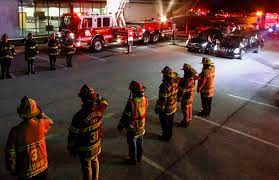
In front of the fire company, which was draped in black, firefighters saluted the entourage upon arrival. In silence, they laid their hands upon the hearses.
The news of two volunteer firefighters losing their lives while fighting a fire swept through the close-knit Pennsylvania German community in Lehigh County.
Bambi Snyder, who volunteers in social events at the fire company, stood along Route 309 as the firefighters arrived.
“They’re everyday heroes,” she said. “Words can’t express the feeling people have for them.”
Frank Junger, 85, a fire policeman in Lynnport, struggled to maintain composure as he contemplated the loss.
“I was a friend of Zack Paris,” he said. “He was an amazing young man and a terrific firefighter.”
Paris had a farm in the area around New Tripoli, Junger said.
“Everybody’s devastated,” Junger said. “It’s such a shock to lose people that you know.”
Paris had previously been involved with the Frederick County Division of Fire and Rescue Services in Maryland.
“There are no words to describe the sadness myself and the our members are feeling today,” Fire Chief Tom Coe said in a news release. “Not only was Zach someone who was living out his dream of becoming a career firefighter, but he was also living our his dream as a family man.”
The International Association of Firefighters Local 3666 president Stephen Jones also reacted to Paris’ loss.
“Losing another of our brothers, especially at this time of year, is heartbeaking,” he said. “We stand ready to support his wife and children during this tragic time.”
At Katie’s Family Restaurant, a local gathering place near Northwestern Lehigh High School, customers were saddened.
Paris and Gruber were regular customers who had been at the restaurant as recently as last weekend, said a waitress, who asked not to be identified.
Bob Breiner, a New Tripoli mechanic who was having breakfast, said the loss was especially devastating with Christmas only a couple weeks away.
“It’s not a good thing anytime, but especially at this time of year,” he said. “The man had a wife and two young children.”
The relatives of three Baltimore firefighters killed in a vacant house collapse in January plan to sue the city and the state of Maryland.
In a letter of intent filed Wednesday, Miller and Stern Lawyers claim that the deadly fire and collapse on Stricker Street in January were the result of the “negligence” of the city and state, WJZ reported.
On Jan. 24, crews responded to Stricker Street for a row house fire. A partial building collapse trapped firefighters.
Lt. Paul Butrim, firefighter/paramedic Kelsey Sadler, and EMT/firefighter Kenny Lacayo were killed, while EMT/firefighter John McMaster was hospitalized with serious injuries.
McMaster is included in the negligence suit, court records show.
In its notice, the defendants may allege negligence by the plaintiffs for failing to demolish or safely secure the vacant building, the mismanagement of money and violations of constitutional protections.
Personal injury, wrongful death and survivor claims exceed $10,000,000, according to the document.
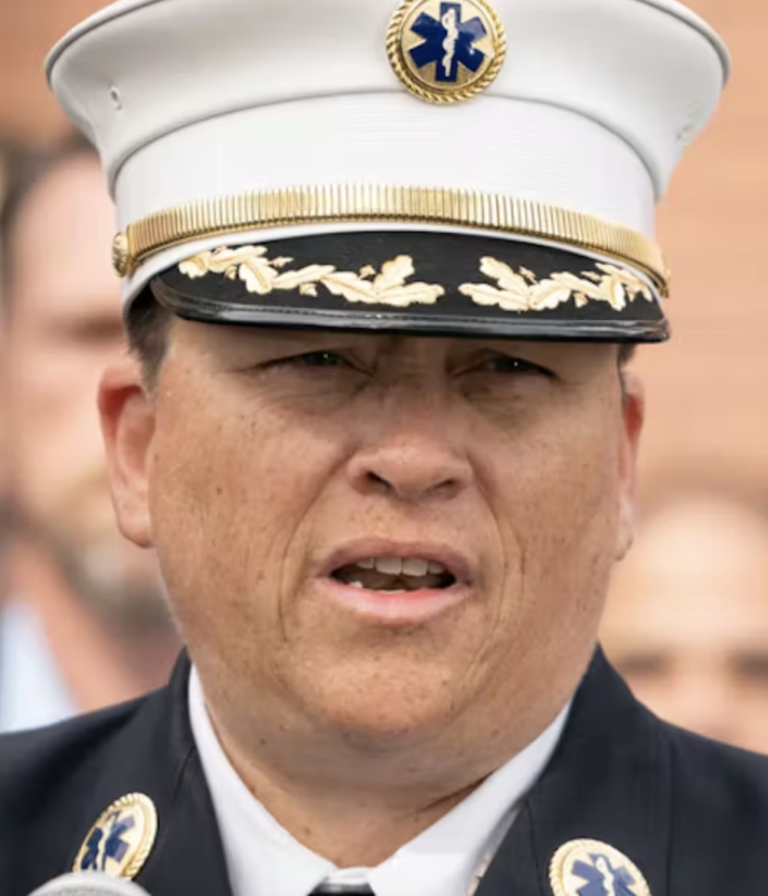
The first woman to lead New York’s cadre of emergency medical technicians and paramedics is calling it a career, the Daily News has learned.
Lillian Bonsignore — who is also the first openly gay leader of the city’s EMS service — has had a three-decade run as a front line first responder.
Assigned to the four-star post in May 2019, Bonsignore, 53, led the city’s 4,640 EMS members during the COVID pandemic, unrest over the murder of George Floyd and the death of EMS Lt. Alison Russo, who was viciously stabbed by a deranged man while on duty outside her Queens EMS station in late September.
“We also had a flood and a couple of storms in there too,” Bonsignore recalled. “When I signed on, no one told me we would have a world-wide pandemic that would shut the city down.”
“As first responders do, particularly EMS, we put our best foot forward and took care of a very sick and needy city in one of the darkest times I remember in the course of my career,” she said. “I’m so proud of the work they have done.”
In 1991, Bonsignore was a single mom trying to overcome her hardscrabble Bronx childhood when her pediatrician encouraged her to become an EMT.
After joining EMS, Bonsignore worked her way up the FDNY ladder, earning respect and accolades from colleagues across the decades. She was chief of EMS training when former Fire Commissioner Daniel Nigro tapped her for EMS’ top spot.
Her last day on the job will be Dec. 30. FDNY Commissioner Laura Kavanagh hasn’t named Bonsignore’s replacement.
Bonsignore’s potential successors include EMS chief of training Cesar Escobar and Deputy Assistant Chief Michael Fields, said a source familiar with the matter.
“Chief Bonsignore has guided the country’s busiest EMS system through some of our darkest days, including when NYC became the epicenter of the COVID-19 pandemic,” Kavanagh said Wednesday. “She has broken multiple glass ceilings in her career …. She has opened the door for so many great leaders to follow.”
During her tenure, Bonsignore spearheaded efforts to improve communications and technology for rank-and-file first responders. She also cleared the way for city ambulances to be equipped with motorized power stretchers that can self-lift and lower.
“It may not seem like a lot, but we saved a generation of back, neck and shoulder injuries,” Bonsignore said.
She’s also credited with making structural changes to the EMS hierarchy and increased the number of chiefs in the department, which were in short supply.
“It was really something that needed to happen,” she said. “My theory is to do things people will forget about. If you do it well enough, it will become institutionalized.”
Bonsignore said she had “a thousand more things” she wishes she could accomplish before retiring and hopes her successor continues the push for better safety measures and decrease the sizable pay gap between EMS and other first responders so EMTs and paramedics “are able to support themselves and not work multiple jobs.”
“It’s a young profession compared to other first responder jobs,” she said of EMS. “We have to continue to grow so people in our society realize we’re not just a group of ambulance drivers. We’re highly trained medical professionals that can bring emergency room training to your bedside.”
Bonsignore says she’s still friends with the pediatrician who encouraged her to apply for EMS.
“Now I get to talk to her about retiring,” she joked.
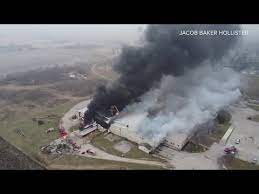
Des Moines firefighters and technicians were ready when they got the call for an explosion at a soybean processing plant.
They train for various scenarios like this, Capt. Chris Bolten told KCCI adding that they work closely with local soybean processor Archer Daniels-Midland to ensure protections are in place to mitigate fire risk.
“Those types of facilities are a high hazardous area, so we try to get out there like once a year,” Bolten said.
Being prepared is vital as an incident at a plant brings additional challenges and dangers. Knowing what chemicals are involved and how they react is vital.
“So, we need to air monitor and make sure these particulates after the fire aren’t creating a health hazard within the community and make sure there’s no secondary explosion limit in there,” Bolten said.
On Thursday, more than a dozen workers were suffered burn injuries. Crews quickly treated them and made sure everyone in the building was accounted for.
Fires like the one in Marengo require a much different response than a house fire. Firefighters used foam to help quell the flames.
A man was arrested after police said he stole an ambulance while paramedics were handling a medical call, according to multiplereports.
Pittsburgh Public Safety said that at about 4:30 a.m. Friday morning, medics responded to a call in the 200 block of West Sycamore Street in Pittsburgh.
While they were treating a patient, a man stole the ambulance and drove away.
Officials said it was driven to Beaver County, where state police were able to track it down more than 20 miles away, according to TribLive.
According to WPXI, multiple police cars surrounded the ambulance on the Parkway West outbound near the Hopewell exit.
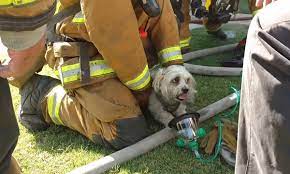
Technical rescue crews from Los Angeles County Fire Department worked diligently to rescue a German Shepard trapped in a hole.
“It ended up being a septic tank. It’s approximately 15 to 20 feet deep,” Capt. Abe Serrano told KIRO, adding that it hadn’t been used in many years.
“They have to take all safety precautions because they’re going into a confined space. They try to do everything expeditiously but they also have to take all safety precautions.”
As soon as a technician in the hole offered Maya, 15, a treat, she accepted happily.
The family told firefighters another dog stood near the hole and barked to alert them to the incident.