Monday, April 27, 2026
Home Blog Page 33

FEMA cancels classes at national fire training academy amid federal funding cuts.

CHICAGO (AP) — The country’s preeminent federal fire training academy canceled classes, effective immediately, on Saturday amid the ongoing flurry of funding freezesand staffing cuts by President Donald Trump’s administration.

The Federal Emergency Management Agency announced that National Fire Academy courses were canceled amid a “process of evaluating agency programs and spending to ensure alignment with Administration priorities,” according to a notice sent to instructors, students and fire departments. Instructors were told to cancel all future travel until further notice.

Firefighters, EMS providers and other first responders from across the country travel to the NFA’s Maryland campus for the federally funded institution’s free training programs.

“The NFA is a powerhouse for the fire service,” said Marc Bashoor, a former Maryland fire chief and West Virginia emergency services director with 44 years of fire safety experience. “It’s not a ‘nice to have.’ It is the one avenue we have to bring people from all over the country to learn from and with each other. If we want to continue to have one of the premier fire services in the world, we need to have the National Fire Academy.”

ADVERTISEMENT

The academy, which also houses the National Fallen Firefighter’s Memorial, opened in 1973 to combat a growing number of fatal fires nationwide. At the time, the National Commission on Fire Prevention and Control envisioned it to be the “West Point of the Fire Service,” according to a report form the organization.

Bashoor said the NFA was set to welcome a new set of fire safety officers for training next week.

“People had made their plane and travel reservations. And all of a sudden, they get an email that ‘Sorry, it’s been canceled,’” he said. “It’s really upsetting.”

For firefighters, including those on the frontlines of deadly fires that ravaged California this year, having an essential training institution “shut down under the presumption that there’s waste, fraud and abuse” has been demoralizing, Bashoor said. He said losing NFA training could make the coordinated response that prevented additional deaths and destruction in California more difficult.

FEMA and the National Fire Academy did not immediately respond to requests for comment.

While surveying disaster zones in California in January, Trump said he was considering “getting rid of” FEMA altogether, previewing sweeping changes to the nation’s central organization of responding to disasters.

Firings at the U.S. Forest Service on the heels of the deadly California blazes also sparked outcry among discharged workers and officials who said it would mean fewer people and less resources will be available to help prevent and fight wildfires.

Cleveland City Council Pushes for More EMS Hiring After Budget DisputeFunding for 11 Additional Paramedics Restored Following Community Pressure

0

CLEVELAND, Ohio — Concerns over emergency medical staffing shortages have led to a budget revision in Cleveland, with City Council advocating for the addition of 11 new EMS positions. The initial budget proposal from Mayor Justin Bibb did not include these positions, despite prior discussions about their necessity.

EMS Staffing Shortages and City Council’s Push for More Resources

Cleveland’s emergency medical services have been operating under increased strain due to staffing cuts made two years ago. In October, EMS leadership indicated they needed 11 additional paramedics to help restore previous staffing levels. However, when Bibb released his proposed budget in February, these positions were omitted.

This decision sparked criticism from the Cleveland Association of Rescue Employees, with Vice President Timothy Sommerfelt highlighting the urgency of EMS response times. “Cleveland can’t wait for an ambulance,” he stated, referencing the mayor’s previous campaign slogan.

City Council members, including Public Safety Committee Chair Mike Polensek, have stressed the importance of prioritizing EMS funding, labeling the issue as a matter of life and death. Council President Blaine Griffin and Bibb’s administration are now engaged in negotiations over the final budget, with council members arguing that funding EMS should be a priority.

Revenue Increases and Budget Adjustments

One factor influencing the debate is the city’s ambulance billing revenue. In 2022, Cleveland significantly increased ambulance service fees, raising base rates from $350-$500 to $750-$1,300. The revenue was intended to support EMS operations, but difficulties in collecting payments led to a substantial decline in funds.

In 2023, the EMS budget was reduced, cutting total personnel from 332 to 304 positions due to hiring challenges. Bibb’s 2025 budget proposal maintained staffing at 304, despite EMS leadership requesting 315 positions. Currently, EMS employs 292 personnel, with nine more trainees expected to start by the end of March. Union leaders argue that recent wage increases have improved recruitment efforts, making it feasible to restore positions that had been cut.

Investing in Emergency Medical Services and Community Programs

The proposed budget does allocate funds for new equipment, including ventilators and resources to develop a blood transfusion program. EMS leaders also hope to expand community outreach efforts, such as CPR and first aid training. However, Sommerfelt cautioned that without additional personnel, these initiatives could pull paramedics away from emergency response duties.

“Without increasing staffing, we’d have to take paramedics off 911 calls to support these programs,” Sommerfelt warned. The estimated cost to add 11 positions is about $1 million, a fraction of the city’s overall budget but a significant investment in public safety.

Addressing Billing Collection Issues

A key challenge in funding EMS has been the city’s inefficient billing collection. Despite the rate increases, revenue fell from $16.8 million in 2021 to just $4.1 million in 2024 due to staffing shortages in the billing department. To address this, Cleveland outsourced EMS billing to a private company in January 2025.

Initial results suggest the move is paying off. The new billing firm has collected $4.7 million in just six weeks, a dramatic improvement over previous years. The city now expects to collect between $15 million and $16 million in EMS revenue for 2025, with finance officials calling this a conservative estimate.

Final Budget Decisions Approaching

With budget talks ongoing, council members continue to advocate for reinstating the 11 EMS positions. Councilman Charles Slife expressed surprise that EMS leadership did not initially present their staffing request during budget hearings, but he and other council members are pushing for the positions to be added before the final budget is approved.

Polensek, a strong supporter of increased EMS funding, emphasized the need to invest in emergency services as a critical quality-of-life issue for Cleveland residents. As negotiations continue, the final decision will determine whether the city’s EMS workforce can meet growing demands and better serve the community in emergencies.

Mayor’s Office Under Scrutiny Over Fire Warnings Before International Trip

0

Concerns Grow as Records Show L.A. Mayor’s Staff Knew of Fire Risks Before Departure

LOS ANGELES — New records reveal that Mayor Karen Bass’ aides were warned about extreme fire conditions before she left for an international trip, raising questions about her administration’s response to the devastating Palisades fire.

Early Warnings Ignored?

On January 3, just a day before Mayor Bass departed for Ghana, the city’s Emergency Management Department (EMD) issued an email alert to multiple city officials, including more than a dozen of Bass’ senior staff members. The message contained urgent weather forecasts predicting strong winds and critical fire risks, with a meeting scheduled to coordinate response efforts. The National Weather Service had also begun publicly warning of heightened wildfire dangers.

Despite these warnings, Bass proceeded with her planned visit to Ghana, where she attended the country’s presidential inauguration and a U.S. Embassy event on January 7—the same day the Palisades fire erupted. The fire ultimately claimed 12 lives and destroyed thousands of homes.

Mayor Bass Blames Fire Chief

Upon her return, Bass fired Los Angeles Fire Chief Kristin Crowley on February 21, citing failures in communication and fire preparedness. She has since claimed that had she been informed of the severity of the situation, she would not have even traveled as far as San Diego, let alone Ghana.

However, documents obtained through a public records request indicate that multiple members of her administration were informed of the potential for extreme fire conditions well before she left the country. Councilmember Monica Rodriguez, a vocal supporter of Crowley, pointed to the email alerts as evidence that the mayor’s office was in the loop.

“She keeps saying, ‘I wouldn’t have left had I known.’ But her staff did know,” Rodriguez said. “This verifies that her staff was notified of the potential threat by EMD, whose responsibility it is to let us know of these potential weather events.”

What Did the Mayor’s Team Know?

More than a dozen Bass aides received the January 3 email, which included a National Weather Service forecast showing a large red flame icon and the phrase “Critical fire conditions.” The forecast warned of wind gusts up to 80 mph starting January 7, combined with dry vegetation and low humidity—creating a high-risk fire environment for Los Angeles and Ventura counties.

Additionally, two of Bass’ aides—Christopher Anyakwo, her executive officer for emergency operations, and Jacquelyne Sandoval, her policy director for emergency management—received direct emails with Zoom links to a coordination meeting set for January 6.

Despite these alerts, Bass’ deputy mayor, Zach Seidl, downplayed the warnings, arguing that the emails did not indicate an imminent catastrophe. “That is not a warning of disaster. That sends the opposite message,” he stated.

Growing Criticism and Political Fallout

Following the fire, scrutiny has increased over how the mayor’s office handled the alerts. The National Weather Service had been holding daily briefings on the wildfire risk since late December, warning on January 2 of a “damaging offshore wind event” and raising the fire danger level to its highest category—extreme—on January 5, just a day after Bass left the country.

By January 6, the National Weather Service issued an even more urgent alert, stating, “HEADS UP!!! A LIFE-THREATENING, DESTRUCTIVE, Widespread Windstorm is expected Tue afternoon-Weds morning across much of Ventura/LA Co.”

Bass returned to Los Angeles on January 8, more than 24 hours after the fire had begun. She told reporters that she took the “fastest route back” and remained in communication with public safety officials while traveling. However, the controversy surrounding her absence, along with the dismissal of Chief Crowley, continues to fuel debate over leadership accountability and emergency preparedness in the city.

The Future of Cancer Coverage for Female Federal Firefighters

Concerns Rise as Policy Changes Disappear from Government Websites

Weeks after the Labor Department extended workers’ compensation coverage to include cancers affecting female and transgender firefighters, concerns are mounting as information about the policy change has vanished from government websites. The sudden removal has sparked fears that the newly granted protections may be at risk under the Trump administration.

A Long Battle for Coverage

Federal firefighters have long fought for presumptive workers’ compensation for illnesses linked to toxic exposures on the job. After nearly three years of advocacy, breast, ovarian, cervical, and uterine cancers were finally included in coverage through the Labor Department’s special claims unit. This addition ensured a streamlined claims process for affected firefighters, a significant improvement from past practices that saw only 29% of firefighter occupational disease claims approved.

The policy, implemented in the final weeks of the Biden administration, aimed to address an oversight that left female reproductive cancers off the initial list of covered illnesses. While numerous cancers—including lung, brain, kidney, and melanoma—were already recognized for expedited claims, female firefighters and advocacy groups were dismayed to find that certain cancers predominantly affecting women were initially excluded.

Concerns Over Policy Reversal

Shortly after President Trump took office, the Department of Labor removed online references to the expanded coverage. Officials have since declined to clarify whether claims for breast, ovarian, cervical, and uterine cancers will continue to be processed under the special claims unit.

This uncertainty has alarmed many in the firefighting community. Pete Dutchick, a federal firefighter and advocate, stressed the importance of ensuring continued coverage. “Firefighters dedicate their lives to protecting the public. They should not have to fight for healthcare after facing occupational hazards that put them at higher risk of cancer.”

Scientific Research Supports Coverage

Years of research have linked firefighting to increased cancer risks. A study following Florida firefighters found elevated cancer rates among female firefighters. The International Agency for Research on Cancer classified firefighting as a cancer-causing profession in 2022. Additionally, studies have connected perfluoroalkyl substances (PFAS), found in firefighting gear, to breast and uterine cancer.

Despite this evidence, female firefighters have historically been underrepresented in occupational health studies, contributing to past exclusions from coverage. Advocacy groups have pushed for research to better reflect the risks faced by all firefighters, regardless of gender.

The Future of Coverage Remains Uncertain

Without formal rulemaking or congressional intervention, the fate of this expanded coverage remains unclear. Federal firefighters who developed cancer before the streamlined process existed, like Kaleena Lynde, know firsthand the challenges of navigating workers’ compensation without dedicated support. Diagnosed with small cell ovarian cancer at just 22 years old during her third fire season, Lynde underwent multiple surgeries and chemotherapy without the benefit of expedited claims processing.

Advocacy organizations continue to push for permanent protections. “Hazard pay won’t stop cancer,” said retired firefighter and researcher George Broyles. “The government must be upfront about the risks and ensure proper support for those affected.”

For now, federal firefighters and their supporters remain vigilant, watching closely to see whether the protections they fought for will endure or disappear in the shifting tides of policy changes.

D.C. Firefighters Recall Harrowing Response to Deadly Plane and Helicopter Crash

D.C. Firefighters Recall Harrowing Response to Deadly Plane and Helicopter Crash

WASHINGTON, D.C. — First responders who rushed to the devastating collision between an American Airlines jet and a U.S. Army Black Hawk helicopter over the Potomac River described the scene as overwhelming and unlike anything they had ever encountered.

D.C. Fire and EMS marine pilot CJ Isbell, who was among the first to arrive, called the experience “a nightmare.”

“With years on the job, you think you’ve seen it all, but that night was beyond anything I could have imagined,” Isbell told NBC Washington. “The scale of it—the number of victims, the debris, the sheer devastation—it was like something out of a movie, not real life.”

The collision, which occurred on January 29 as the American Airlines flight prepared to land at Ronald Reagan Washington National Airport, sent both aircraft plunging into the river, claiming 67 lives.

A Chaotic and Overwhelming Scene

Firefighter and EMS diver Steve Hater, who also responded to the crash, recalled the difficulty of processing the destruction.

“No matter how much experience you have, nothing prepares you for something like that,” Hater said.

Isbell and his crew were alerted by a phone call and immediately deployed their fireboat, reaching the crash site in under ten minutes. Despite having night vision and thermal imaging equipment, they struggled to see through the darkness. Instead, the strong odor of jet fuel told them they were close.

“As we approached, we saw part of the fuselage sticking out of the water, a massive debris field, and a thick layer of jet fuel covering the surface,” Isbell explained. “Our first priority was to check for survivors, so we began searching inside the fuselage, hoping to find anyone still alive.”

Hater noted that while visibility in the water was unusually clear due to the cold temperatures, making sense of what they saw was difficult.

“It was just wreckage everywhere, a tangled mess,” he said. “It took a moment to even comprehend what we were looking at.”

Coping with the Aftermath

Both first responders acknowledged that the tragic events of that night left a lasting impact. They continue to process the emotional toll of the experience with the support of colleagues and loved ones.

“I’ve leaned on my family and my fellow firefighters,” Hater shared. “Talking about it—just being able to be open with the people who were there—that’s helped the most.”

As investigations into the crash continue, those who responded remain focused on healing while honoring the lives lost in the tragedy.

Three Firefighters Injured in New York House Fire After Roof Collapse

A MayDay call resulted in the firefighters being sent to the hospital for medical attention.

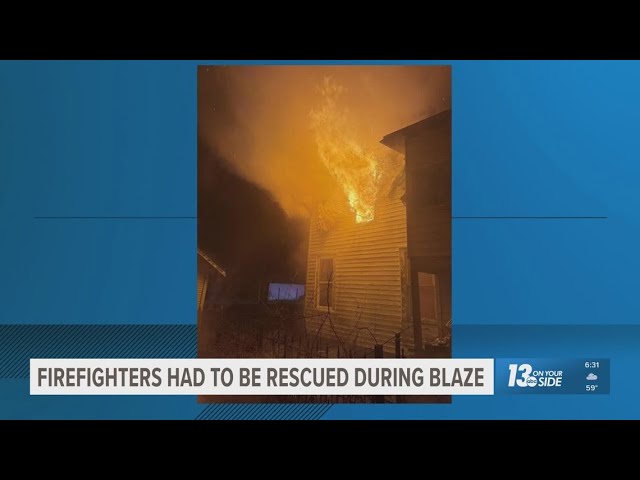
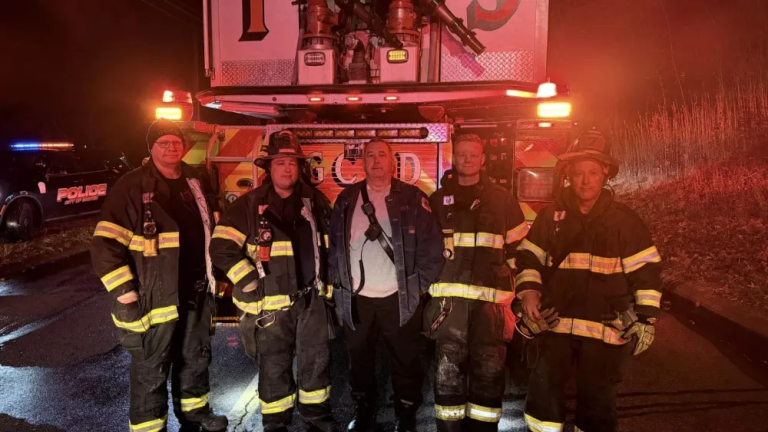
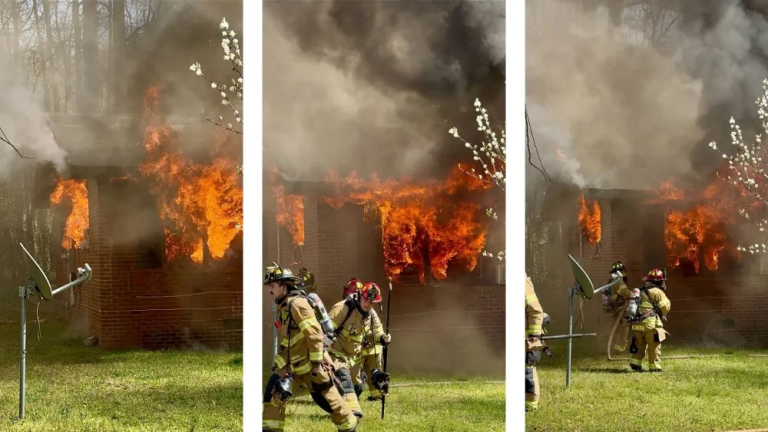
CUBA, N.Y. — A house fire in Cuba, New York, led to a mayday call on Sunday morning after the roof collapsed, injuring three firefighters. Emergency crews from Allegany and Cattaraugus counties responded to the blaze on Yankee Road shortly before 9 a.m.

According to Ischua Fire Chief Mark Kirtz, the fire had already spread extensively by the time firefighters arrived. “Flames were through the roof, and it was well involved,” Kirtz told WGRZ.

As crews worked to contain the fire, part of the roof gave way, prompting an emergency mayday call. Three firefighters sustained injuries and were transported to the hospital, though officials reported their injuries were not life-threatening.

The homeowners, Brenda Wyant and her husband, expressed gratitude for the firefighters’ efforts. “I was born on this road, and I’ll probably die on this road,” Wyant said. “I’m just grateful today wasn’t that day.”

Despite the devastating loss, one firefighter was able to retrieve a meaningful possession from the home. “He saw our family Bible sitting on the end table and brought it to me,” Wyant shared. “That means so much.”

Authorities continue to investigate the cause of the fire.

Freight train derails in Czech Republic, causing major chemical fire

PRAGUE (AP) — Czech firefighters were battling a major chemical blaze in eastern Czech Republic on Friday after a freight train derailed and carcinogenic benzol from damaged tank wagons caught fire.

The derailment took place near the station in the town of Hustopeče nad Bečvou around noon local time (1100 GMT), with the fire sending thick black smoke into the air visible from a long distance. The cause of the derailment was under investigation. No one has been injured.

The nearest houses in the town are located about 500 meters (around a quarter-mile) from the fire, but the smoke hadn’t reached them.

Firefighters said that 15 of the 17 tanks in the train were on fire. Each tank contained about 60 metric tons (66 tons) of the toxic substance. They used a helicopter to contain the fire while their counterparts from neighboring Slovakia were on the way to help.

Authorities said that no levels of dangerous substances exceeding limits have been detected in the town, but advised that residents there and in nearby towns and villages don’t open their windows, and stay indoors.

Benzol contains benzene, toluene and xylene, which are used to make various chemical substances.

FDNY Crews Rescue Window Washers Trapped on Scaffolding 

0

The scaffolding broke in the high winds leaving the workers stranded by the 78th floor. 

By Thomas Tracy  Source New York Daily News (TNS)

FDNY firefighters raced to Columbus Circle in Midtown Friday to rescue two window washers trapped on the side of a high-rise on a broken scaffold being blown around by high winds, officials said.

First responders were called to 25 Columbus Circle about 9:47 a.m. after receiving a 911 call about the window washers trapped on the side of the building by the 78th floor.

The scaffold had broken free from the building and was hanging from security lines from the building’s roof. Video of the incident shows the scaffolding swinging back and forth and spinning as it was buffeted by the high winds.

Firefighters managed to pull the two men inside within a half hour, FDNY officials said.

No serious injuries were reported.

©2025 New York Daily News. Visit nydailynews.com. Distributed by Tribune Content Agency, LLC.

Los Angeles Fire Chief Wants Job Back, Appeals Firing

0

Fire Chief Kristin Crowley, who was fired last Friday, will have to get 10 of the 15 council members’ votes to be reinstated.

Teresa Liu Los Angeles Daily News (TNS)

Former Los Angeles Fire Chief Kristin Crowley announced on Thursday, Feb. 27, that she has formally appealed her removal by Mayor Karen Bass, escalating an already contentious political battle.

The uphill fight now shifts to the City Council, where Crowley will need support from at least 10 of 15 council members to be reinstated–an outcome that remains highly uncertain.

“Today I notified the City Council of my appeal as provided for in Los Angeles Charter, Article V, Section 5.08(e), due to Mayor Bass’s removal of me, on February 21, 2025, from the position of Fire Chief of the Los Angeles City Fire Department,” Crowley said in a statement.

Shortly after Crowley’s appeal, Marqueece Harris-Dawson, leader of the 15-member City Council, scheduled a special meeting at 5 p.m. Friday, Feb. 28, at Van Nuys City Hall to hear Crowley’s appeal.

However, later Thursday evening, his office announced that the meeting has been rescheduled to next Tuesday, March 4, at 10 a.m., to allow Crowley, interested parties and Councilmembers adequate time to prepare and attend.

In the media advisory, which was sent just before 9 p.m., Harris-Dawson’s office said that, after receiving Crowley’s appeal, Harris-Dawson had directed city staff to prepare for a special Council meeting. Initiallly, the earliest available time for the meeting was determined to be Friday at 5 p.m.

“While it is in the city’s best interest to hear this matter expeditiously, it is also important to allow the appellant, interested parties, and Councilmembers to be present and prepared for the meeting,” the statement read. “This matter will be heard in City Council on Tuesday, March 4th, at 10:00 a.m.”

Harris-Dawson previously told City News Service that he urged Bass to “separate” from the chief.

“We’re council members, so we don’t agree on everything,” Harris-Dawson told CNS. “I will say, I was one who was encouraging the mayor to separate with the chief weeks ago.”

United Firefighters of Los Angeles City, or UFLAC, the union representing the city’s firefighters, blasted the decision in a statement to media Thursday evening, saying that it’s “outrageous” that the City Council has scheduled a special meeting on just 24-hour notice.

“This is an example of why the public doesn’t trust City Hall and the constant missteps that we have seen our city leaders make since the fires broke out on January 7th,” the union said. “This is not transparent, fair, or just. It’s yet another public blunder coming out of City Hall that makes the people of Los Angeles continue to question the motives and trustworthiness of our city’s leaders.”

Harris-Dawson along with Councilmembers Curren Price, Hugo Soto-Martinez and Adrin Nazarian – stood behind the mayor as she spoke. A couple of other councilmembers, including Councilmember Monica Rodriguez, has publicly indicated their support for Crowley to appeal her removal.

Mayor’s spokesperson Zach Seidl said in a statement Thursday that “former Chief Crowley has the right to appeal her dismissal.”

After the firing, the mayor’s office said Crowley had chosen to exercise “her Civil Service rights to stay with the Fire Department at a lower rank.” However, it remains unclear what position she has been assigned, as the mayor’s office did not directly answer that question Thursday.

The move comes less than a week after Bass announced Crowley’s immediate removal and named former Chief Deputy Ronnie Villanueva, who recently retired, as interim fire chief.

Bass cited Crowley’s refusal to submit an after-action report on the Palisades fire as a key reason for her removal.

The mayor also criticized her handling of staffing decisions, saying that when the Palisades fires broke out on the morning of Jan.7, up to 1,000 firefighters could have been on duty but were instead sent home under Crowley’s leadership.

“Let me be clear: our firefighters acted heroically during the Palisades fire, and they act heroically every single day. That is without question. Bringing new leadership to the fire department is what they and the people of Los Angeles deserve,” Bass said during a Feb. 21 press conference announcing Crowley’s removal.

Under the City Charter, Crowley has 10 calendar days to appeal her firing to the L.A. City Council. The council could overturn Bass’ action if two-thirds of the governing body – meaning 10 of the 15 council members – vote to reverse the mayor’s decision.

The political turmoil has been building for weeks, with Crowley criticizing the city and Bass firing back. In an interview soon after the Eaton and Palisades fires erupted, Crowley said the city had “failed” her and the fire department by making budget cuts that hampered firefighters’ ability to respond to the recent deadly wildfires.

Bass, meanwhile, has reportedly blamed Crowley and others, saying that if she had been properly informed about the severity of last month’s windstorms, she would not have traveled out of the country just days before the first wildfire erupted.