Thursday, June 25, 2026
Home Blog Page 4

Three-Alarm Warehouse Fire Forces Firefighter Evacuation Before Roof Collapse in Seattle’s Ballard Neighborhood; One Firefighter Injured

0

By MES Dispatch Staff


The Briefing

  • More than 100 Seattle Fire Department personnel responded Thursday evening, June 12, 2026, to a three-alarm structure fire at Consolidated Supply Co., a plumbing supply warehouse on Northwest 42nd Street in Seattle’s Ballard neighborhood, near the Ship Canal.
  • High winds accelerated fire spread and forced an interior crew evacuation shortly before the building’s roof collapsed; at least one window was also blown out during the incident.
  • One firefighter sustained a minor injury; a person inside the building at the time the fire started had already exited before crews arrived, and no civilians were inside when crews conducted a search.
  • The large volume of water demand caused pressure drops in the area, prompting deployment of a Seattle Fire Department fire boat to pump water from the Ship Canal to support suppression operations.
  • Damage was contained to the Consolidated Supply Co. building; the cause of the fire remains under investigation, with a formal entry into the structure pending safe access.

SEATTLE, Wash. — Seattle firefighters were forced to abandon an interior attack and shift to a defensive posture Thursday evening after high winds rapidly accelerated a three-alarm fire at a commercial warehouse in the Ballard neighborhood, prompting a roof collapse shortly after crews pulled out and requiring a fire boat to supplement water supply. One firefighter sustained a minor injury; no civilians were reported hurt.

The fire was reported at the Consolidated Supply Co. plumbing supply warehouse on Northwest 42nd Street shortly after 5 p.m. A large plume of black smoke rose over the Ship Canal and was visible from across the city, drawing spectators to the perimeter. The Seattle Fire Department upgraded the response to a three-alarm assignment, deploying 15 engine companies and nine ladder trucks for a total response of more than 100 firefighters, according to department spokesperson David Cuerpo.

Crews initially attempted an interior attack, but wind conditions caused the fire to intensify and spread faster than suppression operations could contain. Department spokesperson Kaila Lafferty said at the scene that the wind was a decisive factor. “That wind picked up and really caused it to spread quickly,” she said. Incident commanders ordered firefighters to exit the structure, and the roof collapsed shortly after crews cleared the building. At least one window was also blown out. Firefighters transitioned to a defensive strategy, applying water from a safe exterior perimeter.

The scale of the response placed significant demand on the municipal water supply in the area, causing pressure to drop in some portions of the distribution system. A Seattle Fire Department fire boat was deployed to pump water directly from the Ship Canal to sustain adequate flow for suppression operations. Lafferty said a person who had been in the building before the fire reported the incident to 911 but had exited prior to the arrival of crews. A search of the structure confirmed no civilians remained inside.

The cause of the fire had not been determined as of the time of publication. Investigators were expected to enter the warehouse once structural conditions allowed for safe access. Lafferty said fire crews anticipated remaining on scene into late Thursday night to monitor for flare-ups. Damage was reported as contained to the Consolidated Supply Co. building, with no extension to neighboring structures.

Inoperable Sprinklers, Low-Pressure Hydrants Hamper Response to Total Loss Fire at Medline Medical Warehouse in Tracy, California

0

By MES Dispatch Staff


The Briefing

  • A fire that broke out at approximately 1 p.m. Thursday, June 11, 2026, destroyed a one million-square-foot Medline medical supply distribution warehouse in Tracy, Calif., approximately 55 miles east of San Francisco, with the building fully engulfed within 40 minutes of firefighter arrival.
  • Tracy Fire Department crews arrived to find the facility’s sprinkler system inoperable and on-site hydrants without adequate water pressure, forcing a defensive posture and requiring connection to city hydrants, according to Tracy Deputy Fire Chief Brian Bagley.
  • Authorities believe the water system failure was attributable to a problem with the facility’s internal systems, not the city’s municipal water supply; the sprinkler system had passed an outside inspection in January with no issues noted.
  • Embers from the blaze ignited two grass fires and set pallets and multiple semi-trailers at an adjacent FedEx facility alight, though those secondary fires were contained; no injuries were reported.
  • The Bureau of Alcohol, Tobacco, Firearms and Explosives has been called in to assist in determining the cause of the fire; investigators are expected to need several additional days before accessing the interior of the structure.

TRACY, Calif. — A fire that consumed a one million-square-foot medical equipment distribution warehouse owned by Medline Industries in Tracy, California was significantly compounded by the failure of the facility’s internal fire suppression and water supply systems, leaving firefighters with no building-side water source and forcing a defensive exterior operation as the structure burned to a total loss, fire officials said Friday.

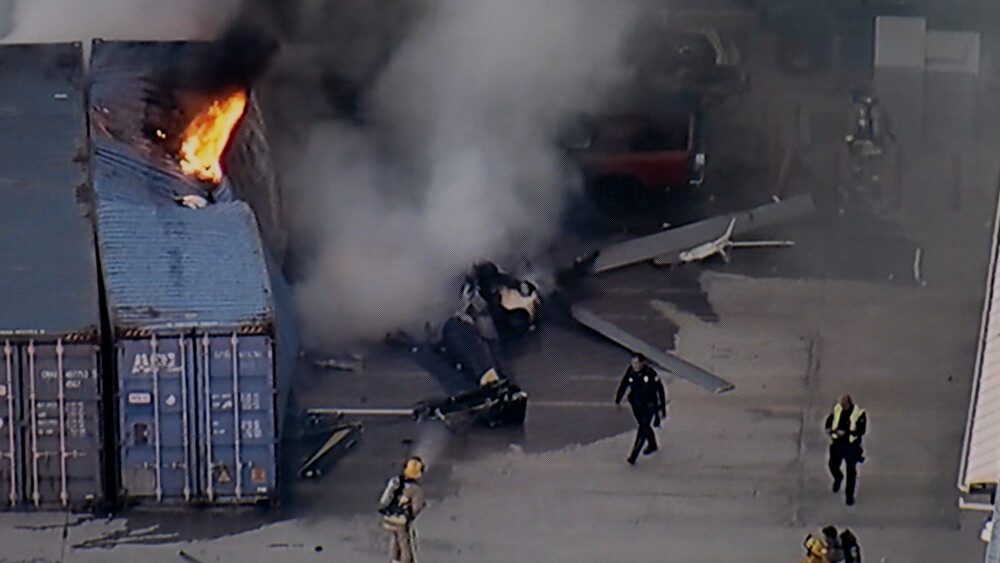
This image from aerial video shows black smoke pouring into the sky from a fire at a medical equipment warehouse in Tracy, Calif., Thursday, June 11, 2026. (KGO via AP)

The blaze was reported at approximately 1 p.m. Thursday. Tracy Fire Department crews arrived to find the building’s sprinkler system inoperable and the on-site fire hydrants without sufficient water pressure to support suppression efforts, Tracy Deputy Fire Chief Brian Bagley said. With little or no water flowing through either system, incident commanders made the decision to shift to a fully defensive posture and reroute supply lines to city hydrants. The building was fully engulfed within 40 minutes of firefighters arriving on scene. No injuries were reported; the facility had been evacuated prior to crews’ arrival.

Bagley said investigators have not yet determined why the water systems failed, but that the failure appeared to be confined to the facility’s internal infrastructure rather than the city’s municipal water supply. Notably, the building’s sprinkler system had been inspected by an outside contractor in January and was found to be functioning at that time. No explanation for the subsequent failure had been identified as of the time of publication.

The facility was one of more than 50 Medline distribution centers operating across the country and served as the primary supply hub for Northern California hospitals, providing medical equipment and supplies including bandages, gloves, surgical instruments, hospital beds, wheelchairs, and catheters. Medline issued a statement saying the company had activated a contingency plan following the fire and was redistributing operations to other facilities in its regional network. The company said it was working to maintain service continuity for affected hospital customers.

Embers from the warehouse fire traveled and ignited two grass fires in the surrounding area, as well as a fire involving pallets and multiple semi-trailer trucks at an adjacent FedEx distribution facility. Firefighters contained those secondary incidents. Overnight crews were required to address additional fires that reignited in loaded trailers at the site. Tracy’s industrial park also houses distribution and fulfillment operations for Amazon and Home Depot. No residential evacuations were ordered, and Bagley said air quality monitoring had not produced results requiring public health alerts, though residents near the fire were advised to shelter indoors as a precaution. Thick black smoke from the warehouse remained visible from the area into Friday.

The ATF has been requested to assist with determining the origin and cause of the fire. Bagley said investigators would likely require at least several more days before conditions at the site permitted safe entry into the structure for a formal investigation.

Four Injured, Including Two Firefighters, in Extra-Alarm Apartment Fire in Chicago’s Back of the Yards Neighborhood

0

By MES Dispatch Staff


The Briefing

  • Chicago Fire Department crews responded at approximately 5 a.m. Thursday, June 11, to an extra-alarm structure fire at a two-and-a-half-story residential building in the 4500 block of South Laflin Street in the Back of the Yards neighborhood on the city’s Southwest Side.
  • Four people were injured — two Chicago firefighters and two civilians; a 90-year-old resident was hospitalized for smoke inhalation and minor cuts and bruises, and a second civilian was treated for minor injuries.
  • Nearly 100 firefighters operated on scene; part of the building’s roof collapsed during suppression operations, and fire spread to neighboring structures.
  • CFD District Chief Scott Shawaluk said crews moved quickly to protect exposures on adjacent buildings while simultaneously attacking the fire in the primary structure.
  • Fire officials stated it is unclear whether the building had functioning smoke detectors, and the cause of the fire remains under investigation.

CHICAGO, Ill. — Four people, including two Chicago firefighters, were injured early Thursday when an extra-alarm fire tore through a two-and-a-half-story multi-family home in the Back of the Yards neighborhood on Chicago’s Southwest Side, prompting a response of nearly 100 firefighters and causing a partial roof collapse before crews brought the blaze under control.

The Chicago Fire Department received the call at approximately 5 a.m. and arrived to find the residential structure in the 4500 block of South Laflin Street heavily involved in fire, with thick black smoke visible for miles in the surrounding area. CFD District Chief Scott Shawaluk said crews immediately established a dual-front operation, working to protect adjacent homes from fire spread while simultaneously mounting an interior and exterior attack on the primary building. The fire extended to neighboring structures before being contained.

The family residing in the multi-generational home was alerted to the fire by a relative living next door. The 90-year-old matriarch of the household, who was on the second floor at the time the fire broke out, was transported to a hospital and treated for smoke inhalation and minor cuts and bruises. A second civilian sustained minor injuries and was also transported for medical evaluation. Two Chicago firefighters were injured during suppression operations; their conditions and the nature of their injuries were not specified in initial reports. Alderman Ray Lopez, who represents the area, confirmed details of the family’s situation at the scene.

Roof collapse during active operations added to the complexity of the response. Fire officials said investigators have not yet determined whether the building was equipped with functioning smoke detectors. The cause and origin of the fire remain under investigation by the Chicago Fire Department.

UL Research Institutes’ Fire Safety Research Institute Launches Five-Week ‘Hot Drill Summer’ Search and Rescue Training Challenge

By MES Dispatch Staff


The Briefing

  • The UL Research Institutes’ Fire Safety Research Institute (FSRI) launched a five-week hands-on search and rescue training initiative called “HOT Drill Summer,” running from June 9 through July 11, 2026, open to fire departments nationwide.
  • The challenge invites crews to complete a weekly research-based drill scenario, then share photos, videos, and feedback using the hashtag #HotDrillSummer on social media platforms.
  • Each week’s drill focuses on a progressively more complex search and rescue scenario, beginning with victim removal and advancing through pre-suppression and during-suppression searches with both known and unknown victim locations.
  • The drill sheets are drawn from FSRI’s Search and Rescue Tactics research program for single-family, single-story residential structures and are designed to translate fire dynamics research findings into repeatable, field-applicable training exercises.
  • All drill sheets, an instructor guide, and supporting resources are available at no cost through the Fire Safety Research Institute’s Fire Safety Academy at training.fsri.org.

COLUMBIA, Md. — The UL Research Institutes’ Fire Safety Research Institute launched a nationwide five-week search and rescue training initiative June 9, inviting fire departments to complete a series of progressive, evidence-based drill scenarios and share their results publicly as part of a social media challenge designed to promote hands-on skill development across the fire service.

The initiative, called “HOT Drill Summer,” is built around a set of drill sheets developed from FSRI’s full-scale fire experiment research on search and rescue operations in single-family, single-story residential structures. The drill sheets are structured as a progressive training series intended to reinforce both task execution and fireground decision-making. Participating departments complete each week’s assigned scenario — which may include victim removal, entry point selection, ventilation coordination, isolation, and suppression integration — and post documentation of their training online using the hashtag #HotDrillSummer.

The five-week drill schedule began June 2 with the release of an instructor guide, followed by Week 1 on June 9 covering victim removal. Subsequent weeks address pre-suppression search with a known victim location (June 16), pre-suppression search with an unknown victim location (June 23), during-suppression search with a known victim location (June 30), and during-suppression search with an unknown victim location (July 7). Each scenario is designed to build directly on the skills developed in the preceding week’s drill.

An instructor guide accompanies the drill sheet series to assist training officers with adapting scenarios to their department’s local conditions, facilitating post-drill debriefs, and emphasizing tactical decision-making alongside physical skill execution. The drill sheets are integrated into FSRI’s updated online training program on search and rescue tactics, which incorporates additional guidance on search, suppression, and ventilation operations based on the organization’s latest experimental findings.

All drill sheets, the instructor guide, and access to the broader online training course are available at no cost through the Fire Safety Research Institute’s Fire Safety Academy at training.fsri.org. FSRI has not set a participation cap or registration requirement for the challenge; departments may begin at any point during the five-week window.

Michigan House Passes Three-Bill Package Creating 25-Foot Buffer Zone Around First Responders; Measure Heads to Senate Amid Free Speech Debate

0

By MES Dispatch Staff


The Briefing

  • The Michigan House of Representatives passed a three-bill package on June 9, 2026, that would establish a 25-foot buffer zone around first responders on duty, making it a criminal offense to approach and remain within that perimeter with intent to interfere, harass, or threaten after receiving a verbal warning.
  • The legislation, sponsored by Rep. Alicia St. Germaine, R-Harrison Township, and Rep. Mike Harris, R-Waterford Township, received bipartisan support in the House and now moves to the Michigan Senate.
  • Penalties under the bills range from a 60-day, $500 misdemeanor for a standard violation to a 15-year, $7,500 felony if the violation causes the death of a first responder.
  • Several Democratic lawmakers opposed the package, citing concerns about potential infringement on free speech and residents’ ability to observe and record law enforcement; an amendment to limit the buffer zone to EMS and fire personnel — excluding law enforcement — was rejected.
  • The bills are supported by the Michigan Association of Chiefs of Police, Michigan Fraternal Order of Police, and Michigan Sheriffs’ Association, and opposed by the ACLU of Michigan and the Criminal Defense Attorneys of Michigan; similar laws in Arizona, Florida, Indiana, Louisiana, and Tennessee have faced court challenges on constitutional grounds.

LANSING, Mich. — The Michigan House of Representatives passed a three-bill package June 9 that would create a 25-foot protective buffer zone around first responders performing their duties, establishing new criminal penalties for individuals who approach and remain within that perimeter with the intent to interfere, harass, or threaten — legislation that advanced with bipartisan support but drew significant opposition from Democratic lawmakers and civil liberties organizations.

The bills — House Bills 5574, 5575, and 5576 — amend the Michigan penal code to create a new criminal offense triggered when an individual, after receiving a verbal warning, approaches and remains within 25 feet of a first responder on duty with intent to impede, interfere with, threaten, or harass that responder. The legislation has been described as a “halo law,” a term applied to similar protective perimeter statutes enacted in several other states in recent years. Michigan law already prohibits assault, obstruction, and endangerment of first responders and law enforcement officers, but the bills expand those provisions to also cover harassment.

House Bill 5574, sponsored by Rep. Alicia St. Germaine, R-Harrison Township, amends the penal code to codify the new offense. House Bill 5575, sponsored by Rep. Mike Harris, R-Waterford Township, defines the covered first responders to include law enforcement officers, corrections officers, firefighters, and EMS personnel — including medical first responders, EMTs, paramedics, and EMS instructor-coordinators. House Bill 5576 establishes the penalty structure: a standard violation would carry a maximum of 60 days in jail and a $500 fine; a violation resulting in injury to a first responder would be a two-year felony with a $1,000 fine; and a violation causing the death of a first responder would carry up to 15 years in prison and a $7,500 fine.

St. Germaine cited what she described as a growing pattern of first responders being singled out and harassed while on duty. “This bill establishes a reasonable boundary so first responders can focus on protecting the public, not managing unnecessary distractions,” she said during House floor testimony. She did not identify a specific incident as the impetus for the legislation. Harris separately said the bills would help address ongoing difficulties with recruiting and retaining public safety personnel.

Multiple Democratic lawmakers voted against the package, raising concerns about the potential for the buffer zone to restrict residents’ rights to observe and record law enforcement activity. Rep. Dylan Wegela, D-Garden City, said the language defining the zone was insufficiently specific, particularly in scenarios involving individuals filming police for accountability purposes. He also raised concerns about interactions between law enforcement and protesters: if officers moved toward demonstrators, residents would face a choice between withdrawing from a public space or facing arrest. Rep. Emily Dievendorf, D-Lansing, called the bills likely unconstitutional and said an attempt to amend the package to limit the buffer zone to firefighters and EMS personnel — excluding law enforcement — was unsuccessful. “We can and should protect first responders without undermining constitutional rights or limiting the public’s ability to hold government actors accountable,” Dievendorf said.

The legislation received endorsements from the Michigan Association of Chiefs of Police, Michigan Fraternal Order of Police, and Michigan Sheriffs’ Association. Michael Sauger, president of the Michigan Fraternal Order of Police, said the bills provide narrowly tailored protections that preserve lawful speech and constitutional rights, and that they are intended to address conduct intended to obstruct or intimidate — not to restrict public observation of government officials. The ACLU of Michigan and the Criminal Defense Attorneys of Michigan formally opposed the package. A House Fiscal Agency analysis noted that similar buffer zone laws adopted in Arizona, Florida, Indiana, Louisiana, and Tennessee have been challenged in court on constitutional grounds. A comparable federal bill, Senate Bill 3179 — focused on federal immigration enforcement officers — was introduced in late 2025 but has not advanced. The Michigan bills now advance to the state Senate for consideration.

17 Gaines Township Firefighters and Officers Walk Out Following Board’s Appointment of New Fire Chief

0

By MES Dispatch Staff


The Briefing

  • The Gaines Township Board of Trustees voted 3-2 on June 9, 2026, to appoint Dan Stevens as the next fire chief of the Gaines Township Fire Department, bypassing former Interim Chief Scott Mangrum despite unanimous endorsement of Mangrum by the department’s officer staff.
  • Following the vote, 17 firefighters and officers walked out of the department, according to Mangrum; it remains unclear how many intend to formally resign.
  • The department stated that every member of its officer staff signed and presented a letter endorsing Mangrum to the township board on four separate occasions prior to the vote.
  • Stevens previously served as a battalion chief with the department but had not been with the agency for more than three years at the time of his appointment, according to the department.
  • Mangrum had served as interim chief since August 2025, previously holding the position of assistant chief; the department said morale, participation, and involvement improved during his tenure in the interim role.

GAINES TOWNSHIP, Mich. — Seventeen firefighters and officers with the Gaines Township Fire Department walked out June 9 following a 3-2 vote by the Gaines Township Board of Trustees to appoint Dan Stevens as the department’s next fire chief, passing over former Interim Chief Scott Mangrum, who held the unanimous support of the department’s officer staff.

Mangrum confirmed the walkout and said the number of personnel who departed stood at 17, though he indicated it was not yet clear how many of those individuals would submit formal resignations. The department did not immediately respond to requests for additional comment from the township board, and the township supervisor had not issued a public statement as of the time of publication.

The department stated publicly that every officer on staff had signed a letter endorsing Mangrum for the permanent chief position. That letter was presented to the township board on four separate occasions prior to the June 9 vote. The department said Mangrum had served as interim chief since August 2025, following a period as assistant chief, and that department morale, participation, and operational involvement had improved during his time in that role.

Stevens, the board’s appointee, previously held the rank of battalion chief within the Gaines Township Fire Department. The department noted in a social media statement that Stevens had not been active with the agency for more than three years prior to his selection. The department publicly questioned the basis for the board majority’s decision, asking why a candidate absent from the department for that period was chosen over one who had been serving in the interim chief capacity with documented staff support.

“What qualifications or factors led the Board majority to conclude that a candidate who had not served with the department for more than three years was the better choice?” the department wrote in a public statement. “Why was the candidate who had been successfully serving as Interim Chief not selected despite having the support of the department’s leadership?”

The department urged residents to contact township officials to express concern about the appointment. The full scope of staffing impact from the walkout, Stevens’ start date, and any response from the board majority had not been publicly released as of the time of publication.

Seelyville Fire Chief Harold Osborn, 51, Dies of Cardiac Arrest Following Monday EMS Response

0

By MES Dispatch Staff


The Briefing

  • Seelyville Fire Chief Harold Osborn, 51, died Monday night, June 9, 2026, from cardiac arrest — hours after responding with fellow firefighters to assist EMS with a patient lift.
  • Osborn’s wife discovered him in cardiac arrest at home following the call, initiated CPR immediately, and he was transported to a nearby hospital, where he was pronounced dead.
  • Osborn had served with the Seelyville Fire Department for 30 years and also held a position as a reserve deputy sheriff with the Vigo County Sheriff’s Department since 2019.
  • Vigo County Sheriff Derek Fell publicly mourned Osborn’s passing, honoring his dual service as both a firefighter and reserve law enforcement officer.
  • No further details regarding a formal line-of-duty death determination or memorial arrangements had been publicly announced as of the time of publication.

SEELYVILLE, Ind. — Seelyville Fire Chief Harold Osborn, 51, died Monday night following a cardiac arrest that occurred at his home hours after he and fellow Seelyville firefighters responded to assist an EMS crew with a patient lift call, according to the Vigo County Sheriff’s Department and the first responder support organization Supporting Heroes.

Osborn participated in the EMS assist response Monday evening and returned home afterward. His wife later discovered him in cardiac arrest and immediately began CPR. He was transported to a nearby hospital, where he was pronounced dead. A formal line-of-duty death determination had not been publicly announced as of the time of publication.

Osborn had served with the Seelyville Fire Department for 30 years. In addition to his role as fire chief, he had served as a reserve deputy sheriff with the Vigo County Sheriff’s Department since 2019, making him a dual-role public safety figure in the community.

Vigo County Sheriff Derek Fell issued a statement on the department’s Facebook page mourning Osborn’s death. “Harold Osborn proudly served as a reserve deputy sheriff for our agency since 2019, selflessly dedicating his time to safeguarding and protecting our community,” Fell wrote. “Those who had the privilege of knowing Harold recognized his tireless work ethic and character that defined him. Throughout his career, Harold also devoted many years to serving our community as a firefighter as well. His loss impacts the hearts of family, friends, and our colleagues. We will deeply feel the absence of Harold moving forward, but are so very thankful for our time serving with him.”

Three Critically Injured, 25 Displaced in Two-Alarm Duplex Fire on Columbus’s East Side; Firefighters Initially Short-Handed

0

By MES Dispatch Staff


The Briefing

  • Columbus fire crews responded to a two-alarm structure fire at a multi-unit residential building in the 1900 block of Bairsford Drive in the Walnut Hills neighborhood just after 2 a.m. Wednesday, June 10, 2026.
  • Two adults and one child were transported to area hospitals in critical condition; a dog was also rescued from the building; no firefighters were injured.
  • Responding crews reported being initially short-handed, and a Columbus police officer who was patrolling nearby arrived at the scene first and assisted in pulling victims from the burning structure — aided by at least one civilian neighbor.
  • The fire affected all four units of the building, spread through a common attic, and caused one side of the structure to collapse, complicating efforts by investigators to determine the cause.
  • Approximately 25 residents were displaced; the American Red Cross was activated to assist, and mutual aid was provided by Madison Township and Turo Township fire departments.

COLUMBUS, Ohio — Three people were hospitalized in critical condition early Wednesday after a two-alarm fire tore through a four-unit apartment building in Columbus’s Walnut Hills neighborhood, with firefighters reporting they were initially short-staffed and a Columbus police officer arriving first and assisting in the rescue of victims.

Columbus Division of Fire crews were alerted to the fire in the 1900 block of Bairsford Drive just after 2 a.m. The response was upgraded to a second alarm due to what Columbus Fire Lt. Nicholas Davis described as a significant life hazard. Before fire units arrived on scene, a Columbus police officer patrolling the area responded within seconds and began assisting residents. A civilian neighbor also aided in the rescue effort, pulling victims from the flames alongside the officer.

Three victims — two adults and one child — were rescued and transported to area hospitals in critical condition. The child’s age was not immediately disclosed. A dog was also rescued from the building. Davis confirmed no firefighters were injured during the incident. Mutual aid from Madison Township and Turo Township fire departments was requested, and multiple units ultimately worked the scene.

The building’s layout contributed to the rapid fire spread. The structure contained four residential units — two on each side — connected by a common attic area that allowed the fire to travel between sections. The blaze caused one side of the building to collapse, Davis said, significantly complicating the post-fire investigation. Investigators from Columbus Fire, Madison Township, and Turo Township fire departments were sifting through debris as of Wednesday morning to determine the origin and cause of the fire.

Davis noted that the fire’s intensity forced some firefighters to pull back at points during suppression operations. A total of approximately 25 residents were affected by the fire. The American Red Cross was called upon to assist those displaced. The cause of the fire remains under investigation.

San Jose Fire Engineer Collected More Than $1 Million in Overtime Over Three Years as Department Staffing Shortages Persist

0

By MES Dispatch Staff


The Briefing

  • San Jose Fire Engineer Spencer Piercy earned $437,337 in overtime pay in 2025, $411,000 in 2024, and $287,000 in 2023, making him the city’s highest-compensated employee each of those years, according to public city compensation data.
  • City officials said Piercy’s overtime was accumulated by filling vacant paramedic, hazardous incident, and fire engineer shifts — roles the department has been unable to fully staff since the COVID-19 pandemic created a severe licensed paramedic shortage.
  • The San Jose Fire Department responds to more than 110,000 calls annually, maintains roughly 750 employees, and carries a vacancy rate of approximately 8%; the department’s total employee compensation costs were on pace to exceed its $331 million approved budget by approximately $13 million in the current fiscal year, primarily due to overtime.
  • Nearly 400 San Jose fire and police employees earned six-figure overtime sums in 2025, more than triple the number who did so in 2020; San Jose spent $71 million on police overtime last year alone — $45 million over budget.
  • The San Jose City Council was scheduled to vote on a proposed budget that includes overtime reform measures; the city faces a $50 million annual budget deficit and has proposed delaying construction of a planned fire station in the Little Saigon neighborhood.

SAN JOSE, Calif. — A San Jose fire engineer accrued more than $1 million in overtime pay over three years, according to city compensation data, as persistent staffing shortages and rising service demands continue to drive public safety overtime costs to levels that have significantly exceeded budgeted amounts in both the fire and police departments.

Fire Engineer Spencer Piercy earned $437,337 in overtime in 2025 — more than twice his base pay and nearly double the salary of Mayor Matt Mahan — following overtime earnings of more than $411,000 in 2024 and $287,000 in 2023, according to data published on the City of San Jose’s open data portal. City officials said Piercy accumulated those hours by voluntarily filling vacant shifts on the department’s paramedic, hazardous incident, and fire engineer teams. The San Jose Fire Department has contended with a severe shortage of licensed paramedics since the COVID-19 pandemic and has relied on other qualified personnel to maintain minimum staffing levels on paramedic-staffed units. The city did not disclose whether Piercy’s overtime hours were subject to annual caps or the total number of hours worked. Piercy did not respond to requests for comment.

Piercy is among nearly 400 San Jose fire and police department employees who earned six-figure overtime pay in 2025 — a figure more than triple the number that did so in 2020. San Jose spent approximately $71 million on police overtime last year, a sum $45 million over its approved budget, though a significant portion of the overage was offset by savings from unfilled positions; the police department’s total compensation costs finished $16.5 million above budget. The fire department’s total compensation costs were on pace to exceed its $331 million approved budget by roughly $13 million in the current fiscal year, due primarily to overtime spending. As of February, police overtime was tracking approximately 20% above the prior fiscal year.

Jerry May, president of the San Jose firefighters’ union, attributed the overtime surge to structural hiring challenges and escalating service volume, and called for expanded recruitment and retention efforts as the only durable solution. The department now responds to more than 110,000 calls annually and faces rising pressure from increased wildfire risk and homelessness-related emergency calls. Its roughly 750-person workforce carries a vacancy rate of approximately 8%. Tom Saggau, a spokesperson for the San Jose police union, noted that the police department — authorized for approximately 1,700 employees with a sworn-personnel vacancy rate of roughly 9% — faces comparable challenges, and argued the city should budget accordingly rather than treat overtime as an anomaly.

“Staffing just doesn’t add up to meet the need, so overtime is what’s used,” Saggau said.

San Jose officials have characterized overtime as a necessary tool for maintaining public safety service levels while emphasizing ongoing efforts to reduce its cost. In March, the City Council adopted police overtime policy changes projected to save at least $8 million annually, including redeployment of officers from specialized units to field patrols, a lower cap on paid time off earned through overtime, and additional approval requirements for certain overtime shifts. A February memo from the city’s budget director cautioned that those savings might not be sufficient to cover future overages. The proposed budget before the council for a Tuesday vote included additional reform measures, though fire department strategies focused primarily on filling vacant positions rather than structural overtime policy changes. Greg Woods, a criminology professor at San Jose State University, said departments bear a fiscal responsibility to keep overtime within budget — regardless of the service pressures driving it.

“If they can’t, that means that there’s something going wrong with the equation,” Woods said. “And that begs accountability.”

Honolulu Firefighters Rescue Six, Including Two Infants, from Three-Alarm Condominium Fire in Waipahu

By MES Dispatch Staff


The Briefing

  • The Honolulu Fire Department responded to a three-alarm structure fire at Waipahu Towers, an eight-story condominium at 94-337 Pupumomi St. in Waipahu, at 10:57 p.m. Monday, June 9, 2026.
  • Crews rescued six people — four adults and two infants — who were sheltering in place in separate units on smoke-filled upper floors; no injuries were reported among residents or firefighters.
  • Dispatchers upgraded the response to a third alarm based on the absence of a sprinkler system in the building and the possibility that a lithium-ion battery explosion had started the fire; a total of 15 units and 49 personnel were deployed.
  • The fire originated on the eighth floor and was brought under control at 12:06 a.m. and fully extinguished at 12:18 a.m.
  • An HFD fire investigator has been assigned to determine the cause and origin of the fire; the investigation is ongoing.

WAIPAHU, Hawaii — Honolulu Fire Department crews rescued six residents, including two infants, from heavy smoke conditions at Waipahu Towers late Monday night following a three-alarm fire on the building’s top floor that officials believe may have been caused by a lithium-ion battery.

The department received a 911 call at 10:57 p.m. reporting fire at the eight-story condominium at 94-337 Pupumomi St. in Waipahu. Based on confirmation that the building lacked a sprinkler system and initial reports that a battery may have exploded, dispatchers upgraded the response to a third alarm, ultimately sending 15 units and 49 personnel to the scene. The first fire company arrived at 11:04 p.m. and reported smoke issuing from the building’s top floor.

Firefighters established a water supply and conducted an interior attack on a unit on the eighth floor. During operations, crews conducted searches under heavy smoke and low-visibility conditions. Four adults and two infants were found sheltering in place in separate apartments on the affected floor; all were assisted to safety. Emergency Medical Services personnel provided on-scene medical evaluation. Searches confirmed all other building occupants had evacuated prior to crews’ arrival. No injuries were reported among residents or firefighters, and all HFD personnel were accounted for at the conclusion of the incident.

The fire was brought under control at 12:06 a.m. and declared fully extinguished at 12:18 a.m. Following suppression, crews conducted overhaul operations to check for fire extension inside walls and concealed spaces and removed water from affected apartments and stairwells. The American Red Cross was contacted to assist residents displaced by the fire.

An HFD fire investigator has been assigned to determine the cause, origin, and extent of damage from the blaze. The investigation remains ongoing. The department used the incident to reiterate public safety guidance regarding lithium-ion batteries, advising residents to use only manufacturer-approved batteries and charging equipment, to avoid charging devices on soft surfaces such as beds or couches, and to call 911 immediately if a battery exhibits signs of overheating, leaking, swelling, or other unusual behavior.