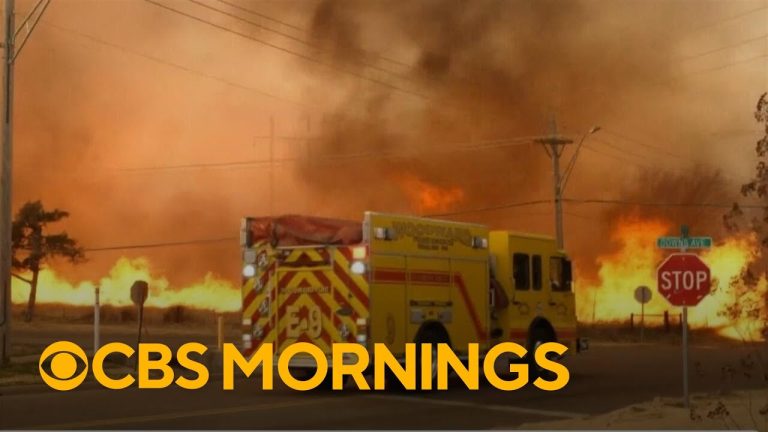
A house on an island in the Florida Keys was destroyed by fire this past weekend despite residents’ efforts.
No fire engines or firefighters were involved in the operation — and for good reason. Cook Island is only accessible by boat.
Monroe County Fire Rescue did not immediately respond to the blaze, so after the inferno finally started dissipating, neighbors took action. One neighbor rigged a pump using hoses and sea water from his boat, according to Local 10.
“We have no way to get to it — it was really a tragedy,” Chief James Callahan adding that crews eventually got a boater to take them out. “They were able to get us out there close to the island, but we still couldn’t get close enough to get on it. It was so shallow.”
The department, that covers 100 square miles, doesn’t have a fire boat.
“We’ve always known there’s problems should there be a fire out here, that comes with the turf. But the fact is, what we didn’t know was that there was no plan should such a situation arise.”
There are no roads. Residents collect rainwater in buckets and barrels and solar panels provide electricity.
Seattle firefighters and EMS personnel may get new protections under proposed legislation before city officials.
“SFD personnel have experienced more than 50 instances of this workplace violence in the last six months. Today, it’s not only occurring at incident scenes but elsewhere in the community as we perform other aspects of our job, such as during fire inspections or other routine duties,” IAFF Local 27 President Lt. Kenny Stuart told KCPQ reporters.
The current law makes it illegal for people to interfere with police officers but doesn’t mention other responders such as EMS or firefighters.
Asst. Chief Chris Lombard said: “Assaults and threatening behavior towards our unarmed members who are simply trying to help others have become a regular and unacceptable part of these responses. Our members are experiencing this with such regularity we’re starting to have trouble of even getting them to continue reporting them. They’re feeling almost hopeless in some of these regards.”
Lombard added that some of the assaults have had serious results. “SFD members have been hospitalized from assaults. Some have required surgical intervention, they’ve been punched, they’ve been threatened with death and much more.”
Stuart and Lombard say among the items used rebar, wood sticks, hammers and glass. They’ve also been spat on.
“Everybody knows what it feels like to be threatened with violence. It changes your focus of attention and what we’re looking for here is the ability for firefighters to focus 100 percent of their attention and efforts on the job at hand,” said Stuart, a 27-year veteran.
Councilmember Lisa Herbold who introduced the legislation explained: “Every day, Seattle’s firefighters are rushing into danger to protect us, whether it be from a house fire, a car wreck, or an overdose. They do so unarmed, and often their life-saving work reviving a person makes it difficult to have any defensive awareness of a possible threat. It’s time we make sure we are doing all we can to protect them. This is a common-sense fix to Seattle’s laws that allows firefighters to focus on the dangerous work they do and makes us all safer.”
A furniture warehouse in Pompano Beach was evacuated for part of Tuesday afternoon following the deaths of two pest control workers and the hospitalization of a third over the weekend, according to authorities.
The Baer’s Furniture warehouse, 1589 NW 12th Ave., was evacuated at around noon Tuesday following reports that two employees of a pesticide company had died off-site after fumigating the location, the Broward Sheriff’s Office told the Miami Herald. Investigators say a third pest control worker was hospitalized.
As of Tuesday night, authorities hadn’t said what led to the deaths and illness. The workers’ identities and the name of the pest control company hadn’t been released.
The situation began Saturday after the three workers had completed their work.
Later that day, one of them began to feel ill and went to a hospital in Palm Beach County, said Carey Codd, a BSO spokesman.
“It was discovered later that day that the other two employees were found deceased,” Codd said in an email Tuesday. “One was found [dead] in Hollywood and the other in Boynton Beach.”
The worker who was found dead in Hollywood was discovered at about 9:45 p.m. Saturday.
According to the Hollywood Police Department, officers forced their way into a vehicle at the 1700 block of Taft Street after finding him.
“Hollywood Hazmat was called out, and no hazardous chemicals were found coming from the vehicle,” Hollywood police spokeswoman Deanna Bettineschi told the Herald in an email Tuesday afternoon. “Detectives are working on this investigation and waiting for a cause of death ruling from the Medical Examiners’ Office.”
In Boynton Beach, the second victim was found. Boyton Beach police hadn’t responded to requests for details Tuesday evening.
On Tuesday, in an abundance of caution, the warehouse on 1589 NW 12th Ave. was evacuated. Pompano Beach Fire Rescue inspected it for hazardous materials but found nothing of concern, authorities said.
The warehouse is less than a mile from Markham Elementary School, which went on a hold status, keeping everyone indoors, the South Florida Sun-Sentinel reported.
Baer’s Furniture employees returned to the building later in the day. Kari Fletcher, the company’s director of marketing, told the Herald in an email that no Baer’s staff has been injured.
A Robbinsville police officer was struck by a car along a New Jersey highway Saturday night as he was helping a motorist.
“There’s a parking lot right there, we’re going to push you into there okay?” Patrolman Connor Boyle is heard saying to the driver on the dashcam released by the department.
He landed briefly on the vehicle’s hood before falling to the ground, according to 6abc.
He was transported to a hospital for treatment. He was released on Monday but is using crutches.
Rachel Glatt,52, left the scene but was arrested later. She was charged with leaving the scene of an accident, careless driving and failure to change lanes for an emergency vehicle.
The incident reinforces the importance of moving over for emergency vehicles on the shoulder.
“Slow down when you see emergency lights, even tow trucks, and move over,” said Lt. Carlos Docarmo, station commander for New Jersey State Police’s Hamilton Substation.
New Jersey’s Move Over Law requires drivers passing an emergency vehicle to move over one lane if possible, and to slow down to below the speed limit.
Mayor Adams took the city’s robot dog for a walk Tuesday morning to praise its work in last week’s downtown building collapse — and to thumb his nose at critics of the emergency response pooch.
The mayor, who was joined by FDNY Commissioner Laura Kavanagh and other top city officials, appeared at the fire department’s Randall’s Island training academy for a demonstration of the robo-dog and used the event to drive home his support of it and other new technologies the city is now employing.
“We rolled out similar technology a few weeks earlier in Times Square. Some people called them toys,” Adams said of the city’s announcement two weeks ago. “This is not play time. This is real time.”
Last week, when a parking garage collapsed on Ann St. in lower Manhattan, the FDNY deployed its so-called Digidog to search for people trapped in the wreckage and survey the scene — a move Adams touted at the time because it eliminated the need to put firefighters in harm’s way. The robot and its handlers were engaged in a training exercise at a downtown high-rise when the garage came down and arrived about 15 minutes after the first distress call went out, Kavanagh said.
“The robotics members went to work quickly, suggesting that the robotic dog could aid in the operation,” she said. “Three drones were also deployed — one overhead to give a clear picture of what was happening on the roof and two inside to assess the situation in there.”
Adams noted that it was the first time in the city’s history that the FDNY and NYPD responded with drones and the Digidog, which is named Bergh. Fabien Levy, Adams’ spokesman, said the FDNY currently has one Digidog and the NYPD has ordered two.
“This is an administration that is not going to be fearful of using everything possible to save the lives of New Yorkers and to save the lives of first responders,” Adams said. “The benefits are not theoretical. Last week, we saw it in action.”
Critics remain skeptical, though.
The Surveillance Technology Oversight Project, a civil rights group, has criticized the robot as dystopian, calling it a “knockoff Robocop.”
And the Legal Aid Society is demanding that the City Council hold an oversight hearing.
“Mayor Adams continues to pour money into the NYPD’s bloated budget, enabling police to impose new, dystopian surveillance technologies throughout the city without meaningfully engaging New Yorkers in a conversation about whether this is how we want to live,” said Legal Aid spokesman Redmond Haskins. “The Legal Aid Society urges the City Council to hold an immediate oversight hearing to further investigate the use of these technologies and to afford all New Yorkers the chance to have their voices heard.”
A Council spokesperson said the body will delve into the city’s tech purchases at an upcoming budget hearing scheduled for May 17.
Asheville firefighters had close calls at a house fire Monday.
AFD Fire Chief Scott Burnette told WLOS three firefighters who lost the hose line were trapped in the room by the flashover. They bailed out a window to escape.
One firefighter suffered smoke inhalation and was transported to the hospital.
Chief Burnette said flashovers typically happen before firefighters get there. He added that a situation like this puts all crews on high alert.
“It definitely puts everybody into high gear in the department, especially the firefighters that are on the fire ground,” Burnette told the media. “It puts you into fire rescue mode and their efforts are 100% focused on saving one of their own. Firefighting is one of the most dangerous professions and our firefighters are faced with those dangers. When a flashover occurs, it puts them at the most danger of getting injured or losing their life.”
The chief went on to explain another close call at the incident: “At the exact same time another firefighter from another company fell through the floor all the way through the basement. He was able to get himself out with some assistance from another company that was in the basement.”
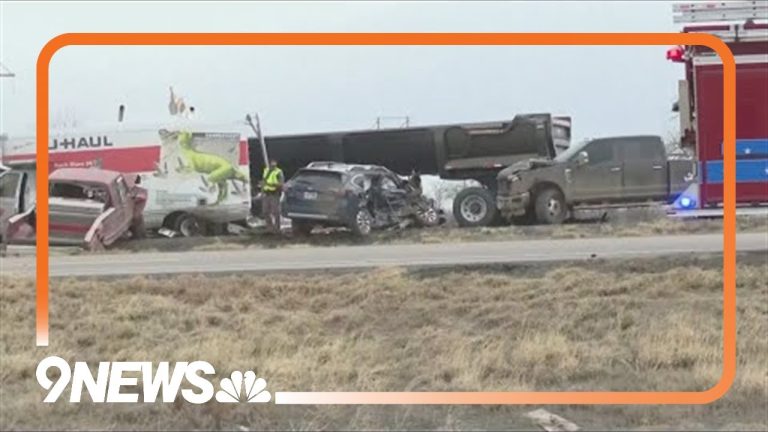
A 27-year-old father and volunteer firefighter died when the firetruck he was driving ran off the road, Tennessee officials and loved ones say.
Roy Sewell was driving a firetruck around 4 p.m. on Monday, April 24, when the truck ran off the right side of the road into an embankment and flipped, Tennessee Highway Patrol officers told WATE. No other vehicles were involved in the wreck.
Sewell was responding to a request for a landing zone for a Lifestar helicopter transport when the wreck occurred, according to the Tazewell Police Department.
The Tennessee Highway Patrol did not immediately respond to McClatchy News’ request for comment.
“With a saddened heart, we mourn the recent loss of our fallen brother, Captain Roy Sewell,” the department wrote on Tuesday. “Roy represented the best of us all. We love you brother. Greater love hath no man than this.”
Sewell and his wife, Randi Meshea Sewell, had a daughter and were expecting their second child in July, according to a Facebook post.
“Last I spoke to him, he was telling me how excited (and nervous!) he was to be expecting a baby boy this summer,” Paige Smith wrote in her post. “The world isn’t as bright today. It’s quieter too. The silence is deafening.”
Other loved ones shared tributes to Sewell on social media.
“Yesterday doesn’t feel real,” Sewell’s sister-in-law wrote in a Facebook post. “If you knew Roy, you knew that he was one of the nicest people you’ve ever met. I was blessed to have known Roy and even more blessed to call him my brother in law.”
“Roy truly gave his all to his family first, then this department. His willingness to serve and heart for his brotherhood and community went unmatched,” Sewell’s brother said in a comment. “We’re all shocked and words are hard to come by, but one thing rings true and it’s that he was doing what he loved.”
Tazewell is about 50 miles northeast of Knoxville.
Tarrant County College Coordinator of the Basic Firefighter Training program Bill Pearson graduated his 100th recruit class last week.
When Bill Pearson was tapped to run a new fire academy at the then Tarrant County Junior College in 1989, he was in the midst of his career with the Fort Worth, TX, Fire Department, and years after he retired, this role keeps him involved with the fire service he loves.
On Saturday, the day after Tarrant County College’s (TCC) Fire Service Training Center celebrated the graduation of their 100th daytime recruit class, graduates, former faculty and former and current instructors came together to celebrate the milestone and reflect on how the fire service, firefighter training and education has evolved.
In the late 1980s, with the Fort Worth area growing, the college wanted to add a full fire academy to help train local fire department recruits and those seeking fire service jobs for the skills they needed.
After a few phone calls, they began talking with Pearson, a former Granbury, TX, high school teacher and coach of both basketball and football. He left the education field to become a Fort Worth firefighter in 1980.
Pearson was no stranger to teaching fire recruits – twice he worked at Fort Worth Engine 31 – which was the city’s fire academy for many years. There, recruits used the station to understand station life, the classroom to learn skills, the training tower to hone their skills and rode along with Engine 31’s crews, working alongside some of the city’s best firefighters.
The move to the college was a natural fit for him.
“It was amazing. We had a humble start with our classroom in small office space,” Pearson recalled. “It was due to the vision of the administration, the desire to make a facility that would serve the fire community.”
They used a classroom in the primary education building and received a well-used donated pumper with Class 1 starting in October 1989 and graduating in February 1990. They also had a small training tower at the campus, in northwest Fort Worth.
Flower Mound, TX, Battalion Chief Scott Funderburg, a member of Class 1 that graduated in 1990, was there Saturday. Months after he graduated, he was hired by the Colleyville, TX, Fire Department because he already had the training.
“It’s amazing and I appreciate what they did in 1989 to give me a chance to start my career and I’m fixing to hit 33 years in the fire service,” Funderburg said at the celebration. “It’s been an honor to be in Class 1 and to get the knowledge and, and then to come back and see what they’re doing.”
“I can remember coming out here when we’d go to the burn tower in Arlington and we were burning tires and mattresses to make black smoke, which that wouldn’t happen anymore,” he said.
Pearson, whose title is Coordinator of the Basic Firefighter Training program, said the academy’s reputation quickly caught on in the early 1990s and departments would send sponsored (paid by the department) recruits. Others who wanted jobs in smaller departments would pay for the academy out of their own pocket (non-sponsored) to get their careers started.
“It was the instructors who made it a successful program,” Pearson said. “Fire departments saw that our students were passing the state test, so they would start sending their students out here.”
Since Class 1, the college has run 100 daytime academies with a total of 2,478 students graduating. They have also run 17 nighttime academies and several hybrid/weekend academies. Both Class 1 and Class 100 had a total of 24 recruits graduate.
Pearson says he has seen sons of fathers whom he taught, the daughter of a recruit he taught and the son of a mother who went through the academy.
Bill Pearson reflects on the changes at Tarrant County College’s fire program since it started in 1989.
“Sometimes they’ll come up to me and say they were in a class, but I don’t remember their name. If I do remember their name, it probably was not a good thing,” Pearson said with a laugh.
Graduates have gone on to serve as fire chiefs across the state and beyond, school officials boasted.
A handful of today’s adjuncts instructors went through the TCC academy over the years and returned to teach, using their various experiences – including training officers, Urban Search and Rescue Team members, leadership instructors and those focused on other topics.
Jacob Smith, a battalion chief with the Euless, TX, Fire Department, graduated from TCC’s Night Class 10, paying his own way as a non-sponsored student. He was also going through a paramedic class at the same time.
Within two months of graduating from TCC, he was hired by the fire department and went right to work.
“What’s special for me is, going through the academy here with Chief Pearson, and now I’m back here working with him,” Smith said. “It’s pretty neat to see it all go full circle.“
“The teaching style has had to change,” Smith said, reflecting on differences from his time in the academy. “In just the last 10 years that I’ve been involved in as an instructor out here, we’ve had to redevelop our instructional processes a bit, because it’s a different generation of students.”
Euless Fire Department Driver/Engineer Ryan Hayes, a member of Day Class 30, now works as an adjunct instructor.
“I don’t think they realize just how fortunate they are to have all these offerings available to them,” Hayes said about those who go through the academy. “We didn’t have nearly the level of instructors we did when I came through here. There is so much knowledge out here, and sometimes we take it for granted because we’re here all the time.”
Hayes likes the depth of the classes they offer, adding “I’m just proud to be out here and to be a part of it.”
“It’s just amazing that they go through the program, get a job, then come back and be a part of the academy,” Pearson said.
During the ceremony, instructor Jeff Holloway – who has both taught and written for Firehouse – received the Instructor of the Year Award from the Texas Area Fire Educators association for his dedication to firefighter education at the college and beyond.
He acknowledged the college, saying it is where he began his education and was thankful for the opportunities he has received since.
Pearson said the college created an Outstanding Alumni Award program to highlight the extraordinary work graduates have done in the field.
Burleson, TX, Firefighter Dallas Fowler was the first recipient for his efforts in the rescue of a worker trapped over 700 feet on a transmission tower.
“It was a tremendous rescue that was seen around the world, and we were very proud of him for that.”
He recalled a recent recipient, Irving, TX, firefighter Adam Donahue, who was seriously injured after being struck by a vehicle at an accident scene and, after rehabilitating and returning to work, suffered another injury during a training evolution.
“He was a tremendous student, a tremendous person, and an outstanding firefighter,” said Pearson. “I hope he gets his career back on track.”
The fire program dedicated a bell that will be used by future firefighter recruit classes on Saturday.
At the ceremony, the school dedicated an ornamental bell that will be placed in the fire station for recruits to ring at future graduations. Pearson was gifted a plaque with a replica of the bell.
Pearson acknowledged the school’s board of trustees for supporting the program, the growth of the facility and the purchase of modern fire apparatus to make sure students have reality-based training opportunities.
The sprawling complex has evolved and, in 2001, a whole new facility with multiple burn buildings, a training tower, an intense swift water rescue training area, multiple technical rescue training areas, aircraft and rail car props, and an extrication pit was dedicated.
“Many countries who look to us, not only as a benchmark not only for the quality of education but the outstanding facility,” TCC Northwest President Zarina Blankenbaker said.
“It’s just amazing to be a part of the process. I have been so blessed to be a part of it, and the technology part of it has grown, and starting to get into more technical classes like drone classes and special ops,” Pearson said. “We have swiftwater rescue classes and students go through these classes, then they go out and perform some type of rescue because of that training they went through out here. So that just makes us feel good about what we do.”
A Preston firefighter has a long road to recovery before he can fight fires again, but he says he knows he dodged a bullet.
Capt. Jared Bennett and another firefighter were headed to a call earlier this month when he had to take evasive action to avoid being hit by a car. The department’s only engine rolled into a ditch, according to KY3.
“I keep telling everybody I’m probably the luckiest person in the world. In that situation, I mean, that’s a one-in-a-million situation to come away from that.”
He suffered a collapsed lung and broke all but two ribs. Doctors had to put his chest back together.
Bennett said when a car crossed the yellow line beside them, he drove the engine onto the shoulder. Getting it back on the road proved fruitless. “The truck didn’t even want to move that direction, honestly, Then, once it did, it came out with a vengeance.”
He was ejected through the windshield as the rig rolled. He and Firefighter John Sanchez were left lying in the road.
Bennett’s father, Preston Fire Chief Brian Bennett, was driving behind them. He was warned on the radio by a firefighter who said there was a car in his lane.
Nothing could prepare him for what he encountered seconds later when he rounded a curve.
“You know, there’s a lot of things that we can get by with, had they been texting or lighting a cigarette, on the phone, whatever, if they were to just stop. Instead, they left my son, a firefighter, laying in the middle of the highway, basically, as roadkill,” the chief told a reporter shortly after the wreck.
The chief urged drivers to slow down and pay attention.
Although his passion for firefighting is on hold for now, the captain said he forgives the people who left him and Sanchez lying in the roadway. He said he hoped they were going to get help.
“I can’t hold that against anybody because not everybody has that type of skill set. I mean, not everybody has done that before.”
He’s overwhelmed by the encouragement from and is anxious to return to the firehouse.
“I’m just walking around and bopping and doing my own thing. I honestly feel like it’s all the support. I just feel so uplifted, and I feel I feel good.”
April 25, 2023 “..The turnover rate is high, pay is low…members of this unit are exhausted from forced overtime and lack of days off,” a consultant said of the Hialeah center.
The Hialeah, FL 9-1-1 center is in crisis due to a staffing shortage.
Hialeah is facing a crisis at its 911 emergency call center.
Five years ago, 26 employees left, including 16 teleoperators, and the center hasn’t recovered.
The vacancies represent 15% of the labor force required by the department, which until now hasn’t been able to fill the jobs, Jorge Llanes, police commander and director of the call center, told el Nuevo Herald.
Now employees are publicly asking for help.
Andrew Glassmer, a police radio dispatcher for the Hialeah 911 communications department, told the City Council on March 28: “We have severe staffing shortages, and unfortunately a lot of the issues with our staffing are retention issues. We lose them to other agencies that offer a more tempting offer like the retirement pension.
Hialeah eliminated pensions for public employees in 2014, under the administration of Carlos Hernández, due to a budget deficit of $28 million, Local 10 reported at the time. Now, only police officers, firefighters and those employees who were already contributing before that decision was made have the benefit.
The employees hired after cut have access to a 401(k) plan. The city spends about $35 million a year to pay existing pensions.
In six months, more employees left
When Hialeah released its 2023 budget in September 2022, it projected that it would have 55 employees in the 911 communications division.
Six months into the budget, the number of personnel dropped to 43.
And the exodus has continued.
In the breakdown of the list of employees, provided by the city’s human resources department, 13 people working in the 911 center left in the past six months. Among them:
▪ A police lieutenant
▪ An electronic technician
▪ Two complaint officers responsible for rapid screening of phone calls
▪ Two public safety tele-communicators
▪ Four police radio dispatchers
Only one new employee was added to the 911 functions, a complaint officer.
For Glassmer, the police radio dispatcher who has been with that department for six years, “it’s been a downhill trend since the first day I got here. Unfortunately, we need his help, we are very, very desperate,” he said.
Glassmer warned that “the future for our division are poor if drastic and rapid changes are not made.”
Of the employees who remain in the emergency service, only 18 are call operators, according to public records obtained by el Nuevo Herald.
The department has another 10 public safety tele-communicators, but only part-time, many of them qualified primarily to handle administrative but not emergency, calls. According to Llanes, the city has only three people who can handle all types of emergency calls: police, medical and fire.
Most of the tele-operators have training in one of the three areas but not in all, which requires an additional person to handle each situation.
On an average day, it’s stipulated that there be five tele-operators, a radio dispatcher, three emergency operators and a supervisor. But often there are one or two fewer people, which forces the staff on duty to work up to a 16-hour shift, Llanes said.
The department with the lowest salaries in the city
Recruitment for the center has been an issue in Hialeah.
Said Human Resources Director Elsa Jaramillo-Velez: “We have a problem with recruitment. The salaries in this department are quite low. They are the lowest in the city. We are having a very hard time recruiting dispatch operators or complaint officers.”
The starting salary in the 911 division is $30,186, about $15 an hour, for a 37.5-hour week, which due to lack of personnel frequently exceeds 40 hours a week.
However, Jaramillo-Velez said that some of the employees in the division “make even less than that,” around $27,000.
But in the case of the 10 part-time people, their salary is different. They earn between $30 and $40 an hour, more than double ($15) than those full time, stipulated for an eight-hour shift. But due to low staff, they have 12-hour daily shifts, Llanes said.
Hialeah has just approved a new contract with the union, the American Federation of State, County and Municipal Employees, which brings together 911 employees, for which they received a 3% salary increase.
The city is offering as an incentive, to attract new workers, a bonus of $1,500 as soon as they join. The bonus is given out under the condition that they remain in the department for at least two years. If they leave earlier, they would have to return the money.
Llanes said that when the Hialeah center is overwhelmed with calls, some are redirected to Miami-Dade County until they can be picked up again by the city.
Even if the city were able to fill all 911 vacancies immediately, their professional practice doesn’t start the day they are hired.
For a new recruits to start answering unsupervised calls, they must first do 232 hours of communication training, about four months, to obtain Florida certification.
But they are not yet prepared to deal with police, medical or fire emergencies. To answer a call of any type of emergency, they must spend at least two years in training.
Unit requires immediate attention
Sixteen months ago, when a replacement for the police chief was being sought, the consulting firm Colina Group warned in a report on the police department, which includes the 911 communications center, that “this unit is very neglected and needs immediate attention.”
In the report, the consulting firm said that “an investment now will save money in the long term. The turnover rate is high, pay is low, recruiting is a problem, and members of this unit are exhausted from forced overtime and lack of days off.”
The president of the fire union, Eric Johnson, asked: “Do you want to retain people? Do you want to know where the operators go? They go to Miami Beach, they go to the county.”