A tanker truck carrying about 25,000 lb of anhydrous ammonia leaked while parked behind a hotel in Weatherford, Oklahoma. AP News+2AP News+2
Dozens of individuals were hospitalized, including several in critical condition; hundreds of residents evacuated or ordered to shelter in place. People.com+1
The leak forced closure of local schools, evacuation of nursing homes, and deployment of hazmat and environmental teams. New York Post+1
Incident Overview
In the late evening hours of November 12, 2025, a tanker truck parked behind a hotel in Weatherford ruptured, releasing a large volume of anhydrous ammonia into the surrounding area. The chemical cloud spread into the hotel and neighboring areas, prompting immediate emergency response and evacuations. People.com+1
Emergency crews from local fire departments, hazmat units, and the National Guard responded. Hospitals treated dozens of people exhibiting signs of ammonia exposure—breathing difficulties, eye and skin irritation—with some patients in critical condition. New York Post+1
Hazards & Response Considerations for Fire/EMS Teams
This event underscores the severe risk posed by large-scale chemical releases in civilian settings. Key lessons include:
Rapid escalation & evacuation: Burn-scar or wildfire terrain isn’t the only place for major hazards; chemical storage and transport near public zones can trigger mass casualty events.
Monitoring & detection: Anhydrous ammonia is a highly toxic gas; breathability can degrade quickly and exposures can cause serious or permanent damage. CDC+1
Inter-agency coordination: Fire, EMS, hazmat, environmental protection (EPA), and law enforcement all played major roles in this incident.
Community protection & logistics: Temporary shelter, safe re-entry, and decontamination of exposed individuals and structures are critical in such incidents.
Moving Forward
As investigations continue into the exact cause of the leak (likely a valve or seal failure on the tanker), fire and EMS agencies should review their readiness for chemical-hazard scenarios—even those not tied to industrial sites. Training in ammonia detection, evacuation procedures, and multi-agency response is essential for protecting both responders and civilians.
About MES Brief
MES Brief, a publication of MES Life Safety, delivers actionable insights and frontline-ready content for fire, EMS, and public-safety professionals. 📞 Contact: 1(877)711-5557 🌐 Visit: www.meslifesafety.com
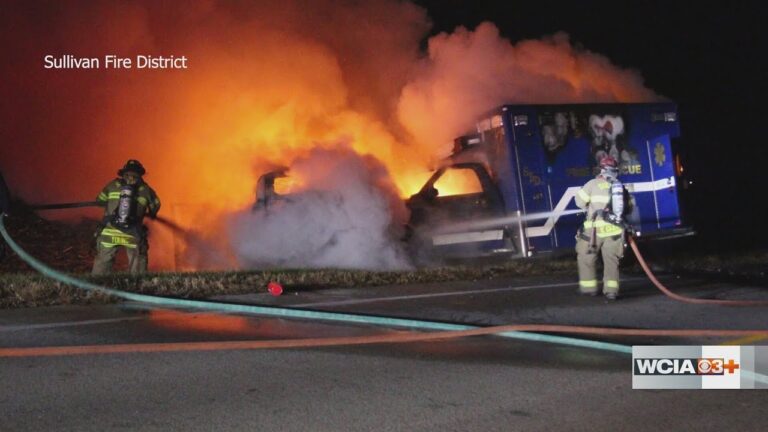
A Sullivan, Illinois ambulance collided and caught fire while responding to a call, leaving two firefighters injured.
The unit was fully involved in flames upon arrival of additional crews; the firefighters were transported for treatment.
The incident underscores the risks EMS and fire personnel face during emergency vehicle operations.
Incident Overview
In Sullivan, Illinois, an ambulance from the local fire department was involved in a serious crash that resulted in the unit igniting and sustaining heavy damage. Two firefighters aboard were injured during the event and were transported to a hospital for evaluation. The crash is under investigation by local authorities and the fire department’s vehicle-safety team.
Upon impact, the ambulance was reported to have become engulfed in flames, prompting response from multiple departments. Crews arrived to a scene where the apparatus was already burning, requiring rapid suppression, firefighter protection, and patient care—none of which could proceed normally due to the blaze.
Operational Lessons for EMS & Fire Teams
This crash offers key take-aways for departments tasked with emergency response:
Vehicle safety under emergency response: High-speed or lights-and-sirens operations drastically increase crash risk; departments must enforce rigorous driver training and maintenance programs.
Rapid transition from transport to fire scenario: When vehicles become fuel-fed hazards, crews must quickly shift to firefighting posture, protective positioning, and scene control.
Responder injury potential: The fact that the firefighters aboard were injured underscores the vulnerability of EMS crews not only in the patient-care role but also as occupants of emergency vehicles.
Post-incident review and prevention strategy: A full departmental review of crash dynamics, vehicle integrity, occupant protection and response protocols will strengthen future prevention efforts.
About MES Brief
MES Brief, published by MES Life Safety, delivers actionable insights and frontline-ready content tailored for fire, EMS, and public-safety professionals. Stay informed. Stay ready. 📞 Contact: 1(877)711-5557 🌐 Visit: www.meslifesafety.com
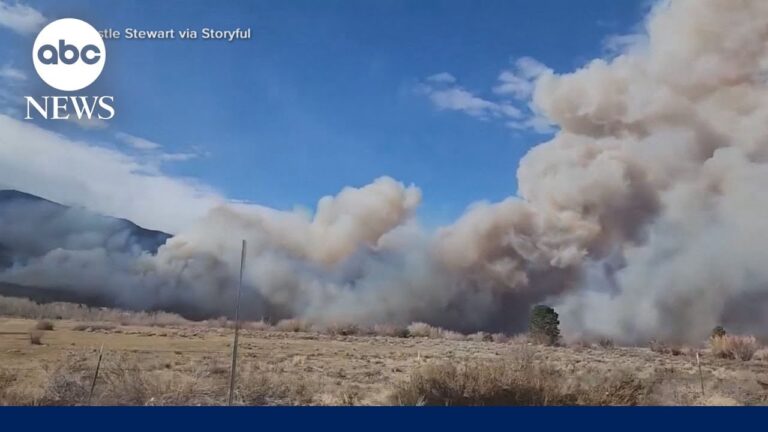
Emergency management officials in Southern California have issued evacuation warnings and orders for communities in recent wildfire burn scars, ahead of heavy rainfall.
Burn-scar terrain is especially vulnerable: charred soil loses its ability to absorb water, making flash floods, debris flows, and mudslides far more likely.
Residents in affected zones are urged to evacuate early, secure pets and livestock, and stay clear of arroyos, drainage channels and closed roads until the storm threat passes.
Storm Threat Amplified by Burn Scars
As a powerful late-winter storm moves across Southern California, fire and emergency officials are watching vulnerable zones closely. Regions that recently burned now face an elevated risk of urgent weather-related emergencies. These areas are under Evacuation Warnings or Orders, especially where steep slopes, loose soil and limited vegetation increase hazard potential. NBC Los Angeles+1
When intense rainfall hits a burn scar, the water hits ground that behaves like pavement — instead of soaking in, it runs off rapidly, carrying debris, boulders, and mud down slopes. Cal OES News+1
Operational Considerations for Fire & EMS
This scenario requires a different preparedness mindset than typical wildfire response:
Advance hazard mapping and coordination with public works to monitor drainage channels and burn scar runoff paths.
Pre-positioning of strike teams and swift water/rescue resources in high-risk zones.
Public-information campaigns & early evacuations in burn-scar neighborhoods ahead of rainfall.
Post-event operations: clearing channels, assessing road/bridge damage, and supporting community recovery.
Looking Ahead
These “second-phase” hazards — flooding and debris flows after the fire — frequently catch communities off guard. For fire and EMS agencies, readiness must move beyond flame suppression to include weather-driven rescue and recovery operations in vulnerable terrain.
About MES Brief
MES Brief, a dispatch from MES Life Safety, delivers actionable insights and frontline-ready content for fire, EMS and public-safety professionals. Stay prepared. Stay ready. 📞 Contact: 1(877)711-5557 🌐 Visit: www.meslifesafety.com
A three-alarm fire tore through a historic former police precinct building in the Hampden neighborhood of Baltimore.
Heavy fire broke out on the third floor; businesses inside evacuated safely.
The cause is under investigation; crews worked for hours to extinguish hotspots and secure the structure.
Historic Structure Engulfed
In the early morning hours of November 11, 2025, firefighters in Baltimore were called to a blaze at the former police precinct building in the city’s Hampden neighborhood. Upon arrival, heavy smoke and flames were already visible from the third floor, signaling a serious and quickly evolving fire incident.
The two-story building, originally designed as a precinct house decades earlier, had been repurposed for businesses. All occupants were safely evacuated without reported injuries.
Extended Firefighting Effort
Fire crews escalated the response to three alarms as fire spread quickly in the aged structure. High winds added to the complexity, fanning flames up the exterior and increasing collapse risk. Crews remained on scene for several hours, combating remaining hot spots and conducting thorough checks of fire extension.
The building’s vintage construction—wood framing, legacy finishes, and altered interior spaces—posed additional hazards for engine companies and ladder crews alike. Ladder operations and collapse zone awareness were prioritized.
Operational Lessons for Fire Departments
This incident serves as a strong reminder of the unique risks posed by older and repurposed structures. Key take-aways include:
Building age and construction type matter: Historic buildings often lack modern fire‐resistive features; fire spreads faster and collapse risk is elevated.
Wind and weather amplify danger: External conditions can turn a fire into a rapid-growth event, requiring quick escalation of resources.
Evacuation and occupant safety: Ensuring all individuals are clear before aggressively attacking the fire is vital—especially in mixed-use or business-occupied structures.
Post-fire operations: Hot-spot search, thermal imaging, structural integrity checks, and coordination with building owners are critical for full resolution.
About The MES Dispatch
The MES Dispatch, a publication of MES Life Safety, delivers frontline stories, insights, and lessons from fire, EMS, and law-enforcement incidents. Our mission: help first responders stay informed, prepared, and protected.
A small turboprop aircraft loaded with hurricane relief supplies bound for Jamaica crashed into a retention pond behind a home in Coral Springs, Florida shortly after take-off from Fort Lauderdale Executive Airport.
Emergency services responded rapidly, but initial search efforts found no survivors; the mission shifted from rescue to recovery.
The flight was part of a humanitarian relief effort following Hurricane Melissa, which caused widespread damage in Jamaica.
Mission of Mercy Ends in Tragedy
On the morning of Monday, November 10, 2025, a small plane departing Fort Lauderdale Executive Airport on a relief-mission bound for Jamaica plunged into a residential retention pond in Coral Springs. The aircraft was carrying supplies destined to support Caribbean communities recovering from Hurricane Melissa.
The crash occurred mere minutes after take-off. Surveillance and witness footage show the plane clipping trees and fences before descending into the water behind a home in the 5500 block of NW 57th Terrace. Fire-rescue units from Coral Springs‑Parkland Fire Rescue and neighboring agencies arrived on scene quickly, but found no survivors.
Operational Impact for Fire & EMS Teams
Although this incident did not involve a fire-ground operation, it holds several critical lessons for fire service and EMS leadership:
Rapid incident evolution: A humanitarian mission flight crash in a residential zone required immediate multi-agency rescue and recovery response.
Hazard assessment on arrival: Although no fire consumed the structure or homes, fuel contamination, wreckage in water, and structural debris presented environmental risks.
Community resilience & inter-agency coordination: The broader mission — hurricane relief for Jamaica — highlights how fire/EMS units may interface with humanitarian logistics and aircraft operations.
Deputy Chief Mike Moser of Coral Springs-Parkland Fire Rescue noted that crews arrived to a partially submerged wreckage scene and quickly transitioned from rescue to recovery mode.
Looking Ahead
The National Transportation Safety Board (NTSB) is investigating the accident. While the full cause is still under review, fire and EMS agencies should use this event as a reminder: even relief-missions and flights may overlap into our jurisdiction, and readiness for off-site rescue, environmental hazards, and joint operations is essential.
About The MES Dispatch
The MES Dispatch, presented by MES Life Safety, delivers frontline stories and insights for fire, EMS, and law-enforcement professionals. Stay informed. Stay ready. Stay safe.
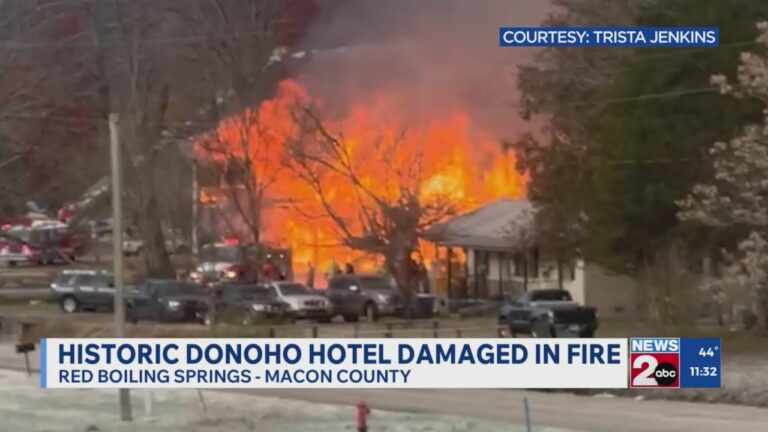
A fire on the morning of November 12 2025 destroyed the century-old Donoho Hotel in Red Boiling Springs, Macon County, Tennessee.
Firefighters identified heavy fire on arrival, believed to have started in a second-floor electrical equipment room.
The 1914-built structure, a historic resort landmark, is considered a total loss; no firefighter injuries were reported.
Historic Landmark Engulfed
In the early hours of Tuesday, November 12, crews from the Red Boiling Springs Fire Department responded to heavy smoke and flames at the Donoho Hotel, a storied resort built in 1914 and deeply woven into the history of the Red Boiling Springs mineral-spring community. Upon arrival, firefighters found fire heavily involved along the side of the two-story white-frame building with its signature full-length porches.
Investigators believe the blaze originated in an electrical equipment room on the second floor, and rapidly spread through the aging structure’s wood-frame construction. Chief Randall Bray praised mutual-aid crews for their support under “challenging conditions,” noting the speed of fire spread and structural complexity.
The Impact on the Community
The Donoho Hotel was more than lodging—it was a living relic of the early twentieth-century resort era that drew visitors to Macon County’s famed mineral springs. Its loss is being felt deeply by residents and local businesses alike. Three occupants escaped unharmed, but the building is now deemed a total loss.
Local authorities have launched an investigation into the exact cause of the fire. Meanwhile, the community faces the long path of recovery and decisions about preservation, rebuilding, or reclamation of the site.
Operational Takeaways for Fire-EMS Teams
Aging wooden structures—especially those with historic status—pose heightened risk of rapid fire spread and collapse.
Electrical equipment rooms in older buildings are potential ignition points; proactive inspection and suppression strategies are critical.
Mutual-aid coordination proved essential here: multiple departments responded and worked together under complex conditions.
Community relations matter: Loss of landmark structures affects not just property but cultural identity and public morale.
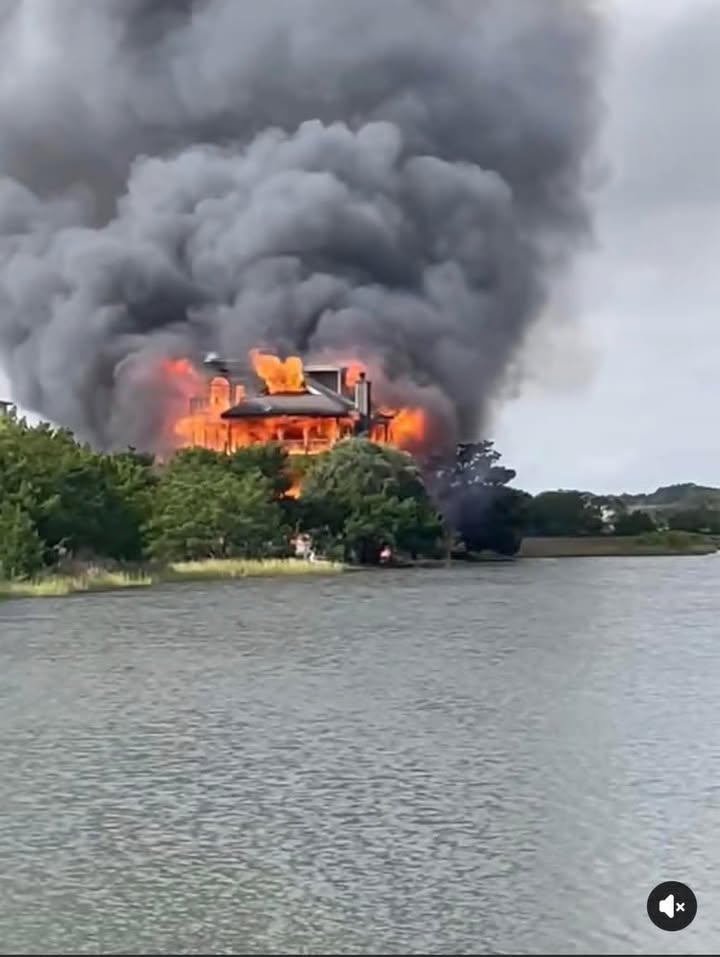
Due to limited access, St. Paul Fire District crews used canoes and kayaks to get to the house on Edisto Island.
The husband of a South Carolina Circuit Court judge was injured when he jumped out a window to escape a massive fire.
Judge Diane Goodstein was walking her dogs nearby on Edisto Beach when the house caught fire Saturday.
Neighbors with a canoe helped paramedics reach and rescue former South Carolina Sen. Arnold Goodstein. Crews used a rope to pull him from the terrain, The Post and Courier reported.
“Due to the remoteness and layout of the lot, the occupants had to be rescued from the backyard via kayaks and brought to Colleton County EMS where they received medical aid,” St. Paul Fire District officials wrote.
One of the three injured was flown to the Medical University of South Carolina.
Sources said the occupants jumped from an elevated first floor to escape the fire.
Investigators with South Carolina Law Enforcement Division (SLED) are investigating.
Goodstein, who has served on the state judicial bench since 1989, had been the victim of previous death threats, The Guardian reported.
She recently issued a temporary injunction on the release of state voter files that the U.S. Justice Department requested.
But, that ruling was overturned by the state supreme court.
Firefighters were battling a blaze at a Chevron refinery in Southern California late on Thursday, company and government officials said, after a massive fireball erupted at the facility.
Firefighters were battling a blaze at a Chevron refinery in Southern California late on Thursday, company and government officials said, after a massive fireball erupted at the facility.
It was not immediately clear what caused the blaze, which was burning in El Segundo, a city in Los Angeles County.
“All refinery personnel and contractors have been accounted for and there are no injuries,” Allison Cook, a Chevron spokesperson, told ABC News.
Gov. Gavin Newsom was briefed on the fire, his office said.
“Our office is coordinating in real time with local and state agencies to protect the surrounding community and ensure public safety,” the office said in a statement.
The sprawling refinery, which is located just south of Los Angeles International Airport, has its own fire department on site, according to its website. Chevron’s firefighters were joined by emergency personnel from El Segundo and Manhattan Beach in responding to the “isolated” fire within the facility, the Chevron spokesperson said.
“No evacuation orders for area residents have been put in place by emergency response agencies monitoring the incident, and no exceedances have been detected by the facilities fence line monitoring system,” the spokesperson said.
L.A. Mayor Karen Bass said she’d been briefed on the fire. She also said she’d spoken with Holly J. Mitchell, the supervisor who represents El Segundo.
“LAFD stands at the ready to assist with any mutual aid request. There is no known impact to LAX at this time,” Bass said on social media. “We will continue to monitor this situation.”
A 3-hour shelter-in-place order was issued for areas within the Tree Section of Manhattan Beach, according to Alert SouthBay. “Bring all people and pets indoors,” the alert said. In an earlier social media post, the alert system said, “There is NO PUBLIC threat at this time and NO evacuation orders in place at this time.”
The fire department in nearby Torrance, California, issued an alert, saying it was aware of the fire, but there was “no impact” to the city.
This is a developing story. Please check back for updates.
ABC News‘ Naomi Vanderlip contributed to this report.
Review shows extreme hoarding caused one fatal floor collapse and fueled seven fatal fires, underscoring risks as firefighters struggle through debris-filled homes
By Christine Dempsey. The Hour
GLASTONBURY, Conn. — The discovery of a Glastonbury woman’s remains under a mountain of trash in her own home, seven months after she was reported missing, shocked Connecticut and made national headlines. But 73-year-old Mary Notarangelo wasn’t the first state resident to be found dead in a pile of her own garbage, and she may not be the last.
While deaths from hoarding are rare, a CT Insider review of media and police reports from the last 11 years shows it directly led to at least one death and was a factor in more than a half-dozen others, most involving fires.
Perhaps the most unusual case was the 2014 death of a 66-year-old Cheshire woman who fell to the basement when her floor collapsed under the weight of waist-high debris. Beverly Mitchell died of traumatic asphyxia after suffocating on her own belongings, medical examiners said. Unlike Mitchell’s, the cause of Notarangelo’s death could not be determined.
Hoarding played a major, if less direct, role in other deaths, adding fuel to fires from which it was difficult to escape. They include:
The 2014 death of a 43-year-old Bridgeport mother in a fire that seriously injured her young daughter and the girl’s father. The mayor attributed the fire to hoarding;
The 2017 deaths of two people in separate fires in Norwalk, both of which involved hoarding, officials said;
The 2022 death of a grandmother in East Windsor; firefighters said they were hampered by high winds and hoarding;
The 2023 death of a 22-year-old Hebron man after hoarded items kept him from getting out of his house during a fire;
Last year’s death of a Stamford man, 67, whose body was found amid clutter after the fire was out, firefighters said;
In August, the death of a 75-year-old woman two weeks after she escaped a fire despite clutter that kept crews from going into her burning Killingly house.
Hoarding is a mental health condition in which people have trouble parting with items — including things that have no value — to the point where their homes no longer have enough living space and are dangerous. It is believed to affect between 2-6% of the U.S. population, according to the state Department of Mental Health and Addiction Services. There’s treatment, but no cure, and the problems it creates are not easily resolved.
“It certainly is not a new phenomenon,” said David Tolin, a national expert and director of the Anxiety Disorders Center at the Institute of Living in Hartford. Still, the American Psychiatric Association didn’t label it as a disorder until 2013, said Tolin, who regularly appeared on “Hoarder,” a reality television show that revealed the struggles of people with the disorder.
Firefighters are often the first to encounter someone with the disorder, which creates a perfect storm of conditions for starting fires and keeping them going: Piled up newspapers, boxes and clothes near heaters or electrical wires can spark and then fuel a blaze so it burns hotter and spreads faster, said New Haven Assistant Fire Chief Dan Coughlin. The clutter also blocks crews trying to put out the fire, sometimes injuring firefighters, he said.
“You’re trying to get down narrow paths, carved out through debris,” Coughlin said.
Crawling on hands and knees
That is what happened on May 8, when five people, three of them New Haven firefighters, were injured in a Salem Street fire in which hoarding played a role, Coughlin said. They rescued a couple who crawled on their hands and knees to escape falling rubble from hoarding; the firefighters’ injuries were minor, and the two residents were expected to recover, he said.
Coughlin estimates as many as half of the city’s fires involve some degree of hoarding.
“We go to about 100-110 fires a year in New Haven, and about half of those involve hoarding,” he said. “It’s very common.”
Mike Thurz, chief of the Glastonbury Fire Department, said, “You’re probably going to find hoarding in every town.” He usually refers to the problem as “unkempt conditions” out of sensitivity for those involved.
Long before his department helped search for Notarangelo, Thurz had to climb a cluttered stairway to help a man having a heart attack on the second floor of his house.
“I was throwing things down the stairs to get to him,” he said. “He was having a medical emergency, and there was so much clutter, it was hard to safely get him to the ambulance.” Like the New Haven couple, the man survived, he said.
The fact that no one died that day at the Glastonbury scene or on May 8 in New Haven is a win for the two departments.
Hebron Fire Marshal Chris Bray wasn’t so lucky in 2023 — his first year in the Hebron job — when a resident died in a fire, likely because the man couldn’t escape the flames due to hoarding. There easily could have been more lives lost that night, he said.
Bray had been working with the family, a mother and her two grown sons, to make their Hope Valley Road house safer. He explained that the residents needed to stop blocking at least two exits, he said. Easier said than done.
One door was clear, but it was too difficult to immediately free up a second, so the family said they would use a first-floor bathroom window in the event of a fire. Bray made them show him how, having family members demonstrate, one at a time, how each was able to climb onto the vanity to get to the window, he said.
“They had to climb up on the toilet, and onto the counter,” Bray said, then “they had to remove the screen.”
“So they were able to demonstrate that they were able to get out that window. It was unorthodox, but it’s the best I could do without making things worse,” Bray said.
As it turned out, that’s how the fire victim’s brother escaped the night of the fire.
“I don’t have a single doubt in my mind that that saved this individual,” Bray said.
‘It’s a very delicate situation’
The patience Bray and his staff showed in working out a compromise is important when helping people with hoarding disorders, experts say.
It’s very common for someone with the disorder to resist attempts to make them safe. They are often emotionally attached to the items that are piling up in their homes.
“We want to be respectful,” Bray said. “It’s a very delicate situation.”
State Rep. Christopher Rosario, D- Bridgeport, said he was working as the director of the city’s anti-blight program when a local woman was struggling with a serious hoarding problem. Staff members were getting resistance, but things began to improve “the moment we started backing off with people showing up in uniforms, and bringing in mental health counselors,” he said.
“Once we started digging into the deep roots of what was going on, we saw changes,” Rosario said.
The changes didn’t happen quickly, though.
“It took a year and a half,” he said.
Elaine Daignault, director of human services in Westport, said a gentler, patient approach is the way to go.
“I think the biggest thing is for us to do it in a non-punitive, compassionate and humane way,” she said.
Daignault works with the neighboring towns of Weston and Wilton to help people who have excessive clutter through the Safe Homes Task Force. Task forces like Safe Homes exist around the state, although many are informal groups of town or city workers who respond to clutter once it becomes a public health and safety matter. In addition to fire and police departments, the local building, health and human services agencies usually get involved, as well as an outside mental health organization.
But if it’s hard to launch a quiet, multi-faceted effort to help people who hoard, it’s even harder to spot them in the first place.
“A lot of times, we don’t know what’s going on in somebody’s home,” Daignault said.
In the Hebron case, the Hope Valley Road home was already on first responders’ radar because of a large number of 911 calls — including false reports of fires — coming from the house and complaints from neighbors, town officials said.
And in the Cheshire case, there were complaints of smells coming from the woman’s house. The town worked with her to clean up her property and she did, but the behavior resumed, the health director said; town workers hadn’t worked with her in the year before her death. The house was eventually demolished.
In Vernon, neighbors’ complaints about odors in May of 2023 and, later, rats, led to a court process and declaration that a house on Warren Avenue was unfit for human occupancy. The resident left, and the town hired a private contractor to clean her house, which was boarded up.
‘Packed to the brim’
The deadly situation in Mary Notarangelo’s Glastonbury house was harder to spot. Despite floor-to-ceiling piles inside and unclaimed food deliveries outside, the house’s deplorable condition went undetected because the house is set back off the road, far from neighbors and shielded by trees. Mail piled up in her mailbox, however, and an acquaintance who occasionally helped her around the house eventually reported her missing. Conditions in the house were so bad that neither police nor firefighters could conduct a thorough search for her without first hiring an excavator. There was a seven-month delay in doing that while police tried to make sure she wasn’t on an extended trip.
Even at homes closer to the road, looks can be deceiving. Rosario said a staff member of a U.S. Congressperson from Connecticut ended up having a serious problem with clutter, something that shocked those who knew the person.
“The outside looked immaculate,” Rosario said. “It wasn’t until the neighbors started complaining of a stench…That house was packed to the brim.”
On the other hand, a house in Hebron that was the subject of a complaint because the resident’s belongings had spilled out onto the porch didn’t pass the test, Bray said. An inspection showed dangerous hoarding was not taking place. He used a measuring scale that Tolin helped create to make the determination. Called the Clutter Image Rating Scale, it has pictures of three different types of rooms, the kitchen, living room and bedroom. Each room is photographed nine times, with each picture portraying a progressively worse level of hoarding. At the ninth level, kitchen counters, tables, beds and dressers are no longer visible, having been completely covered with clothes, bags, boxes and garbage; anyone at Level 4 or higher needs help, according to the International OCD Foundation.
The scale, which is used nationally, allows the user to remove personal opinion from the decision-making process, Bray said.
“That allows us to look at it objectively,” he said.
2,000 pairs of shoes and missing cats
It’s not known exactly why some people compulsively save things, including things like trash that are not valuable.
Like many mental health problems, it is likely due to several factors, such as genetics and difficult life experiences, Hartford HealthCare says. Mary Notarangelo, who was a retired Bridgeport police detective, mentioned in her podcasts that she had a difficult childhood.
Two women with serious clutter in their homes had different reasons for their piles, according to a 2011 story by Hearst Connecticut Media Group. A 74-year-old Bridgeport woman said she liked to help people by storing things for them and collecting items to give to her church, “but now I can hardly move around in here, and my landlord wants to throw me out.”
Another woman, an 80-year-old from Milford, talked about the trauma she endured — such as domestic violence and a murdered son. She had more than 2,000 pairs of shoes and cats that she couldn’t always find amid the piles of dishes, books, coats and knick-knacks.
“I have two televisions in here somewhere, but I can’t find them,” she said.
And she alluded to a fire hazard: Her kitchen was so crowded, “I can turn the stove on with my butt, just going past it.”
The second woman was far from the only state resident thought to be hoarding animals. Animal hoarding also is a serious problem in Connecticut, with animal cruelty charges recently filed against three people accused of hoarding 18 cats and a dog in Cheshire and three more who had moved out of an Old Saybrook home, leaving knee-deep trash and more than 100 animal carcasses, police said.
Tolin said people with hoarding disorder are not able to separate what’s important versus what is not. Brain scans of those with the disorder show markedly higher levels of brain activity when faced with a decision about throwing something out than the scans of people who are not diagnosed with the disorder, he said.
When diagnosed people are asked to consider tossing something, Tolin said, “that section of the brain starts screaming.”
Although there is no cure for hoarding disorder, it can be treated. The Institute of Living holds classes with 8-12 people in each, Tolin said. Sessions last 4-5 months, and group members are expected to practice sorting and parting with possessions.
Cognitive behavioral therapy, a type of psychotherapy that aims to address negative thoughts and behaviors, is effective for hoarding disorders, Tolin said. Done in group sessions, the therapy allows patients to “make more efficient and value-oriented decisions about their possessions,” he said.
“People see dramatic improvement in their quality of life,” Tolin said of his patients. But there are no guarantees.
“We can reliably make people better,” he said, “but we can’t make them completely well.”
How to respond to signs of hoarding disorder
People who want to help those with hoarding disorder are likely to encounter resistance, experts say. Those with the disorder often feel anxious when they have to make a decision about throwing things out.
The Connecticut Hoarding Working Group, formed in 2014 to provide resources that help resolve problems around hoarding, suggests that those working with people with the disorder:
Wait to enter the home until it’s safe;
Treat the occupants with respect and create trust by building a rapport with them;
Refrain from appearing shocked or showing negative facial expressions when engaging;
Allow them to play an active role in the process, refrain from taking over and cleaning up without their input;
Let them decide which possessions to get rid of and how;
Realize that people place a value on their belongings, and give them time to initiate change;
Take small steps in several sessions so as not to overwhelm them;
And follow up with them.
Hartford HealthCare suggests that visitors also show empathy and let them know treatment is available.
“Clients have often voiced to us that they would have sought treatment earlier if they had known it was available, that hoarding was a legitimate mental health issue and that there was an effective treatment,” it says on its website about hoarding disorder.
In short, anyone who thinks they know someone who may be suffering from the disorder shouldn’t ignore it, said Thurz, the Glastonbury fire chief.
“Don’t turn a blind eye,” he said. “If you see something, say something.”
“There’s more Mary Notarangelos out there.”
For help with hoarding, contact:
The International OCD Foundation has a locator at helpforhoarding.org that you can use to find help in your area: