
By MES Dispatch staff
The Briefing
• Fire service leaders and industry experts say specialized training and equipment are becoming increasingly important as electric vehicle incidents grow more common.
• Lithium-ion battery fires present unique hazards including thermal runaway, toxic off-gassing and reignition risks, according to fire response experts.
• New suppression technologies, including ultra-high-pressure cooling systems and battery containment tools, are being integrated into EV response strategies.
• Fire officials emphasized that no single tool can address every EV battery emergency and that responder training remains critical.
• Departments nationwide continue adapting operational procedures as electric vehicle adoption expands across the U.S.
WASHINGTON, DC — As electric vehicles become more common on U.S. roadways, fire departments and emergency responders are increasingly adapting their training and operational strategies to address the unique hazards associated with lithium-ion battery incidents.
Fire service experts say electric vehicle emergencies can present challenges beyond those found in traditional vehicle fires, including thermal runaway, toxic gas release, prolonged burn times and the possibility of reignition after suppression efforts appear complete. Officials noted that these incidents often require extended scene operations and specialized suppression approaches.
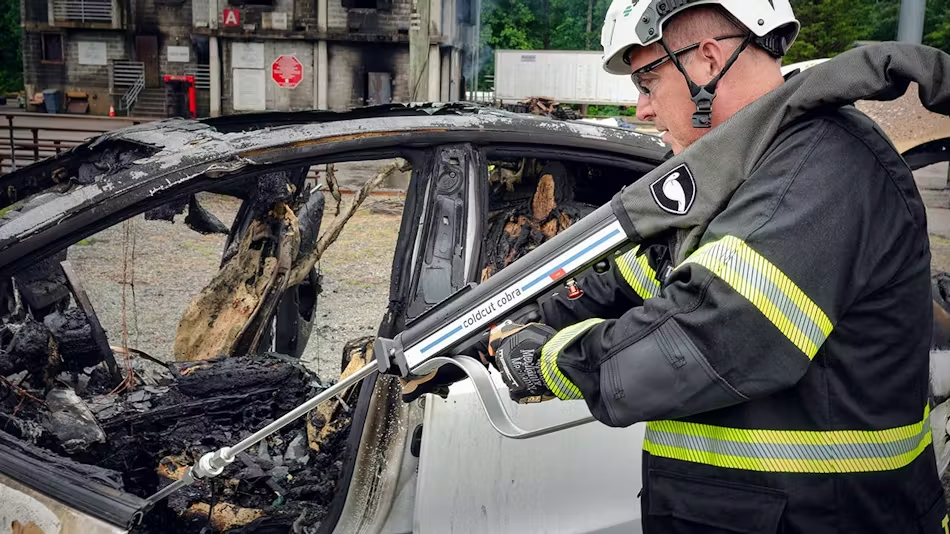
Departments are also evaluating new technologies designed specifically for EV response. Among the tools highlighted by industry leaders are ultra-high-pressure water systems capable of directing cooling streams closer to battery packs, along with containment systems intended to stabilize damaged batteries after active firefighting operations conclude.
Training organizations and fire service educators said responder preparedness remains the most important factor in safely managing electric vehicle incidents. Current instruction focuses on battery behavior, vehicle stabilization, cooling priorities, hazard recognition and post-fire monitoring procedures.
Officials emphasized that electric vehicle response continues to evolve alongside vehicle technology and that departments are working to integrate updated tactics, equipment and operational guidelines into daily response planning as EV adoption expands nationwide.