
By MES Dispatch Staff
The Briefing
- Organizers submitted 6,223 petition signatures Monday to Salisbury, Maryland, to force a voter referendum on the City Council’s May repeal of collective bargaining rights for firefighters, police officers, and municipal employees.
- The signature count exceeded organizers’ estimated threshold by 54% and requires validation against a 20% threshold of qualified city voters to block the repeal pending referendum approval.
- Salisbury City Council voted 3-2 in May 2026 to repeal collective bargaining after the city granted the right in 2022; Mayor Randy Taylor cited unsustainable labor costs comprising 70% of the city budget.
- The petition campaign, organized by labor supporters including unions AFSCME Maryland Council 3 and IAFF Local 4246, collected signatures in 37 days from more than 100 volunteers including firefighters, local officials, and civic organizations.
- Salisbury’s next municipal election is scheduled for November 2027; city officials will determine whether the referendum question can appear on the general election ballot or a special election must be called.
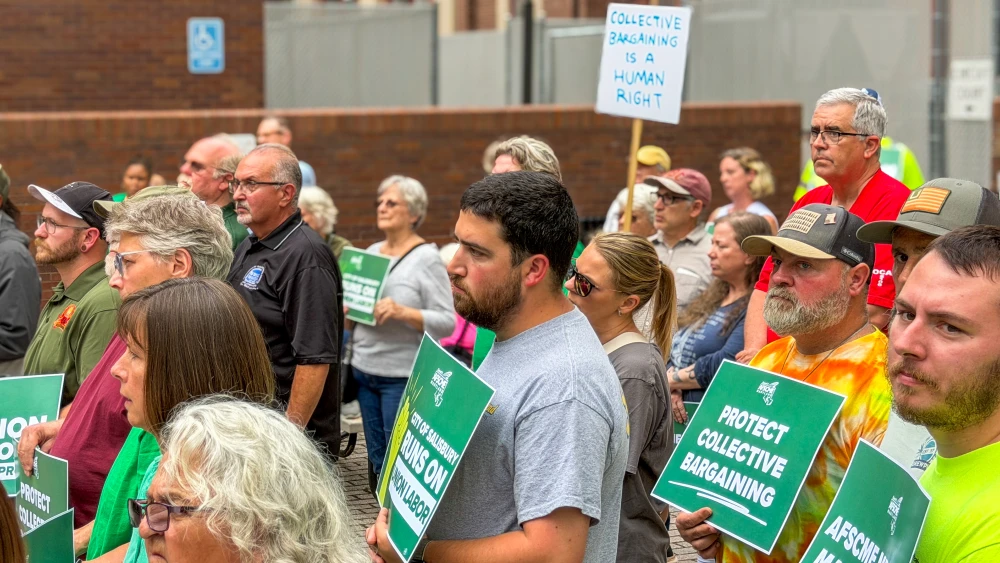
SALISBURY, MD. — Organizers fighting to preserve collective bargaining rights for Salisbury municipal workers submitted 6,223 petition signatures Monday to force a voter referendum on the City Council’s repeal of negotiating protections for firefighters, police officers, and city employees.
Josh Davis/TNS
Jared Schablein, an organizer of the petition campaign, stated that the signature total significantly exceeded what campaign leadership believed was required. “People want this. And we’re excited for this to go on the ballot,” Schablein said.
The petition submission potentially blocks the City Council’s repeal from taking effect pending voter approval of the proposal. However, the signatures must be validated against state legal requirements. Maryland law requires petition signatures to total at least 20% of qualified city voters within Salisbury’s jurisdiction.
Salisbury City Council granted collective bargaining rights to firefighters, police officers, and general government workers across city departments in 2022. On May 27, 2026, the council voted 3-2 to repeal that provision following weeks of tense debate regarding municipal labor relations and budgetary constraints.
Mayor Randy Taylor characterized existing collective bargaining agreements as financially unsustainable. Taylor stated that labor costs represent approximately 70% of the city budget and that agreements providing 6% annual raises exceeded Salisbury’s average annual revenue growth of approximately $2 million annually.
The petition campaign mobilized more than 100 volunteers over a 37-day period. Volunteers included union members, retired and off-duty firefighters, local elected officials, and members of civic organizations across Salisbury.
Brandon Records, president of Salisbury Career Firefighters Local 4246, characterized the petition effort as reflecting citizens’ actual preferences. “The IAFF and AFSCME have put in the work and completed this first step,” Records said. “We now look forward to keeping our momentum to the polls at election time.”
AFSCME Maryland Council 3 expressed confidence that petition signatures exceeded the legal threshold. “Thousands of Salisbury’s voters have made their voices heard through this petition effort, and it’s clear that the people of this community overwhelmingly support our city workers,” the union stated.
Mayor Taylor confirmed that the City Clerk’s Office is reviewing petitions. “The mayor’s office will report when more information is known,” Taylor said.
Schablein rejected prior criticism from Mayor Taylor regarding the petition campaign, including complaints concerning paid canvassers originating from outside Maryland. “The mayor can say what he wants,” Schablein stated. “The people of Salisbury stand with our first responders and city workers.”
Salisbury’s next scheduled municipal election is November 2027. State law permits the City Council to schedule the referendum during the next regular election or call a special election. Schablein stated that it remains unclear whether the question could appear on the general election ballot this November 2026.