
By MES Dispatch Staff
The Briefing
- Caldwell City Council voted August 3 to pursue creation of an independent fire district rather than approve a public safety levy, citing rapid population growth and rising call volumes exceeding department capacity.
- An independent fire district would allow the fire department to capture property tax revenue beyond the 8% annual budget cap applying to cities, potentially extending to 15% under House Bill 959 approved by the Idaho Legislature.
- The Caldwell Fire Department operates on a budget of approximately $14.7 million and requested an increase to $17 million to staff the new Fire Station 4 and address capacity constraints.
- The city population has grown approximately 30% since 2020; in some areas, emergency response times approach eight minutes compared to the department’s four-minute response goal.
- If approved by county commissioners and voters, the measure would appear on the May 2027 ballot; if voters approve, Caldwell would shift fire protection funding from the city budget to the new independent taxing district.
CALDWELL, IDAHO — Caldwell city leaders voted to pursue creation of an independent fire district as an alternative to a public safety levy, seeking expanded funding authority to address rapid population growth and rising emergency call demand.
The City Council decision on August 3 follows rejection of a proposed public safety levy and stalled discussions to annex the Caldwell Fire Department into the Caldwell Rural Fire District.
Fire Chief Bryan Daniels characterized the independent fire district proposal as essential to long-term operational sustainability. Daniels noted that the proposal, enabled by House Bill 959 enacted by the Idaho Legislature, would allow the fire department greater flexibility in budget development and revenue generation.
The proposal capitalizes on provisions of House Bill 959 permitting fire and EMS districts to collect property tax revenue tied to growth beyond the traditional 8% annual budget cap. Under the law, fire districts can collect revenue tied to growth up to 15% annually, enabling greater funding expansion than cities can achieve under Idaho’s budget constraints.
Caldwell Fire Department officials declined to pursue the previously proposed merger with the Caldwell Rural Fire District after rural fire district commissioners expressed concerns regarding the timing and scale of absorbing an 83-person department with a $14 million budget. Mark Wendelsdorf, administrative fire chief for the Caldwell Rural Fire District, stated that annexation would result in revenue loss requiring service reductions by both agencies.
An independent fire district would operate with its own elected commissioners and governing board, separating fire operations from broader city government budget competition. Mayor Eric Phillips emphasized that firefighters would remain Caldwell Fire Department personnel while operating as an independent entity focused exclusively on fire protection rather than competing with police and other city departments for funding.
The Caldwell Fire Department initially requested approximately $17 million in fiscal year 2026-27 funding, largely to support staffing at the city’s new Fire Station 4. This request has been reduced during the city budget process, though officials have identified staffing the new station as a top priority.
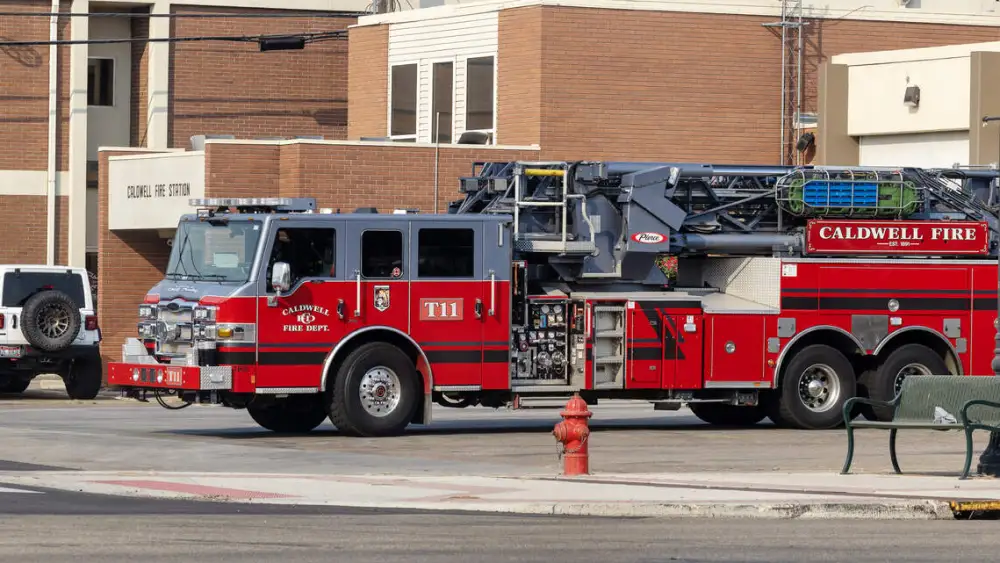
Caldwell’s population grew approximately 30% since 2020, placing strain on the department’s three currently active stations. Fire Chief Daniels reported that portions of the city are experiencing response times approaching eight minutes, substantially above the department’s four-minute response time objective.
Daniels stated that without additional funding, the city faces potential difficult operational decisions including possible layoffs or inability to staff fire stations fully.
If the proposal moves forward, county commissioners must approve placing the measure on the May 2027 ballot. Upon voter approval of the measure, Caldwell would redirect property tax revenue previously allocated for fire protection from the city budget to the new independent fire district, which would levy taxes to operate independently.
City officials stated they have not yet calculated the tax impact to the average homeowner resulting from the revenue shift between the city budget and the new district.