
By MES Dispatch Staff
The Briefing
- The Euclid Fire Department in Ohio responded to 13,080 incidents in 2025, or about 36 per day, according to its annual report.
- More than 10,800 of those calls were rescue or emergency medical service responses, continuing a five-year upward trend in EMS demand.
- Department officials say non-emergency calls are reducing the department’s readiness to respond to more serious incidents.
- The department is exploring options including a hospital partnership program, alternative transport protocols and social services referrals to address the issue.
- Euclid operates three fire stations with a minimum of 18 firefighters on duty and has listed adding a fourth ambulance and two additional firefighter-paramedics among its 2026 goals.
EUCLID, Ohio — The Euclid Fire Department responded to more than 13,000 incidents in 2025, with emergency medical calls continuing to dominate its workload as officials look for ways to prevent non-emergency calls from tying up resources needed for serious incidents.
According to the department’s 2025 annual report, firefighters responded to 13,080 incidents last year, an average of about 36 per day. More than 10,800 of those were rescue or EMS calls, continuing a steady increase from 10,163 such calls in 2021. The report separately lists a slightly different total of 10,801 EMS calls for 2025; Euclid Fire Chief Jay Womack has been asked to clarify the discrepancy.
The department said non-acute or non-emergency responses are affecting its ability to remain available for more serious calls. In its annual report, the department said it is exploring several approaches to address the issue, including a partnership with the Cleveland Clinic’s Safer at Home program, meetings with properties to address what it describes as abuse of EMS services, alternative transport protocols and referrals to social services. The report does not specify how many 2025 calls were considered non-emergency or define what the department considers abuse of the EMS system.
Hospital transport times are also affecting ambulance availability. About 75% of patients on EMS calls last year, or roughly 8,100 people, were transported to a hospital. The department said the 2022 closure of a nearby University Hospitals facility and continued centralization of hospital services have resulted in longer transport distances.
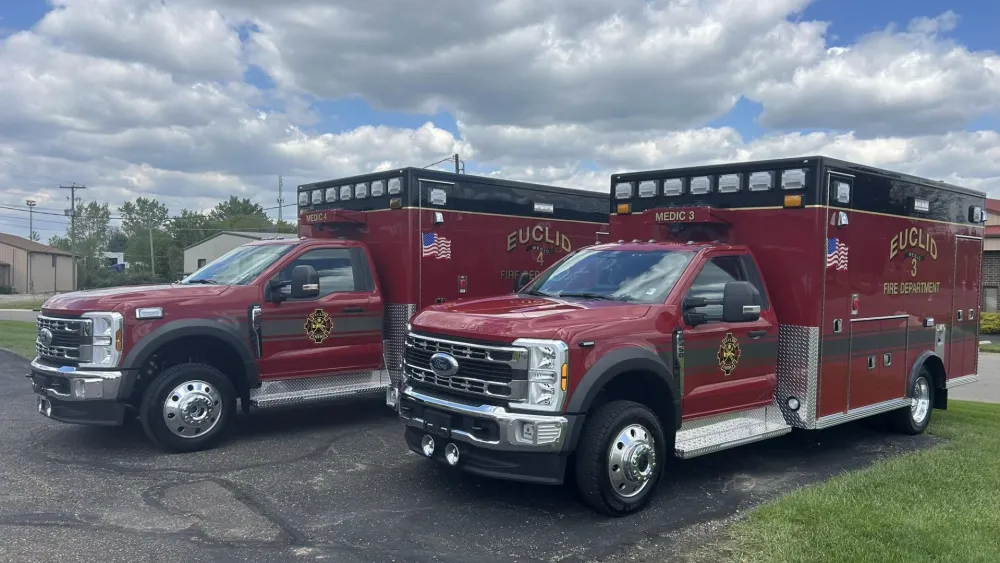
When all of Euclid’s ambulances are unavailable, the department dispatches a fire apparatus to begin assessing and treating patients while awaiting an available ambulance or, in more serious cases, requesting mutual aid from a neighboring department. The report noted that outside departments provided assistance for only a small number of Euclid’s calls in 2025.
The department operates three fire stations with a minimum of 18 firefighters on duty, with 2025 average response times ranging from about six minutes to just over six minutes across its stations. Its stated goals for 2026 include adding a fourth ambulance and hiring two additional firefighter-paramedics, supported by federal grant funding and a commitment from city administration.