
By MES Dispatch Staff
The Briefing
- A National Institute for Occupational Safety and Health report on a May 25, 2026, Jackson Hole, Wyo., fire found a firefighter was seriously injured after falling about 20 feet from a steep roof during vertical ventilation.
- The firefighter had unhooked his safety tether from an aerial platform to step onto the roof between two dormers and lost his footing.
- He suffered fractures to his lower leg and heel and was taken for treatment after mayday calls went out from the aerial turntable and platform.
- NIOSH cited the lack of fall protection, size-up and risk assessment, truck company training, risk management culture, standard operating procedure training and delayed fire department activation as contributing factors.
- The department has begun a full review of its SOPs and is building a truck company task book to confirm personnel can perform the tasks assigned.
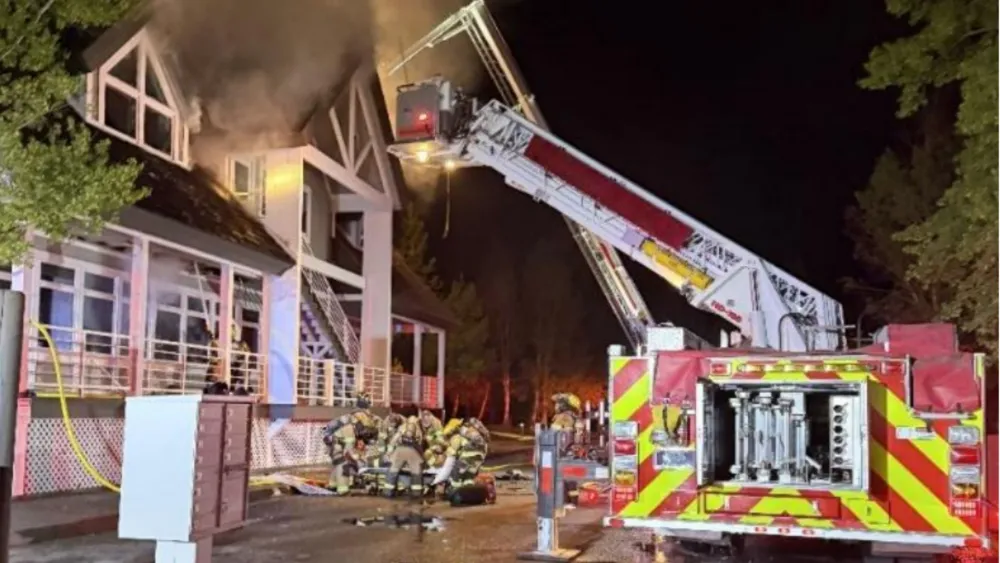
JACKSON HOLE, Wyo. — A NIOSH investigation found that a firefighter fell about 20 feet from a steep roof during a May 25 fire after leaving an aerial platform without fall protection, citing gaps in size-up, training and procedures at the combination career and volunteer department, FireRescue1 reported.
Photo|NIOSH, fire department
The Truck 16 crew had been assigned to ventilate the Side Delta portion of the structure. According to the report, after the crew completed the first hole near the peak, it repositioned the aerial platform between two dormers. The firefighter unhooked his safety tether from the platform and stepped onto the roof to begin the next cut. He lost his footing, slipped from one dormer to the other and fell to the concrete sidewalk below, landing near the staged rapid intervention team, whose members gave immediate care. Mayday calls were transmitted from both the aerial turntable and the platform. He suffered fractures to his lower leg and heel and was taken to a hospital.
NIOSH listed the fall from the aerial platform as the first contributing factor, noting nothing arrested the fall once the firefighter lost footing on the steep pitch. It also cited the initial size-up and risk assessment and recommended a risk-benefit analysis before firefighters are committed to vertical ventilation. The agency found training and evaluation did not match the task, calling for development based on rank and skill across the department’s career and volunteer personnel. The department has since begun a truck company task book to confirm personnel can perform assignments such as vertical ventilation on residential and commercial structures.
NIOSH also cited department culture and risk management as a factor, recommending a balance between the life safety mission and proactive risk management, and cited SOPs and SOGs, which it said help only if crews are trained on them and review them routinely. The department has started a full SOP review. The report listed delayed activation of the fire department response as a contributing factor; the summary does not say how long the delay lasted.
NIOSH recommended that departments ensure firefighters use and maintain fall prevention devices on aerial platforms, complete a size-up and risk assessment before committing anyone to a roof, evaluate personnel by rank and skill and match specialty crews to their tasks, keep SOPs current, and consider requiring monitored detection in commercial occupancies regardless of when a building was built.