Friday, October 23, 2026
Home Blog Page 10

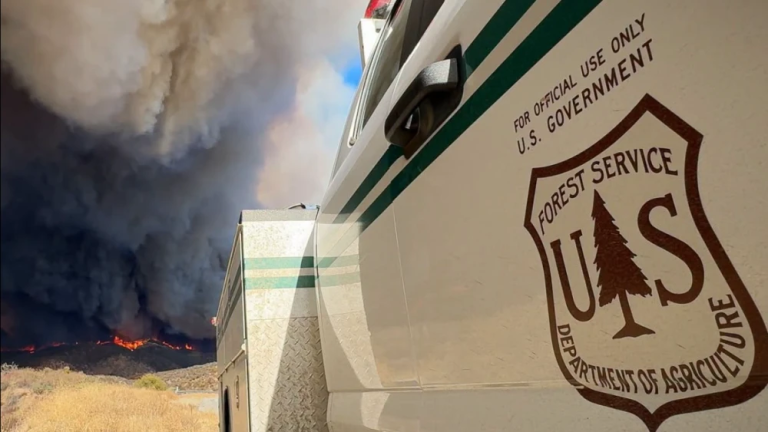
U.S. Forest Service Consolidates Fire, Aviation Authority Under Single Deputy Chief

0

By MES Dispatch Staff

The Briefing

  • U.S. Forest Service Chief Tom Schultz signed a delegation of authority Aug. 11 transferring national fire and aviation oversight to Deputy Chief Sarah Fisher.
  • The change gives Fisher authority over wildfire response, aviation management, critical fire-related spending, resource allocation and emergency declarations.
  • Geographic Area Fire Directors will now report directly to Fisher, shortening the agency’s chain of command.
  • The delegation took effect immediately but does not alter field-level fire operations or the agency’s operational posture for the current fire season.
  • The move implements a 2025 executive order and USDA directive requiring consolidation of wildland fire programs across federal agencies.

WASHINGTON — The U.S. Forest Service has placed its national fire and aviation authorities under a single deputy chief, a change agency leaders say will shorten reporting lines and clarify decision-making authority during wildfire response.

Forest Service Chief Tom Schultz signed the delegation of authority Aug. 11, transferring the authorities to Sarah Fisher, deputy chief for Fire and Aviation Management, Safety, and Employee Wellbeing. The change took effect immediately and covers authorities outlined in Forest Service Manual 1230, governing delegations of authority, and Manual 5100, covering fire management. Powers specifically reserved for the Forest Service chief remain with that office.

Under the delegation, Fisher will oversee the agency’s wildfire response, preparedness and aviation management programs, along with authority to approve critical fire-related spending, allocate resources, oversee communications and manage emergency response actions and declarations. The agency’s Geographic Area Fire Directors will now report to Fisher, which officials said creates a more direct chain of command across geographic areas.

“Today, it is more important than ever that we move with speed, clarity and accountability when fire threatens our communities, our forests and our critical infrastructure,” Schultz said in a statement. “This action streamlines reporting structures, creates clarity and ensures the people responsible for managing these critical programs have the authorities they need to get the job done.”

The delegation does not change the Forest Service’s fire organization or field structure at the forest level, and officials said it does not alter the agency’s operational posture for the current fire season.

The move is part of the agency’s implementation of Executive Order 14308 and USDA Secretary Memorandum 1078-017, which directed the Agriculture and Interior departments to consolidate wildland fire programs and improve coordination, technology and response capabilities. The Forest Service said it and its interagency partners have completed the action items required under the executive order, including updates to national wildfire governance and interagency agreements used to coordinate wildfire response, and that the new delegation aligns the agency’s internal reporting structure with those changes.

Reading, Pa., City Council Approves $500 Flat Fee for False Fire Alarms

0

By MES Dispatch Staff

The Briefing

  • Reading City Council voted unanimously Monday to amend city code, setting a flat $500 fee for each needless or false fire alarm.
  • The change follows roughly 300 needless alarm responses by the Reading Fire Department over a three-month period.
  • The new flat fee replaces a tiered schedule that previously ranged from no charge for a first annual false alarm up to $550 after 13 false alarms.
  • Fire Marshal Jeremy Searfoss said the ordinance targets alarm systems that are poorly maintained or inspected, not alarms that function as intended.
  • Officials said enforcement will follow an initial focus on education, and property owners may appeal charges.

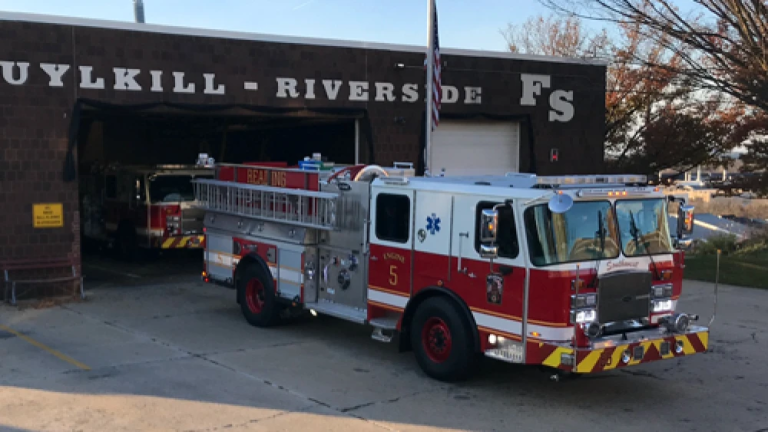
READING, Pa. — City Council has approved a higher, flat fee for false fire alarms after the Reading Fire Department responded to about 300 needless alarms in three months. Council voted unanimously at its regular meeting Monday to amend the city code, setting the fee at $500 per needless or false alarm.

The new flat rate replaces a tiered fee schedule under which a property’s first false alarm in a calendar year carried no charge, with fees then increasing from $80 for a second alarm to as much as $550 after 13 false alarms in a year. The ordinance defines needless alarms as activations caused by something other than smoke, fire or the system’s intended use, including unprotected detectors during construction work, defective medical alarms and intentional activation without an emergency.

Fire Marshal Jeremy Searfoss said the fee is not intended to penalize alarms that function properly, such as detectors triggered by cooking smoke. He said most needless alarms instead stem from systems that have not been properly inspected or maintained, and that the department’s goal is to encourage owners to fix their systems rather than simply collect fines. Searfoss said the department frequently waives fees when owners invest in corrections.

The legislation initially proposed a $400 fee before council raised it to $500 following a recommendation from Councilman Rafael Nunez and discussion of the impact on residents and small businesses. Searfoss said small businesses account for a small share of the problematic alarms and that property owners may appeal charges. He said city officials compared the fee to those in Scranton, Allentown and Bethlehem and found some of those cities charge more.

Officials said the department will prioritize education before enforcement action against property owners with repeated needless alarms.

Federal Judge Allows Amended Lawsuit Over Deaths of 3 Baltimore Firefighters

0

By MES Dispatch Staff

The Briefing

  • A federal judge ruled this week that the families of three Baltimore firefighters killed in a 2022 house fire can file an amended lawsuit against the city.
  • The families are pursuing claims of negligence, wrongful death and state-created danger.
  • Lt. Paul Butrim, Lt. Kelsey Sadler and firefighter/EMT Kenny Lacayo died when a vacant rowhome on Stricker Street partially collapsed during firefighting operations in January 2022.
  • The ruling reverses a February dismissal of the families’ prior complaint and follows the earlier dismissal of a first lawsuit against the city.
  • A man has separately been indicted on arson and homicide charges connected to the fire and is scheduled for trial Oct. 2.

BALTIMORE — U.S. District Judge Matthew Maddox has allowed the families of three Baltimore firefighters killed in a 2022 structure fire to file an amended complaint against the city, giving them another opportunity to pursue negligence, wrongful death and state-created danger claims.

The families of Lt. Paul Butrim, Lt. Kelsey Sadler and firefighter/EMT Kenny Lacayo filed the amended complaint this week after Maddox granted them leave to do so. The three were killed in January 2022 when a vacant rowhome on Stricker Street in the city’s Mount Clare neighborhood partially collapsed while fire personnel were fighting the blaze from inside. Firefighter/EMT John McMaster, who was seriously injured in the fire, is also named as a plaintiff.

The ruling follows Maddox’s February dismissal of the families’ original complaint, in which he found they had not adequately alleged the city acted to purposely endanger the firefighters. In his order this week, Maddox said newly attached affidavits and their citation in the proposed amended complaint addressed that deficiency. It marks the second time a lawsuit brought by the families over the deaths has been revived after dismissal.

The amended complaint alleges the city knowingly sent firefighters into structurally compromised buildings without their knowledge and had discontinued, then concealed the discontinuation of, a program intended to prevent such assignments. It also alleges the city was engaged in a “profit-sharing scheme” that kept certain unsafe properties in some neighborhoods, including the Stricker Street address, from being demolished or flagged as structurally compromised. The city has argued the families cannot plausibly allege it intended the firefighters’ deaths or fraudulently induced them into dangerous conditions.

An independent panel report released later in 2022 found the city lacked policies governing vacant buildings at the time of the fire and that an on-scene battalion chief had been overloaded with duties, causing him to miss critical radio communications. The report’s release led to the resignation of then-Fire Chief Niles Ford.

James Edwin Barnett of Baltimore was indicted in December on arson and homicide charges in connection with the fire and has a trial scheduled for Oct. 2, according to Maryland court records. Attorney Ken Berman, who represents the firefighters’ families, said the case has grown stronger through continued investigation and that the families intend to pursue it despite multiple dismissals. A spokesperson for the mayor’s office did not immediately respond to a request for comment.

Caldwell Considers Creating Independent Fire District to Address Rapid Growth

0

By MES Dispatch Staff

The Briefing

  • Caldwell City Council voted August 3 to pursue creation of an independent fire district rather than approve a public safety levy, citing rapid population growth and rising call volumes exceeding department capacity.
  • An independent fire district would allow the fire department to capture property tax revenue beyond the 8% annual budget cap applying to cities, potentially extending to 15% under House Bill 959 approved by the Idaho Legislature.
  • The Caldwell Fire Department operates on a budget of approximately $14.7 million and requested an increase to $17 million to staff the new Fire Station 4 and address capacity constraints.
  • The city population has grown approximately 30% since 2020; in some areas, emergency response times approach eight minutes compared to the department’s four-minute response goal.
  • If approved by county commissioners and voters, the measure would appear on the May 2027 ballot; if voters approve, Caldwell would shift fire protection funding from the city budget to the new independent taxing district.

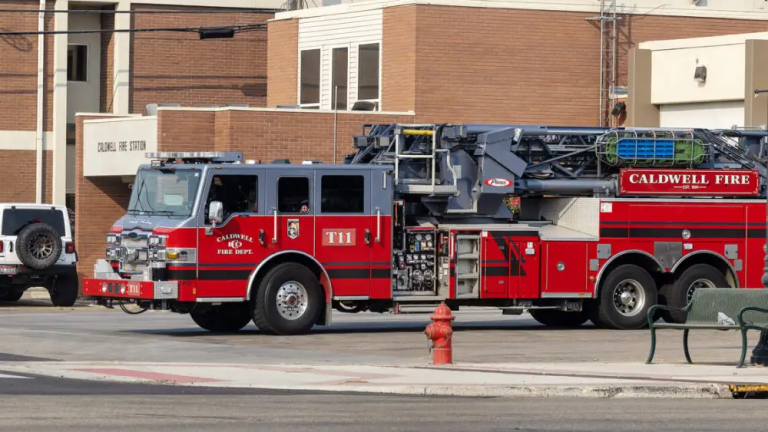
CALDWELL, IDAHO — Caldwell city leaders voted to pursue creation of an independent fire district as an alternative to a public safety levy, seeking expanded funding authority to address rapid population growth and rising emergency call demand.

The City Council decision on August 3 follows rejection of a proposed public safety levy and stalled discussions to annex the Caldwell Fire Department into the Caldwell Rural Fire District.

Fire Chief Bryan Daniels characterized the independent fire district proposal as essential to long-term operational sustainability. Daniels noted that the proposal, enabled by House Bill 959 enacted by the Idaho Legislature, would allow the fire department greater flexibility in budget development and revenue generation.

The proposal capitalizes on provisions of House Bill 959 permitting fire and EMS districts to collect property tax revenue tied to growth beyond the traditional 8% annual budget cap. Under the law, fire districts can collect revenue tied to growth up to 15% annually, enabling greater funding expansion than cities can achieve under Idaho’s budget constraints.

Caldwell Fire Department officials declined to pursue the previously proposed merger with the Caldwell Rural Fire District after rural fire district commissioners expressed concerns regarding the timing and scale of absorbing an 83-person department with a $14 million budget. Mark Wendelsdorf, administrative fire chief for the Caldwell Rural Fire District, stated that annexation would result in revenue loss requiring service reductions by both agencies.

An independent fire district would operate with its own elected commissioners and governing board, separating fire operations from broader city government budget competition. Mayor Eric Phillips emphasized that firefighters would remain Caldwell Fire Department personnel while operating as an independent entity focused exclusively on fire protection rather than competing with police and other city departments for funding.

The Caldwell Fire Department initially requested approximately $17 million in fiscal year 2026-27 funding, largely to support staffing at the city’s new Fire Station 4. This request has been reduced during the city budget process, though officials have identified staffing the new station as a top priority.

Caldwell’s population grew approximately 30% since 2020, placing strain on the department’s three currently active stations. Fire Chief Daniels reported that portions of the city are experiencing response times approaching eight minutes, substantially above the department’s four-minute response time objective.

Daniels stated that without additional funding, the city faces potential difficult operational decisions including possible layoffs or inability to staff fire stations fully.

If the proposal moves forward, county commissioners must approve placing the measure on the May 2027 ballot. Upon voter approval of the measure, Caldwell would redirect property tax revenue previously allocated for fire protection from the city budget to the new independent fire district, which would levy taxes to operate independently.

City officials stated they have not yet calculated the tax impact to the average homeowner resulting from the revenue shift between the city budget and the new district.

Alaska Wildland Firefighter Dies During Minnesota Wildfire Response; Name Released

By MES Dispatch Staff

The Briefing

  • Leslie R. Washington, 41, of Noorvik, Alaska, died August 11 from a medical emergency while assigned to wildfire suppression operations at the Bear Trap Fire near the Minnesota-Canada border.
  • The U.S. Wildland Fire Service identified Washington and announced his death following a procession held August 12 in recognition of his service.
  • The Bear Trap Fire in Superior National Forest near Ely, Minnesota, has burned approximately 30,000 acres and is 44% contained as of the date of Washington’s death.
  • U.S. Wildland Fire Service Chief Brian Fennessy expressed condolences to Washington’s family, loved ones, friends and crewmates.
  • Officials have not disclosed the specific cause and nature of Washington’s medical emergency.

ELY, MINN. — The U.S. Wildland Fire Service identified Leslie R. Washington, 41, of Noorvik, Alaska, as the firefighter who died August 11 while assigned to suppression operations at the Bear Trap Fire along the Minnesota-Canada border region in Superior National Forest.

Leslie R. Washington

Washington suffered a medical emergency during active wildfire operations. First responders held a procession August 12 to honor Washington’s service to the firefighting community.

U.S. Wildland Fire Service Chief Brian Fennessy released a statement regarding Washington’s death. Fennessy characterized the loss as profound and expressed condolences to Washington’s family members, loved ones, friends and crewmates.

An Alaska-based fire crew also recognized Washington as one of their crewmembers in a social media statement acknowledging his service and contributions to the wildland firefighting mission.

The Bear Trap Fire began in July 2026 and has burned approximately 30,000 acres within Superior National Forest near Ely. The fire was 44% contained as of August 11. An interagency complex incident management team directed suppression operations across the fire zone.

Officials stated that the specific cause and nature of Washington’s medical emergency remain under investigation and have not been released to the public.

Merced Fire Department Achieves 24/7 Paramedic Staffing at All Stations

0

By MES Dispatch Staff

The Briefing

  • Merced Fire Department announced August 11 that all five city fire stations now have a firefighter/paramedic on duty 24 hours daily, with Fire Station 52 completing the coverage mandate Monday morning.
  • Federal grant funding supported creation of new paramedic positions to achieve continuous advanced life support capabilities across the department.
  • Advanced life support enables paramedics to provide heart monitoring, medication administration, advanced airway management, and lifesaving treatment before hospital transport.
  • Medical emergencies account for approximately 70% of calls handled by Merced Fire Department; the department responded to more than 12,700 calls in 2025 and projected to exceed 14,000 in 2026.
  • Division Chief Mickey Brunelli stated that having paramedic availability at every station provides critical tools for response to medical emergencies.

MERCED, CALIF. — The Merced Fire Department announced August 11 that all five city fire stations now provide continuous paramedic coverage, with Fire Station 52 beginning 24-hour advanced life support operations Monday morning.

The expansion was facilitated through federal grant funding that enabled the department to staff new paramedic positions. Station 52 began providing advanced life support services at 8 a.m. Monday, completing the department’s transition to continuous paramedic availability across all stations.

Advanced life support capabilities enable firefighter/paramedics to provide heart monitoring, medication administration, advanced airway management, and other lifesaving treatment before patient transport to hospital facilities.

Division Chief Mickey Brunelli stated that achieving complete paramedic coverage represents a long-term operational goal. Brunelli emphasized that medical emergency response requires immediate paramedic availability and that having a paramedic at every station enhances the department’s capacity to provide optimal care to the community.

Medical emergencies constitute approximately 70% of calls handled by Merced Fire Department. The department responded to 12,700 calls for service in 2025, with call volume projected to exceed 14,000 in 2026, indicating continued demand growth for emergency medical services.

The paramedic expansion addresses growing medical call volume and ensures advanced life support capabilities are available for immediate response across the city’s service area.

Lancaster County HazMat Team Ends Emergency Response Services; Transitions to Educational Foundation

0

By MES Dispatch Staff

The Briefing

  • HazMat 2 Environmental Fire Rescue announced August 12 it will cease hazardous materials emergency response services in Lancaster County and transition to an educational foundation due to financial inability to sustain operations.
  • The volunteer nonprofit had provided hazmat response for decades under county contract before the relationship ended in July 2025 following disputes over contract renewal and financial accountability.
  • Without county fee-based funding that previously supported operations, HazMat 2 cannot maintain the $20,000 annual insurance required for emergency rescue calls.
  • Lebanon County’s professional hazmat team has provided mutual aid services to Lancaster County since the contract ended, averaging 38-minute response times compared to approximately one hour under HazMat 2.
  • The HazMat 2 Environmental Fire Rescue Foundation will operate with 12 remaining members, providing educational programs funded through grants, donations and workshop fees.

LANCASTER COUNTY, PA. — HazMat 2 Environmental Fire Rescue announced August 12 that it will discontinue hazardous materials emergency response operations and establish an educational foundation to provide hazard awareness training to Lancaster County residents and businesses.

Executive Director Kurt Windlebleck stated that financial constraints prevented the nonprofit from sustaining emergency response operations. HazMat 2 has relied on savings to maintain operations over the past year after losing county funding support.

HazMat 2 had operated under contract with Lancaster County for decades, receiving operational funding through fees collected from commercial facilities storing hazardous materials on their properties. State law restricted those fees to hazardous materials response purposes.

The contract relationship terminated in July 2025 after disputes emerged regarding contract renewal and allegations of financial mismanagement. County officials accused HazMat 2 of questionable expenses including an international trip, personal medications, and personal mobile phone purchases. The nonprofit denied allegations and stated county leadership had been notified of expenditures when made.

A county investigation into HazMat 2’s spending remains ongoing, with no public disclosure of findings as of August 12.

Without the county fee-based revenue stream, Windlebleck stated HazMat 2 cannot fund the $20,000 annual insurance required to operate emergency rescue calls. The nonprofit has transferred its four remaining emergency response vehicles to Lebanon County’s hazmat team.

Lebanon County’s professional hazmat team began providing mutual aid to Lancaster County immediately after the contract ended in July 2025. The counties signed a formal one-year service agreement in October 2025, which was renewed for an additional year in June 2026 following review by Lancaster County’s Local Emergency Planning Committee.

County spokesperson Michael Fitzpatrick stated Lebanon County’s hazmat team has averaged 38-minute response times to hazardous incidents in Lancaster County, an improvement over HazMat 2’s previous full-team response time of approximately one hour. Fitzpatrick noted that Lebanon County personnel have provided training to Lancaster County volunteer firefighters, equipping crews to coordinate on hazmat-related incidents with reduced full-team response calls.

HazMat 2’s transition to the HazMat 2 Environmental Fire Rescue Foundation will focus on educational initiatives addressing chemical and environmental hazards including lithium-ion battery fires and chemical spills. Windlebleck stated the foundation will serve students, small businesses, and private residents with educational programs and environmental stewardship training.

The 12 remaining HazMat 2 members will manage foundation operations, which will be funded through grants, donations, and workshop fees. Windlebleck stated leaders are filing paperwork with the state to establish foundation status. A timeline for the transition has not been established, though Windlebleck indicated completion is targeted before year-end 2026.

The Local Emergency Planning Committee meeting minutes indicate Lancaster County is also pursuing a mutual aid agreement with Lancaster city’s fire department for hazmat services, though the county has not disclosed the rationale for pursuing additional hazmat coverage beyond Lebanon County’s existing contract.

Wildfire Support Firefighter Dies Following Medical Emergency Near Ely, Minnesota

0

By MES Dispatch Staff

The Briefing

  • A firefighter assigned to suppression operations on wildfires in Superior National Forest died August 11 following a medical emergency occurring in the vicinity of Ely, Minnesota.
  • The U.S. Forest Service confirmed the medical emergency occurred at 10:40 a.m. and stated the incident was unrelated to firefighting activities.
  • The individual was transported to a hospital where he subsequently died; additional details regarding the nature of the medical emergency remain undisclosed.
  • The fatality represents the first death associated with the Superior National Forest fires that began in early July.
  • Approximately 750 personnel were engaged in suppression operations across five large wildfires in Superior National Forest as of the time of the incident.

ELY, MINN. — The U.S. Forest Service confirmed August 11 that a firefighter assigned to wildfire suppression operations in Superior National Forest died following a medical emergency occurring in the vicinity of Ely.

The medical emergency occurred at 10:40 a.m. in the area surrounding Ely. The individual was transported to a hospital facility where he died after arrival.

The Forest Service stated in a public statement that the medical incident was not related to firefighting activities or operations. The specific nature of the medical emergency was not disclosed by Forest Service officials.

“After arriving at the hospital, the patient subsequently passed away,” the Forest Service stated. “When additional information is available and confirmed, an update will be provided.”

The death represents the first fatality associated with wildfire suppression operations in Superior National Forest since the fires began in early July 2026.

Approximately 750 fire suppression personnel from multiple agencies were engaged in active operations across five large wildfires burning within Superior National Forest when the incident occurred.

The Forest Service extended condolences to the deceased individual’s family and the firefighting community. “Our deepest condolences go out to the family and fellow firefighting community,” the agency stated.

The Superior National Forest fires have burned across thousands of acres within and adjacent to the Boundary Waters Canoe Area Wilderness region in northeastern Minnesota. Personnel from state and federal agencies, as well as contracted firefighting resources, have been deployed to the incident.

NIOSH Report: Water Application Triggered Deadly Silo Explosion at Maine Lumber Mill

0

By MES Dispatch Staff

The Briefing

  • Two volunteer firefighters died and 13 emergency responders were injured May 15 when an oxygen-limiting silo exploded at a Searsmont, Maine lumber mill after firefighters applied water into the structure.
  • NIOSH investigation determined firefighters directed water through an opening into the silo’s base for more than 30 minutes before the 20-by-60-foot structure containing kiln-dried wood shavings and sawdust exploded violently upward.
  • Neither facility employees nor responding firefighters recognized the silo as an oxygen-limiting design or understood that combustible dust posed an explosion hazard; water application introduced oxygen that preceded the catastrophic event.
  • Key contributing factors included lack of formal unified command structure with facility expertise, failure to activate accountability systems, and absence of written pre-incident plans identifying silo type and hazards.
  • NIOSH recommendations emphasize written hazard-specific pre-incident plans, trained personnel identification of silo types, prohibition of water or foam application into oxygen-limiting silos, and mandatory accountability procedures.

SEARSMONT, MAINE — A National Institute for Occupational Safety and Health investigation into a May 15, 2026, silo explosion at a Maine lumber mill determined that water application into an oxygen-limiting silo preceded the catastrophic event that killed two volunteer firefighters and injured 13 emergency responders.

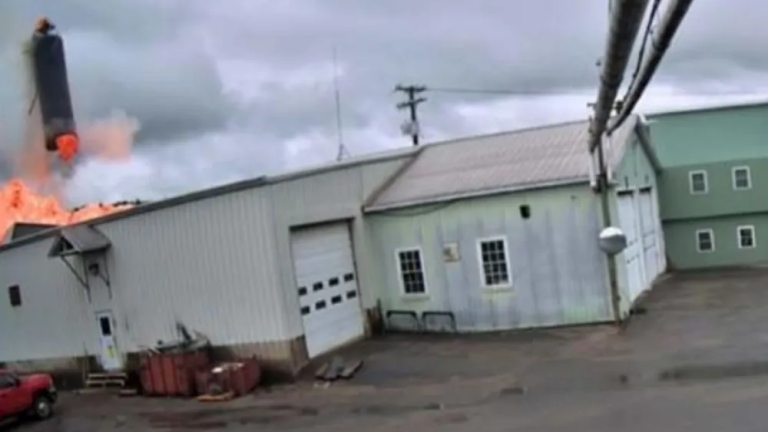
The 20-by-60-foot silo at the lumber mill contained kiln-dried wood shavings and residual sawdust. Approximately 30 minutes into firefighting operations, crews heard a “whoosh” sound as smoke rapidly vented from the structure’s top, then the silo launched vertically into the air as fire erupted below it, according to NIOSH investigation report F2026-07.

Neither facility employees nor responding firefighters recognized the silo as an oxygen-limiting design or identified the combustible dust hazard within its contents. An oxygen-limiting silo uses sealed design to suppress internal fires by limiting oxygen availability; ordinary firefighting actions including water application can introduce oxygen and create dangerous conditions.

Firefighters located a partially melted access panel in a chute beneath the silo shortly after arrival and positioned a nozzle at a three-foot opening beneath the structure, flowing water directly into the base. Additional firefighters continued water application as crews discussed ladder-truck deployment to flow water from above. Approximately 30 minutes of continuous water application preceded the explosion.

NIOSH emphasized that water or foam should never be directed into oxygen-limiting silos because suppression activities introduce oxygen, suspend combustible dust, and contribute to combustible-dust explosions or backdraft-type events.

The investigation identified four critical contributing factors that escalated the incident’s severity. Facility owners and employees remained near the silo and answered firefighters’ questions but were not formally integrated into a unified command structure incorporating facility expertise. A structured exchange of facility information could have identified hazards, operational limitations and appropriate tactics for the high-hazard occupancy.

Firefighters at the participating departments received training on accountability procedures requiring placement of accountability tags on rings at first-arriving apparatus, but that system was not activated. After the explosion, individual departments conducted personnel checks but did not execute a complete accountability process. A missing firefighter was not identified for approximately two hours, when his remains were discovered near the silo beneath burning material.

The first-due fire department participated in annual facility familiarization walks but maintained no formal pre-incident plan documenting the oxygen-limiting silo or combustible-dust hazard. Tactical decisions depended on firefighters’ individual knowledge and memory without a readily accessible document identifying hazards or prohibited tactics.

NIOSH recommended that fire departments train personnel to identify silo types and contents before commencing suppression operations, recognizing visual and operational differences among conventional, oxygen-limiting and modified oxygen-limiting silos. Departments should treat unknown silo contents as significant hazards until verified.

The agency emphasized establishing command, accountability and hazard-zone control at incident initiation. High-hazard industrial responses should integrate knowledgeable facility representatives into unified command while maintaining accountability of all operating members.

NIOSH recommended developing written pre-incident plans for high-hazard occupancies including silo type and contents identification, combustible-dust hazards, suppression-system features, utilities, water supplies, collapse zones, facility contacts and tactics that must not be used.

Departments serving lumber mills, grain facilities and other dust-producing occupancies should coordinate combustible-dust planning with facility operators, inquiring whether facilities completed hazard analyses and communicating those hazards to responders.

Denver Fire Fighters Local 858 Sues Over Disaffiliation Dispute, Challenges $389K Dues Demand

0

By MES Dispatch Staff

The Briefing

  • Denver Fire Fighters Local 858, representing approximately 1,000 firefighters and paramedics, filed suit August 10 against the Colorado Professional Fire Fighters state union and the International Association of Fire Fighters over refusal to recognize the local’s disaffiliation vote.
  • Local 858 members voted twice to leave the state union, with 70% support in the most recent vote; the local’s executive board halted dues payments in late 2024 citing concerns about whether the state union provided sufficient value to justify nearly $250,000 in annual dues.
  • Colorado Professional Fire Fighters demanded $388,936.93 in dues covering more than 18 months; Local 858 contends the state union has not provided a basis for the disputed amount.
  • The lawsuit is supported by the Fairness Center; a precedent case involving Connecticut’s New Haven Fire Fighters Local 825 resulted in 2019 in the local’s independence being upheld with no dues payment required.
  • The IAFF and Colorado Professional Fire Fighters have declined to recognize Local 858’s disaffiliation despite repeated member votes.

DENVER, COLO. — Denver Fire Fighters Local 858 filed a lawsuit August 10 against the Colorado Professional Fire Fighters state union and the International Association of Fire Fighters, seeking court affirmation of its disaffiliation vote and challenging a state union demand for nearly $389,000 in disputed dues.

Local 858 was founded in 1946 and has been affiliated with Colorado Professional Fire Fighters since its inception. In recent years, local members questioned whether the state union’s services justified the approximately $250,000 in annual dues the local was required to pay.

Local 858’s executive board ceased remittance of dues to the state union in late 2024. Members subsequently voted twice to disaffiliate, with the most recent vote showing 70% member support for terminating affiliation with the state union.

Despite multiple member votes supporting disaffiliation, the Colorado Professional Fire Fighters state union has refused to recognize Local 858’s decision to leave. In May 2026, the state union demanded $388,936.93 in dues covering more than 18 months, according to the lawsuit filing. Local 858 contends the state union provided no itemized basis or justification for the disputed amount.

The International Association of Fire Fighters, the parent organization representing firefighters across North America, has similarly declined to recognize Local 858’s disaffiliation decision. The IAFF is named as a co-defendant in the lawsuit.

Local 858 Union President Chris Ferguson stated that member votes should settle the disaffiliation question. “Local 858’s executive board and members voted democratically to stop paying the dues and end our affiliation with the state union. To me, that should have settled it,” Ferguson stated. “But state and international union officials refuse to accept our decision and want to keep control of our money. As Local 858’s president, my job is to stand up for our members — and that is exactly what I will do, even if it means taking the state and international unions to court.”

Local 858 Secretary/Treasurer Devin Hallock stated that the refusal to recognize member votes undermines democratic governance. Hallock referenced his oath taken upon election: “I will dutifully abide by and promote the positions taken by the majority. Our members have voted repeatedly and decisively to cut ties with the state union, yet state and international union officials continue to disregard their voice.”

The lawsuit is supported by the Fairness Center, an organization providing legal representation in labor and union matters.

A precedent case involving similar circumstances involved New Haven Fire Fighters Local 825 in Connecticut. In 2016, Local 825 members voted to leave their statewide union. The statewide union subsequently sought approximately $52,000 in dues. A lawsuit filed on behalf of Local 825 concluded in 2019 with the local’s independence upheld and no payment requirement to the state union.