Friday, October 23, 2026
Home Blog Page 13

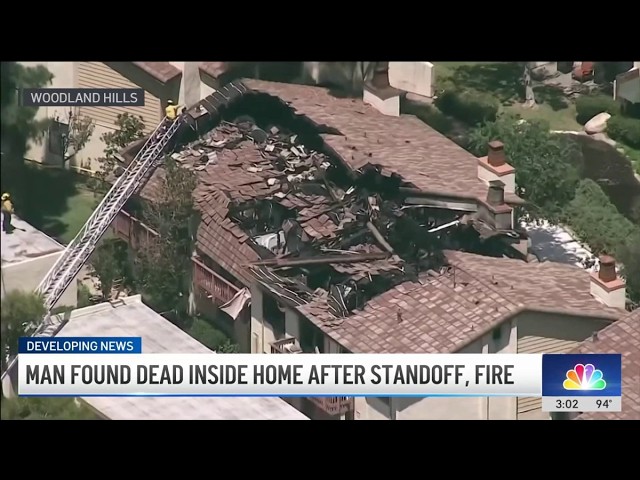
Barricaded Suspect Dies in Townhome Fire During Woodland Hills Domestic Violence Standoff

0

By MES Dispatch Staff

The Briefing

  • A barricaded suspect died July 19 in a fire at a Woodland Hills townhome during a lengthy domestic violence standoff involving Los Angeles Police Department SWAT personnel.
  • LAPD responded to the residence on the 5700 block of Owensmouth Avenue near Burbank Boulevard at approximately 3:15 p.m. for a domestic violence call; SWAT was called around 6 p.m. after the suspect refused to exit.
  • Investigators believe the suspect intentionally set the fire that broke out at approximately 6:41 p.m. in the middle unit of a three-unit townhome complex; tear gas had been deployed in attempts to force the suspect from the structure.
  • When firefighting personnel were able to enter the building, they discovered the suspect deceased inside; a woman believed to be the suspect’s wife sustained injuries.
  • More than 60 firefighters required several hours Monday morning to extinguish the blaze; the Los Angeles Fire Department responded to the structure fire incident.

WOODLAND HILLS, CALIF. — A male suspect died July 19 when a residential townhome caught fire during a lengthy barricade situation involving domestic violence allegations and law enforcement tactical operations.

Los Angeles Police Department personnel responded to the residence located on the 5700 block of Owensmouth Avenue near Burbank Boulevard at approximately 3:15 p.m. following a domestic violence complaint.

Initial officers determined that the suspect refused to exit the residence. SWAT personnel were summoned to the location at approximately 6 p.m. to establish a tactical perimeter and facilitate suspect removal through negotiation and law enforcement intervention protocols.

During ongoing tactical operations, law enforcement deployed tear gas in attempts to compel the suspect to vacate the structure. Investigators later determined that the suspect intentionally initiated a fire within the residence during the standoff.

The Los Angeles Fire Department received notification of structure fire activity at approximately 6:41 p.m. Fire personnel responded to the middle unit of a three-unit townhome complex where heavy smoke and flames were visible emanating from the two-story structure. The LAFD situation log documented active gunfire and heavy smoke conditions during initial fire suppression operations.

Nearby residential units were evacuated as a precautionary measure. After firefighting personnel established control of the fire and gained access to the interior, they discovered the suspect deceased inside the burned structure.

A woman, believed to be the suspect’s wife, sustained injuries during the incident. The nature and severity of injuries sustained by the woman were not immediately specified in available information.

Firefighting operations continued into Monday morning. More than 60 fire suppression personnel were required to fully extinguish the blaze and secure the scene. Investigation into the circumstances of the fire and the suspect’s death remains ongoing.
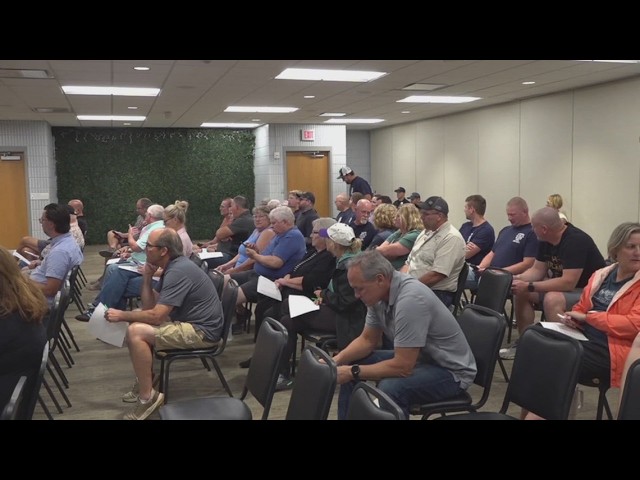

Eldridge City Council Votes to Assume Control of Volunteer Fire Department Despite Firefighter Opposition

0

By MES Dispatch Staff

The Briefing

  • The Eldridge City Council voted unanimously July 21 to assume operational control of the Eldridge Volunteer Fire Company, authorizing the city to hire a fire chief, supervise volunteers, and construct living quarters on the fire station’s second floor.
  • The Eldridge Volunteer Fire Company, an independent nonprofit serving the city and surrounding rural areas, voted in early June to remain independent rather than transition to municipal control, and submitted a three-year budget request beginning at approximately $766,000 annually.
  • A straw poll of department volunteers indicated that approximately 50 percent would depart the department if the city assumed control, raising concerns about experience loss and replacement costs.
  • City officials cited concerns about fiscal oversight of taxpayer dollars directed to an independent entity and conducted comparative analysis with comparable Iowa communities, which reportedly operated on lower budgets while maintaining paid chiefs.
  • Fire department leaders stated that trust between the city and department had eroded following years of negotiations and cited years of chronic underfunding as a basis for the three-year budget request.

ELDRIDGE, IOWA — The Eldridge City Council voted unanimously July 21 to transition the Eldridge Volunteer Fire Company from an independent nonprofit to a city-operated department, rejecting the volunteer organization’s request for continued independent status and three-year municipal funding.

All five council members voted in favor of a motion authorizing the city to hire a fire chief position, provide direct supervision of volunteer personnel, and construct expanded living quarters on the fire station’s upper floor.

The Eldridge Volunteer Fire Company, which operates as an independent nonprofit organization, provides emergency medical and fire services to Eldridge and unincorporated surrounding areas. After extended negotiations spanning multiple years regarding potential municipal transition, department members conducted an internal vote in early June 2026. Members voted to remain independent rather than be absorbed into municipal operations.

Following that vote, fire department leadership submitted a three-year budget request to the city for financial support of continued independent operations. The initial year request totaled approximately $766,000, encompassing compensation for two full-time staff members, capital improvements including building expansion, and equipment replacement and maintenance. The department conducted a public campaign to support their budget request, distributing information materials and hosting community meetings for residents.

At a city council meeting July 13, fire department officials addressed budget concerns and expressed deteriorated relations with the city resulting from prolonged negotiation delays. Department representatives disclosed results of an internal straw poll regarding member willingness to remain with the department should the city assume control. Approximately 50 percent of volunteers indicated they would resign if municipal takeover occurred.

City officials expressed apprehension regarding budget request magnitude and the city’s capacity to ensure accountability of taxpayer dollars directed to an independent entity. Assistant City Administrator Jeff Martens outlined city staff research conducted since his 2022 hiring, including comparative fiscal analysis with comparable Iowa communities.

Martens noted that Nevada, Iowa operated a fire department with a paid chief on an annual budget of $260,000, and LeClaire, Iowa budgeted $541,000 for fiscal year 2026 with compensation for a paid chief and paid captain. Martens stated that the Eldridge Volunteer Fire Company received a $721,000 FEMA SAFER grant in 2023 for volunteer retention and recruitment purposes and employed a full-time grant administrator.

Martens characterized the situation as a management concern rather than a funding issue, a characterization that drew negative reaction from audience members.

Council Member Jeff Ashcraft, who proposed the motion for municipal takeover, stated the action would support continuity of fire and emergency medical services while ensuring proper oversight of municipal financial expenditures.

Council Member Brian Dockery initially advocated for an alternative arrangement in which the city would own fire department assets and fund capital improvements while permitting the Eldridge Volunteer Fire Company to retain independent management and hiring authority for a fire chief. However, Dockery ultimately voted in favor of municipal assumption.

Resident Judith Gilbert spoke before the vote in support of funding the volunteer department’s three-year budget request. Gilbert cited the department’s internal vote supporting continued independence and characterized the volunteer organization as experienced, certified, and committed to service. Gilbert warned that municipal assumption would result in immediate volunteer departures and substantial costs replacing experienced firefighting personnel.

Following the council vote, volunteer fire department members in attendance stood and exited the meeting. Multiple residents gathered outside the council chambers expressed frustration regarding the council decision.

Oakland Fire Department Restricts Wildfire Inspections to Public Property After Firefighter Attacks

By MES Dispatch Staff

The Briefing

  • The Oakland Fire Department implemented new procedures July 21 restricting wildfire vegetation inspections to public property only, after firefighters reported multiple attacks and intimidation incidents in the Oakland Hills.
  • Firefighting personnel will no longer access private residential property during inspections, conducting all work exclusively from public right-of-way areas.
  • The policy change follows a July 4 incident in which a firefighter was attacked by multiple dogs while conducting inspections; the firefighter has since fully recovered.
  • Approximately 80 percent of the department’s 2026 vegetation inspections had already been completed before the new policy took effect.
  • The Oakland Fire Department stated it is exploring alternative inspection methods including drone technology and artificial intelligence to conduct future property assessments, though some residents expressed preference for in-person firefighter inspections.

OAKLAND, CALIF. — The Oakland Fire Department implemented a revised wildfire prevention inspection protocol restricting personnel to public property assessments following a series of reported attacks and intimidation incidents targeting firefighting crews conducting vegetation examinations in the Oakland Hills region.

Under the new operational procedure, fire department inspection crews will evaluate vegetation on public property and public right-of-way areas only. Firefighting personnel will no longer access private residential properties during inspection operations.

Fire Suppression Unit President Seth Olyer described the incident that prompted the policy revision. On July 4, a firefighter conducting routine vegetation inspections was attacked by multiple dogs while on a residential property. Olyer stated the July 4 attack represented one of several incidents involving attacks and intimidation directed toward firefighting personnel during the course of their inspection duties.

The department reported that the firefighter injured in the July 4 dog attack has fully recovered from the incident.

The policy change took effect after approximately 80 percent of the Oakland Fire Department’s 2026 vegetation inspections had already been completed under previous operational procedures. The new protocol will apply to remaining inspection work scheduled for the current year.

The revised policy drew concern from some Oakland Hills residents, who expressed worry that limiting inspections exclusively to public property could diminish the department’s ability to identify and address wildfire risk factors on private residential land.

Oakland Fire Department officials stated the agency is exploring alternative inspection methodologies to address the policy change and property assessment gaps. The department is evaluating drone technology and artificial intelligence systems for conducting future property vegetation assessments.

Some Oakland Hills residents indicated they would prefer firefighters continue conducting in-person property inspections despite the safety concerns raised by department personnel.

Sonoma County Fire District Seeks 16% Ambulance Rate Increase to Cover Rising Operational Costs

0

By MES Dispatch Staff

The Briefing

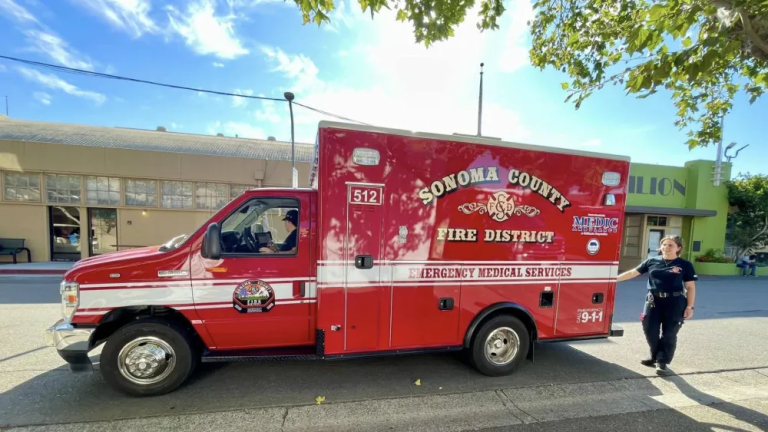
  • The Sonoma County Fire District formally requested a 16.36% ambulance billing rate increase on July 2, 2026, citing rising labor costs, unexpected operating expenses, and negative changes in patient insurance coverage composition.
  • District Chief Ron Busch requested splitting the increase into two phases: 9.9% immediately and the remainder plus cost-of-living adjustment January 1, 2027, a structure that could circumvent the county contract requirement for extensive operational audits triggered by rate increases exceeding 10%.
  • The district, which assumed ambulance service responsibility from American Medical Response in January 2024, projects expenses of $42.7 million against projected revenue of $40.2 million for fiscal year 2026-27, creating an estimated 6% revenue shortfall.
  • Major financial pressures include mandatory wage rates inherited from the previous contractor, the district’s obligation to contribute approximately $2.4 million annually to the county’s dispatch center operations, and reimbursement limitations from Medicare and Medicaid patients who comprise the majority of call volume.
  • Privately insured patients, representing only 13.7% of ambulance calls, generate 39% of billing revenue; the district states it must raise rates for this population to offset fixed reimbursement rates from government insurance programs and self-pay patients.

SONOMA COUNTY, CALIF. — The Sonoma County Fire District submitted a formal request July 2 for a 16.36% ambulance billing rate increase, marking the district’s second significant rate increase request since acquiring the county ambulance service contract from American Medical Response in January 2024.

Fire District Chief Ron Busch detailed the rate increase request in a July 2 letter addressed to County Health Services Director Nolan Sullivan. In a July 3 email transmitting that letter, Busch proposed a bifurcated approach: an immediate 9.9% increase, with the remaining increase and a cost-of-living adjustment scheduled for January 1, 2027.

The district projects ambulance program revenue of approximately $40.2 million for fiscal year 2026-27, contrasted against projected expenses of $42.7 million, creating a 6% revenue shortfall according to financial documents submitted with the rate increase request. The contract between the district and Sonoma County requires comprehensive audits when rate increase requests exceed 10 percent.

District officials cited multiple factors contributing to the financial pressure on ambulance operations. Primary among these are labor cost obligations resulting from salary and benefit increases American Medical Response granted ambulance personnel immediately before the district assumed the contract. The district was contractually obligated to match those compensation levels upon taking over service.

The district’s financial obligations also include a projected $2.4 million contribution to Redcom, the county’s emergency dispatch center, which was restructured in fall 2024. Under that restructuring, the fire district became responsible for one-third of dispatch center operational costs.

District reimbursement challenges are compounded by the composition of its patient base. Medicare, Medicaid, and uninsured or self-pay patients generate approximately $9.2 million, $11.3 million, and $1.2 million in annual revenue respectively, according to district financial documents. These categories operate under fixed or severely limited reimbursement rates established by federal and state programs and cannot be increased to address the district’s revenue shortfall.

Privately insured patients, comprising only 13.7 percent of the district’s ambulance calls, generate approximately $13.7 million annually and account for 39 percent of total billing revenue. The district stated it must direct rate increases toward this patient population to address the gap between revenue and expenses.

The district received a preliminary performance evaluation following its first year of operations. According to district communications, the county conducted a collaborative two-year audit measuring performance against contract compliance criteria, resulting in a first-year score of 91.6 percent, equivalent to an A grade. Negotiations continue between the county and district regarding ambulance response time standards specified in the contract.

This represents the district’s second significant rate increase request. In March 2025, approximately 15 months after assuming the contract, the district requested two increases totaling just under 25 percent, proposed for staged implementation beginning with a 9.9 percent increase. Those discussions appeared to stall, with county officials declining to characterize the outcome publicly.

In September 2025, the Board of Supervisors approved only a 2.4 percent cost-of-living increase, which the contract permits annually based on the region’s consumer price index.

Sullivan stated the county is currently evaluating the district’s rate increase request under established contract terms and will prepare a recommendation for the Board of Supervisors. Sullivan declined to specify when a recommendation would be presented, emphasizing the need to thoroughly evaluate the proposal and its impact on Sonoma County residents.

Central New York Launches Inaugural Youth Fire and EMS Training Weekend Program

By MES Dispatch Staff

The Briefing

  • Twenty-five cadets from 10 volunteer fire departments across Central New York participated in the inaugural Central New York Youth Fire and EMS Training Weekend held July 17-19, 2026, at the Fairmount Fire Department Training Center.
  • The three-day cross-training program was developed jointly by Fairmount Fire Department’s David Mazzoni and Borodino Fire’s Mark Swing, with support from the Firefighters Association of the State of New York (FASNY).
  • Training components included Stop the Bleed emergency medical certification, smoke-out simulations, and rescue scenario exercises; cadets were randomly assigned to mixed-department groups to simulate multi-agency response operations.
  • Mark Swing, founder of Borodino’s Fire Cadet Program and 2026 FASNY Youth Mentor of the Year, emphasized the program’s purpose: recruiting and training future firefighters to sustain volunteer fire service infrastructure.
  • Participants ranged from age 13 to experienced cadets on the path to full department membership, with several expressing intentions to pursue fire science education and professional fire service careers.

SYRACUSE, N.Y. — A collaborative training initiative for youth firefighters and emergency medical personnel debuted in Central New York on July 17, bringing together 25 cadets from 10 volunteer fire departments for a three-day skills and fitness development program.

The Central New York Youth Fire and EMS Training Weekend took place at the Fairmount Fire Department Training Center and was coordinated by Fairmount Fire Department personnel and Borodino Fire’s Mark Swing. The program received organizational support from FASNY, the Firefighters Association of the State of New York.

David Mazzoni, with resources and organizational capacity at Fairmount Fire, partnered with Swing to establish expanded youth fire training infrastructure across Onondaga County. Mazzoni’s role focused on providing facility access and logistical support for the weekend program.

Swing has dedicated his career to mentorship in fire service. His approach emphasizes early recruitment and foundational training for future firefighters. Swing entered a firehouse at age 14, progressed to wildfire deployment, helicopter rescue operations, and served as fire chief twice during a 43-year career. His mentorship commitment led to development of Borodino’s Fire Cadet Program, which resulted in his selection as 2026 FASNY Youth Mentor of the Year.

“To train our future firefighters, to fill the seats of these fire trucks, that is what this is about,” Swing stated. “And give the kids the foundation to start on for community service.”

The weekend curriculum included Stop the Bleed emergency medical training, conducted smoke-out tactical simulations, and heavily obstructed rescue exercises. Cadets were deliberately assigned to cross-departmental groups to build collaboration skills and replicate multi-agency response operations typical of emergency scenes.

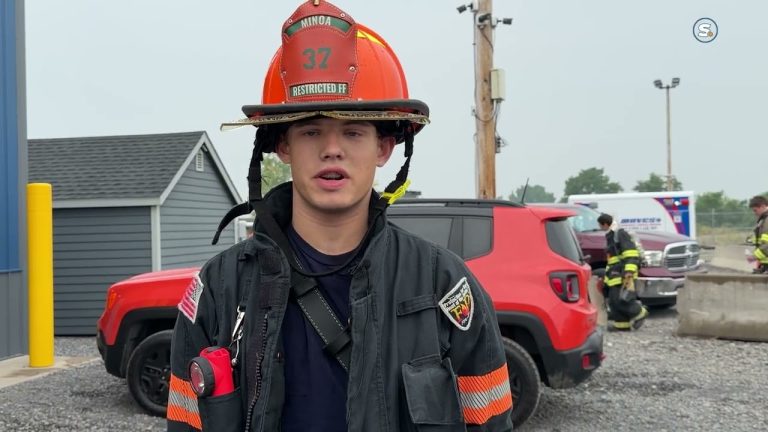
Participation included new cadets experiencing firefighting equipment and procedures for the first time alongside individuals with years of cadet program experience. Connor Young, 17, a restricted firefighter with the Minoa Fire Department and three years in the cadet program, stated he is fully trained as a junior in high school and plans to pursue fire protection technology studies at Onondaga Community College following graduation.

“If you want to do it,” Young said, “get into it young and you’ll enjoy it for the rest of your life and make lifelong friends.”

Rapid City Fire Department Warns of Rural EMS Service Termination Without New County Funding

0

By MES Dispatch Staff

The Briefing

  • The Rapid City Fire Department has notified Pennington County it will cease providing ambulance service to rural county areas effective December 31, 2026, unless county officials establish a funding agreement to continue operations.
  • The department estimates approximately $800,000 annually is required to sustain ambulance coverage for unincorporated areas, which generated 2,655 emergency calls in 2025.
  • RCFD has provided ambulance service to county residents since 2003 without subsidy or a formal service contract with Pennington County since 2007; ambulance operations are funded through a city enterprise fund supported by user fees.
  • The Pennington County Board of Commissioners voted unanimously July 7 to formally request RCFD clarify funding requirements and service parameters needed to continue rural coverage during a transition period.
  • Under current South Dakota law, Emergency Medical Services are not designated as essential services that municipalities or counties are mandated to fund; a state task force created by 2026 legislation is evaluating whether to classify EMS as an essential service requiring statutory funding mechanisms.

RAPID CITY, S.D. — The Rapid City Fire Department notified Pennington County officials in December 2025 that it would cease providing ambulance service to rural unincorporated areas after December 31, 2026, absent a formal funding agreement, prompting county commissioners to seek solutions for maintaining medical response in outlying regions.

RCFD Chief Jason Culberson stated that ambulance service operations are funded through a city enterprise fund that relies on revenue from patient transports. The department does not seek to expand operations but rather to establish a funding mechanism to continue providing services already being delivered to county residents.

The Rapid City Fire Department has operated ambulance service in rural Pennington County since 2003 without municipal subsidy. No service contract between RCFD and Pennington County has existed since 2007. Ambulance enterprise fund operations were approved at $7.2 million for the city’s 2026 budget.

Commissioner Jerry Derr stated that rural ambulance service in the county’s unincorporated areas, particularly eastern Pennington County including New Underwood, requires approximately $800,000 in annual funding to sustain. Emergency calls for ambulance service in those areas totaled 2,655 in 2025.

The Pennington County Board of Commissioners voted unanimously on July 7 to formally send a letter to Chief Culberson requesting clarification on five operational and financial questions, including estimated funding levels, geographic coverage areas, willingness to enter short-term agreements, and conditions required to continue service during a permanent funding model transition.

Under South Dakota law, Emergency Medical Services are not designated as essential services that local governments are required to fund. In 2025, House Bill 1043 proposed requiring counties and municipalities to fund EMS but did not advance past committee. In 2026, Senate Bill 89 established the Emergency Medical Services Funding Task Force to evaluate whether EMS should be classified as an essential service; conclusions and potential legislative outcomes remain undetermined.

Commissioner Derr’s presentation to the board outlined three funding mechanisms: a mill levy ranging from 0.251 to 0.329 mills, a special assessment of approximately $119 per owner-occupied home, or direct allocation from county general funds. Commissioners also discussed the option of establishing an independent ambulance district to contract with providers other than RCFD.

National Wildfire Resources Stretched as Thousands of New Fires Ignite Across Western States

By MES Dispatch Staff

The Briefing

  • Wildfire agencies across the United States are strategically pre-positioning crews, engines, aircraft, and equipment in areas with highest fire risk as the 2026 fire season becomes increasingly deadly and resource-intensive.
  • More than 2,000 fires have been confirmed since the beginning of July, with the National Interagency Fire Center raising the national preparedness level to 4 out of 5; four firefighter deaths have been recorded, including three killed in Colorado and one helicopter pilot killed in a crash.
  • Over 5,600 square miles—more than Yellowstone and Grand Canyon national parks combined—have burned nationwide in 2026, outpacing the average for the past decade as record-low snowpack, persistent drought, and record heat fuel rapid fire growth.
  • Sixteen incident management teams are overseeing approximately 17,000 firefighting personnel deployed across more than a dozen states, including crews relocated from Alaska and California to assist regions experiencing explosive fire activity.
  • Fire managers report concerns about firefighter burnout and safety as personnel work extended hours and face consecutive days of red flag warnings, high winds, and extreme fire behavior conditions.

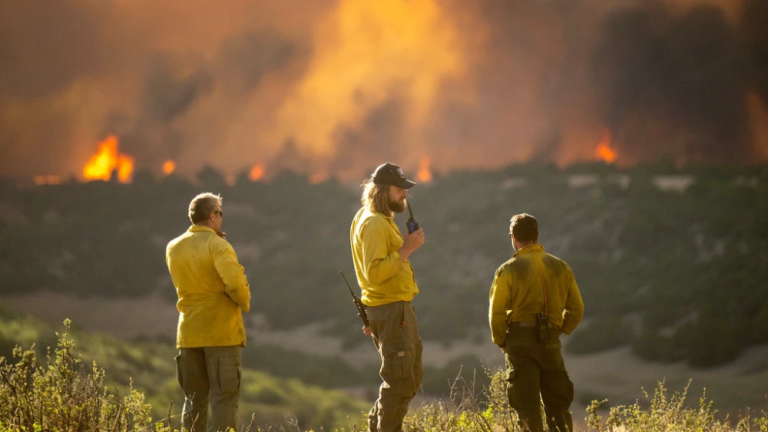
ALBUQUERQUE, N.M. — Wildfire agencies across the nation are strategically deploying thousands of firefighters, hundreds of engines, bulldozers, and fleets of helicopters and air tankers to regions facing the highest risk of catastrophic fire activity as the 2026 fire season becomes increasingly deadly and resource-intensive.

The U.S. Wildland Fire Service stated that resource pre-positioning in high-likelihood activity areas enables more rapid initial attack when fires ignite, frequently resulting in the most effective strategy for containing blazes before they expand to destructive proportions.

The 2026 fire season has already claimed four lives among wildland firefighting personnel and federal agencies. Three firefighters were killed while battling the Snyder Fire in Colorado, and a helicopter pilot died when his aircraft crashed while supporting firefighting operations near the Gold Mountain Fire near Ouray, Colorado.

The National Interagency Fire Center, comprising federal and state agencies supporting ground-level firefighting efforts, raised preparedness levels to 4 out of 5 following a surge of wildfire activity in late June. The escalation triggers mobilization of additional crews, equipment, and incident management personnel to areas experiencing the most significant fire activity.

More than 2,000 fires have been confirmed since July 1 alone, according to the National Fire Center. The explosive fire activity across western states has prompted the deployment of additional highly skilled incident management teams. By Monday, sixteen such teams were overseeing approximately 17,000 firefighting personnel across more than a dozen states.

Over 5,600 square miles—an area larger than Yellowstone and Grand Canyon national parks combined—have burned nationwide in 2026, significantly outpacing the average for the preceding decade. Fire activity has been exacerbated by persistent drought, record-low snowpack levels, and consecutive days of extreme heat, low humidity, and strong winds across western regions.

Geographic area coordination centers nationwide coordinate mobilization of firefighting resources. The Colorado Division of Fire Prevention and Control reported receiving assistance from Alaska-based incident management teams. Officials stated that resource-sharing arrangements have been critical to managing current fire activity. In Utah, firefighting crews were assigned to the Babylon Fire, the largest active blaze in the United States at 166 square miles.

Fire managers are employing aggressive initial attack strategies, directing personnel to suppress every fire as quickly as possible to limit growth, reversing decades-long practices permitting some fires to burn for fuel reduction purposes. Wildfire risk science experts note this represents a shift driven by concerns about firefighter safety and incident expansion under current extreme conditions.

The most recent fire potential outlooks indicate above-normal fire risk continuing through September in areas from the Four Corners region northward to Oregon, Idaho, and Washington.

Christopher Dunn, an assistant professor of wildfire risk science at Oregon State University, described the resource management challenge as requiring delicate balance between sharing resources across regions and maintaining reserve capacity for emergencies. Dunn noted that shared resource deployment creates extended field exposure for firefighting personnel, increasing overtime and risk of burnout.

Camille Stevens-Rumann, a former wildland firefighter and associate professor at Colorado State University, stated that strategic advance positioning of resources proves critical when facing consecutive days of red flag warnings, strong winds, and low humidity conditions. Stevens-Rumann noted that firefighters can be available during evening hours when conditions allow suppression operations but face significant challenges controlling fires during sustained extreme fire weather conditions.

The nation maintains approximately 350 fire lookout towers, many staffed by volunteers due to budget constraints, according to Michael Guerin, chairman of the Forest Fire Lookout Association. Lookout towers located in Colorado were evacuated due to approaching wildfires, while California volunteers positioned themselves to respond when Santa Ana winds arrive. California’s Department of Forestry and Fire Protection announced deployment of the first satellites into orbit as part of a space-based wildfire detection system.

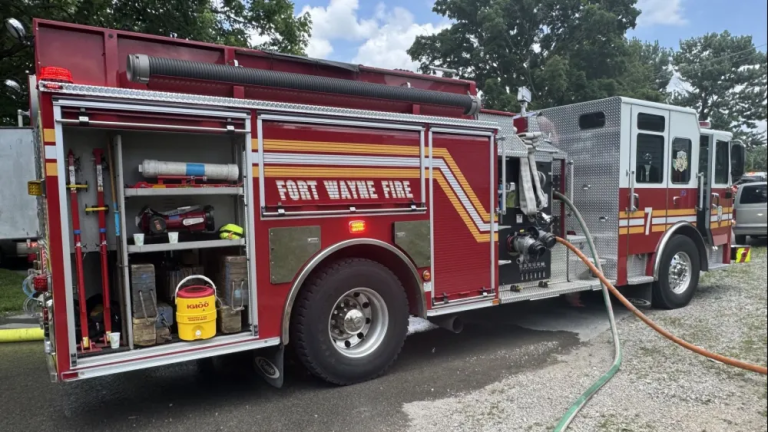
Fort Wayne Man Charged With Arson in Connection With May Garage Fire

0

By MES Dispatch Staff

The Briefing

  • Christopher Peden, of Fort Wayne, Indiana, faces arson charges and up to 12 years in prison in connection with a garage fire that occurred in May 2026.
  • Fort Wayne firefighters and police responded to reports of a structure fire and stabbing at the location; Peden initially claimed he had been stabbed but later admitted he deliberately set the fire.
  • Police report that Peden used a kitchen knife as an instrument in causing injury to himself and then used accelerant to ignite the garage fire.
  • Investigators recovered a gasoline canister, four lighters, and a kitchen knife at the fire scene.
  • Court records document the incident and pending criminal charges; Peden’s case involves both criminal arson and documented mental health crisis intervention.

FORT WAYNE, IND. — Christopher Peden has been charged with arson in connection with a garage fire that occurred in May 2026, with prosecutors seeking up to 12 years in prison upon conviction.

Fort Wayne Fire Department personnel responded to reports of a structure fire and a stabbing incident at a residential property. Initial statements from Peden indicated he had been stabbed elsewhere and claimed to have been threatened the day prior to the incident.

During hospital evaluation following his initial statements to responding officers, Peden recanted his account and provided a different narrative of the incident to medical and law enforcement personnel.

According to Fort Wayne Police Department reports, Peden admitted that he intentionally caused injury to himself using a kitchen knife, then used accelerant to ignite the garage fire.

Investigators located a gasoline canister, four lighters, and a kitchen knife at the fire scene. Court documents do not specify whether additional evidence was recovered or whether Peden received ongoing medical and mental health evaluation following the incident.

Peden faces criminal arson charges with a potential sentence of up to 12 years in Indiana Department of Correction custody upon conviction.

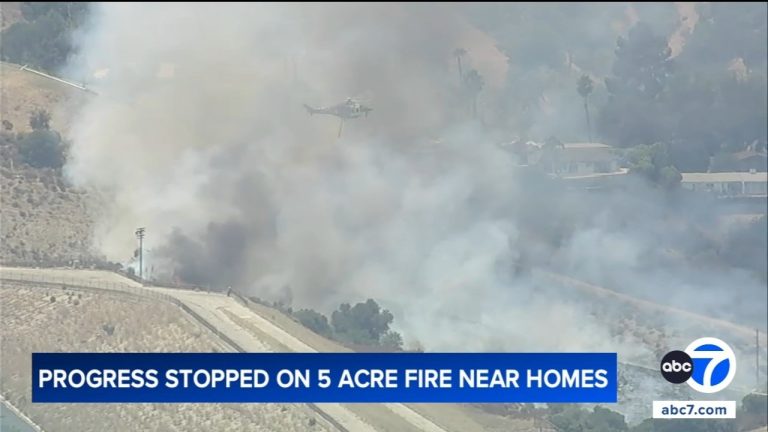
Drone Collides With LAPD Helicopter Above Encino Reservoir Fire; Aircraft Lands Safely

By MES Dispatch Staff

The Briefing

  • A civilian drone struck an LAPD helicopter approximately 3 p.m. Tuesday while the aircraft was operating above an active brush fire near the Encino Reservoir in the Los Angeles area.
  • The helicopter landed safely at Van Nuys Airport with only minor damage; no injuries were reported among crew members aboard the aircraft.
  • An eight-acre brush fire at the Encino Reservoir was caused by downed electrical power lines; firefighters attacked initial spot fires before a second fire ignited when an energized line struck the ground.
  • LAFD Chief Jaime Moore described aggressive firefighting operations that achieved full containment by Tuesday evening after crews shifted focus to the secondary fire location.
  • Mayor Karen Bass condemned the drone operation as illegal and unacceptable, referencing a previous drone incident during the January 2025 Palisades Fire, and warned that individuals responsible would face arrest and prosecution.

LOS ANGELES, CALIF. — An unmanned aircraft struck an LAPD helicopter on Tuesday while firefighting operations were underway above an active brush fire near the Encino Reservoir, forcing the police helicopter to land safely with minor damage sustained.

The collision occurred approximately 3 p.m. near the Encino Reservoir during suppression operations on an eight-acre brush fire. The police helicopter successfully diverted to Van Nuez Airport and made an emergency landing without injury to crew members aboard.

The brush fire was ignited by downed electrical power lines in the area. Los Angeles Fire Department personnel responded to initial reports of a 50-by-50-foot spot fire believed caused by downed power lines. Firefighters immediately initiated aggressive suppression efforts against the initial fire.

As firefighting crews were engaged in suppression operations on the first spot fire, a second fire ignited nearby. The secondary fire was caused by an energized electrical line that struck the ground. LAFD personnel immediately shifted firefighting operations to attack the secondary fire.

Chief Jaime Moore described the operational challenge. “Our firefighters immediately did an aggressive attack. They were mopping up that fire when, just up the hillside, another spot fire broke out because of the energized power line that hit the ground there,” Moore stated.

Firefighting crews worked to suppress both fires, eventually achieving full containment by Tuesday evening. The Los Angeles Department of Water and Power was contacted regarding the downed electrical lines responsible for igniting the fires.

Mayor Karen Bass issued a strong statement condemning the drone operation. “I will say that it is completely unacceptable and illegal to fly drones like this,” Bass stated. “If we find out who you are, you will be arrested, and you will be prosecuted.”

The mayor referenced a prior drone strike on a Los Angeles Fire Department helicopter during the January 2025 Palisades Fire, which killed 12 people and destroyed thousands of homes. Bass directly addressed civilians who might consider operating drones near emergency operations.

“So any lookie-loos out there, this is very dangerous to everyone,” the mayor warned.

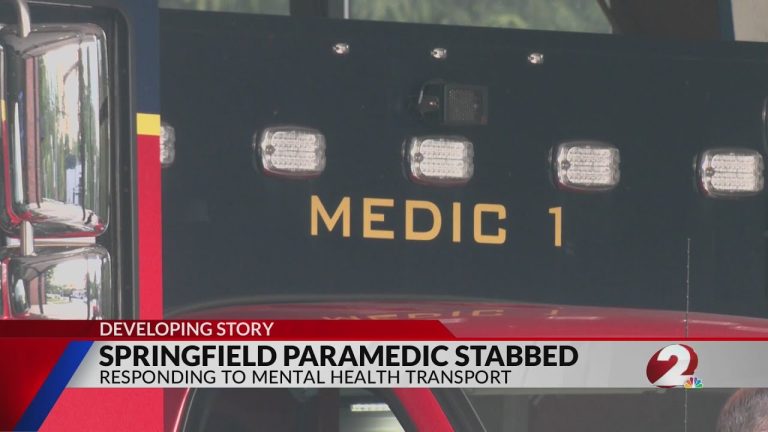
Springfield Firefighter Stabbed by Patient During Court-Ordered Mental Health Transport

0

By MES Dispatch Staff

The Briefing

  • A Springfield firefighter/paramedic was stabbed in the back July 8 while transporting a patient to Springfield Regional Medical Center for a court-ordered mental health evaluation.
  • The patient stabbed the paramedic during the transport; Springfield police responded and took the patient into custody.
  • The paramedic sustained non-life-threatening injuries, was treated at a hospital, and has been released to recover at home.
  • Fire Chief Jacob King issued a statement noting the incident occurred on a call initially believed to be low-risk, highlighting the unpredictable dangers first responders face daily.
  • The incident underscores concerns about safety during behavioral health transports and the potential for patient violence against EMS personnel.

SPRINGFIELD, OHIO — A Springfield Fire Department firefighter/paramedic was stabbed while transporting a patient for court-ordered mental health evaluation on July 8, sustaining non-life-threatening injuries that have since resolved.

The paramedic was part of a transport crew that had been dispatched to transport a patient to Springfield Regional Medical Center for a mental health evaluation. While en route, the patient stabbed the paramedic in the back.

Springfield Police Department personnel responded and took the patient into custody at the scene. The paramedic was transported to a hospital for treatment of the stab wound and subsequent examination. The paramedic has since been released and is recovering at home.

Fire Chief Jacob King issued a statement regarding the incident. “This incident is a reminder that first responders face unpredictable and dangerous situations every day, even on calls initially believed to be low risk. We are grateful our member’s injuries were not more severe and appreciate the rapid response and support provided by the Springfield Police Division and our healthcare partners,” King stated.

The incident raises ongoing questions regarding EMS safety protocols during behavioral health transports and the appropriate role of law enforcement assistance during such calls.