Monday, April 27, 2026
Home Blog Page 35

Officials Look to Reopen Oakland, CA, Fire Stations Closed in Budget Cuts

Oakland officials are looking to take money from insurance and other programs to reopen two fire stations closed last month.

By Sarah Ravani  Source San Francisco Chronicle

Feb. 13—Oakland officials announced a plan that they said would prevent the closure of additional fire stations as the city struggles to address its massive budget deficit, by shifting money from other city funds.

On Thursday, Council Members Janani Ramachandran, Rebecca Kaplan and Zac Unger introduced an ordinance that, if approved, would also reopen two fire stations that were temporarily closedearlier this year to save money.

“Oaklanders are united in wanting safer communities. Firehouses are our bread and butter for keeping our communities safe,” Ramachandran said at a news conference Thursday.

Unger said more fire station closures would be catastrophic for the city and the fire department. Seth Olyer, the president of the firefighters association, said the closure of fire stations is “detrimental to public safety.”

Their proposal would use about $8 million taken from the city’s self-insurance liability and other funds. The city is already using a portion of those funds to address the deficit. Their proposal also uses $2.6 million from the Joint Powers Authority, the governing body that oversees operations at the Coliseum, to keep the stations open.

Though council members originally said some of the money would come from the city’s affordable housing trust fund, and the proposed ordinance named the fund in its title, Ramachandran later said the fund would not be tapped. Unger said the council members are still finalizing the funding that they will use. City staff still need to analyze the proposal.

Damon Covington, the city’s fire chief, said in a statement that he’s encouraged by the city’s consideration of “viable options” to reopen closed fire stations and prevent additional closures.

“Oakland residents understand the value of our department and its ability to respond 24 hours a day to over 80,000 calls per year, and they deserve to have the full complement of fire and medical service resources available when they call us,” Covington said. “I will continue to work with the City Council and City Administration to reinforce this message.”

The City Council will vote on their proposal on March 4. The move comes as the city grapples with a nearly $130 million budget deficit that is eviscerating basic services.

The budget deficit has already resulted in the layoffs of nearly 100 city staff members, the elimination of grants to arts and violence prevention organizations, slashing police overtime and closing two fire stations. The city planned to close four more fire stations this month.

Jestin Johnson, the city administrator, told city staff in an email last month that more harsh cuts remain to address the city’s budget woes. Other proposed cuts have not been released.

“We will be guided by our systems and values, and by our strategic plan, and we will continue to work with our departments, our mayor and city council, and our community to chart the path forward,” he said.

Interim Mayor Kevin Jenkins will release a budget plan in the spring that will be amended and voted on by the City Council by June 30, per the city charter.

NC Lawmakers Aim to Protect Firefighters

0

Legislators in both bodies of the North Carolina General Assembly have introduced bills to help protect firefighters, who face a high risk of cancer exposure in the line of duty.

Firehouse.com – Steven Shaw

Both the Senate and the House of the North Carolina General Assembly have introduced bills to help protect firefighters.

CBS 17 reports that House Bill 97 would expand definitions of on-duty deaths for firefighters to include stomach cancer.

The new Senate bill would slightly increase pensions for firefighters and also give them more representation statewide.

“A lot of [firefighters] are selfless individuals that sacrifice to make sure the rest of us are taken care of,” Rep. Ben Moss told CBS 17.

“I don’t really know that you can draw a line as to how much support you can give back to them,” he added.

Ridgeville, SC, Station, Rig Damaged in Fire

0

Ridgeville Fire Station 8 was significantly damaged along with one its fire trucks following an electrical shortage.

By Javon L. Harris Source The State (TNS)

A South Carolina fire station that caught on fire was significantly damaged along with one its fire trucks following an electrical shortage, according to officials in Dorchester County.

The blaze began at Ridgeville Fire Station 8 at around 2 a.m. on Tuesday, prompting firefighters with Dorchester County Fire Rescue to respond, according to a news release. The fire was caused by an electrical shortage in the station’s brush truck, which is used to fight wildfires, the release said.

Besides one firefighter, who was treated for smoke inhalation, no other injuries were reported, according to the release.

While the fire didn’t damage the station’s primary engine and tanker, the brush truck was a total loss, according to the release. In addition, the station’s building was severely damaged and temporarily closed. Structural engineers will determine when the station can resume operations, the release said.

In the meantime, fire personnel at station 8 will operate six miles away at the Givhans Fire Station 12, according to the release. Other firefighters with the Jedburg Fire Station 10 will help to cover portions of Ridgeville as needed, the release said.

The station fire is not expected to impact insurance premiums for area residents based on the community’s ISO ratings, which determine a fire department’s readiness, according to the release.

East Syracuse, NY, Firefighter Injured in Crash

0

The firefighter suffered minor injuries when the East Syracuse fire truck responding to a call collided with a truck Wednesday afternoon.

Timia Cobbsyracuse.com (TNS)

DeWitt, N.Y. — An East Syracuse fire truck responding to a call collided with a truck Wednesday afternoon in DeWitt.

The crash happened at about 3:19 p.m. at 7030 Fly Road in DeWitt, according to Tom Newton, a spokesperson for the Onondaga County Sheriff’s Office.

Firefighters were on their way to a fire alarm at a home on East Taft Road, according to Onondaga County 911 dispatchers. The crash happened eight minutes away from the East Syracuse fire station.

One person inside the fire truck was taken to a hospital with minor injuries, Newton said.

Deputies are still investigating how the crash happened and if tickets will be issued, he said.

Staff writer Timia Cobb covers breaking news. Have a tip, a story idea, a question or a comment? You can reach her at tcobb@syracuse.com.

Two Dead, Buddhist Temple Destroyed in Bronx, NY, Fire

0

The FDNY said a car parked in front of the closest hydrant hampered firefighting operations.

Credit: Firehouse.com Steven Shaw

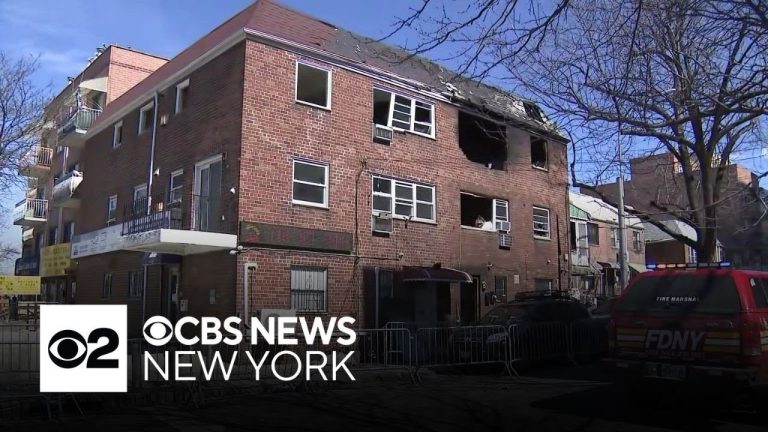
A Buddhist temple in the Bronx was destroyed and two people (one believed to be a Buddist monk) living next door to the temple were killed after a massive fire broke out Wednesday night.

More than 150 firefighters fought the flames for several hours.

FOX 5 reports that firefighting efforts were hampered by a car parked in front of a fire hydrant.

“We did unfortunately have a car parked on the closest fire hydrant. We’ve seen that now a couple of times in the last week throughout the City. We all know that we should not be parking on fire hydrants and when you park on fire hydrants, it slows us down. When we’re fighting a fire, seconds count,” FDNY Chief of Department John Esposito said in a post on X

The FDNY wouldn’t say if the car prevented them from saving those two lives.

JOURNALING FOR FIREFIGHTERS: LAYING THE FOUNDATION

Credit: February 7, 2025. By: Brandon Douglas Firefighter Nation

As firefighters, we rely on our tools. From halligan bars to self-contained breathing apparatus to flathead axes, our tools are versatile, dependable, and always ready to help us work through unexpected challenges. Just as we value adaptability and dependability in our fireground tools, we need the same from our mental health and well-being tools. One of the most effective and versatile mental health tools is the time-tested, super-simple pen and paper.

Journaling helps build self-awareness, drives personal growth, and encourages meaningful self-reflection. It provides a means to detach, transforming subjective experiences into tangible words on a page. These 18 inches of detachment make it easier to process experiences, enabling us to become more resilient, present, and grateful in our daily lives.

While it may seem too simple—just a pen and some paper—journaling can profoundly impact your mental health and emotional resilience. Let’s explore how to get started with one of the most straightforward yet powerful tools at our disposal.

QUICK START GUIDE: BUILDING THE HABIT

START SMALL

Building a new habit doesn’t have to be overwhelming. Let go of any preconceived notions of what journaling “should” be. There are no rules, word count, or grammar requirements; just start. Take advice from Atomic Habits author James Clear: keep it simple, make it easy, and aim for consistency. In the beginning, commit to writing just one line per day.

FOCUS ON GRATITUDE

For that one line, make it something you’re thankful for. Write about a moment you appreciated from the day before (assuming you’re journaling first thing in the morning). Dig deep; be specific. Do this consistently, and you’ll notice gratitude profoundly affects your mindset. Cultivating it through journaling will help you stay grounded, become more resilient, and be more and more aware of all the good around you.

MAKE IT EASY

Set yourself up for success by placing your journal somewhere you’ll see at the same time every day—on your nightstand, by the coffee maker, or on your desk. Make journaling part of your existing routine so it’s easy to remember and even easier to accomplish.

BE CONSISTENT

Again, just one line per day, every day. If you miss a day, no worries. Just try not to miss two in a row. Over time, this small, daily habit will grow into a practice you rely on to process your experiences, improve your mental fitness, and cultivate a greater sense of well-being.

A NOTE ON GRATITUDE

When starting, focusing on gratitude can be especially beneficial. Writing about something you’re grateful for each day shifts your mindset, helping you see the positive aspects of your life even during difficult times. Over time, this practice rewires your brain to focus on what you appreciate rather than what you lack.

For example, you might write about the camaraderie of your crew after a challenging call, the quiet calm of the apparatus floor just before shift change, or the satisfaction of a job well done. These moments, when documented, become anchors of positivity that help you navigate the more challenging days.

IT’S A JOURNEY, NOT A DESTINATION

Building a journaling habit takes time, but the rewards are worthwhile. What begins as a simple, one-line-a-day habit can evolve into a powerful practice that fosters clarity, gratitude, and resilience.

Over time, journaling will become a foundational tool you rely on—not just in your work as a firefighter but in every aspect of your life. It will help you navigate the challenges and joys of being a parent, spouse, friend, and human being.

Just as you wouldn’t face a fire without the right tools, don’t face life empty-handed. Journaling is a dependable, proven, and adaptable tool for strengthening your most significant asset: yourself. Start today. One line. One moment of gratitude. One step toward a better you.

About The Author: Brandon Douglas has 22 years in the fire service and is the division chief over training and development for Rural Metro Fire in Knox County, Tennessee. He holds a bachelor’s degree in psychology from American Public University and is working toward a master’s in organizational leadership through the University of the Cumberlands.

Rancho Cordova, CA, Church Destroyed in Blaze; Arson Eyed

Sacramento Metropolitan firefighters responding to help deputies with a burglar alarm found heavy fire through the roof.

Credit: Chris Biderman The Sacramento Bee (TNS)

Law enforcement and firefighters responded early Saturday morning to a reported break-in that became a two-alarm fire at a church in Rancho Cordova, authorities said.

Deputies and fire crews received reports of a break-in happening in the 10000 block of Folsom Boulevard at the Casa Fuego de Dios Church and responded around 2:45 a.m. The Rancho Cordova Police Department, Sacramento County Sheriff’s Office and Sacramento Metropolitan Fire District found smoke coming from the building and determined it to be a two-alarm fire, the agencies said in social media posts.

According to the church’s Facebook page, the church was destroyed and arson was suspected. No information about the cause of the fire was immediately available from Metro Fire or law enforcement. The name of the church loosely translates from Spanish to “House of Fire of God.”

Metro Fire said it encountered heavy fire through the roof and defensive measures were taken to protect nearby buildings.

The fire was contained to the church, and there were no reports of injuries, Metro Fire said.

©2025 The Sacramento Bee. Visit sacbee.com. Distributed by Tribune Content Agency, LLC.

Plane with 10 people on board missing in Alaska, officials say

Credit: Jessica Schladebeck – New York Daily News (TNS)

A plane carrying 10 people seemingly vanished while flying over Alaska’s Norton Sound south of the Arctic Circle, triggering a desperate search along the state’s western coast on Friday.

The Cessna aircraft, a single-engine turboprop operated by Bering Air, departed from Unalakleet for Nome on Thursday afternoon with nine passengers and a pilot onboard, Alaska’s Department of Public Safety said. Officials lost contact with plane around 2:37 p.m., less than an hour after take-off, and it was reported “overdue” by 4 p.m., per a dispatch message shared on the agency’s website.

According to data from FlightRadar, the aircraft was last seen flying over the Norton Sound, an inlet of the Bering Sea separating Unalakleet and Nome, just after 3:15 p.m. It was “12 miles offshore transiting from Unalakleet to Nome when its position was lost,” the U.S. Coast Guard Alaska maritime region posted on X.

While it’s still unclear what happened to the plane, its pilot apparently “told Anchorage Air Traffic Control that he intended to enter a holding pattern while waiting for the runway to be clear,” according to a Facebook post from the Nome Volunteer Fire Department. A C-130 Coast Guard plane was “planning to scope the area” in response. The agency said its firefighters were also actively searching the ground, between Nome and White Mountain, after they received a “a report of a missing Bering Air Caravan.”

“Due to weather and visibility, we are limited on air search at the current time. National Guard and Coast Guard and Troopers have been notified and are active in the search,” the fire department said. “ Norton Sound Health Corporation is standing by.”

The White Mountain fire chief, Jack Adams, told KTUU that the aircraft “disappeared from the radar somewhere along the coast of Nome to Topkok,” leaving crews to search the approximately “30-mile stretch” of land overnight and into Friday. He said they’re hoping to find the plane on land, adding that it “being in the water would be the worst-case scenario.”

The names of the people onboard weren’t yet being released.

“Staff at Bering Air is working hard to gather details, get emergency assistance, search and rescue going,” said David Olson, director of operations for Nome-based Bering Air, which serves more than 30 local communities.

The plane’s disappearance marks the third major incident in U.S. aviation in just more than a week’s time. It comes one week after a medical transportation plane crashed in Philadelphia on Jan. 31, killing the six people onboard and another person on the ground. And on Jan. 29, a US military Black Hawk helicopter collided with a passenger jet near Washington, DC, leaving no survivors.

With News Wire Services 

Black Hawk Helicopter Makes Emergency Landing in Cascade, MD, Field

0

The two soldiers aboard, who are OK, were trying to make it back to Fort Ritchie, but chose the cornfield instead.

Credit: Susan Nicol – Firehouse.com

A Black Hawk helicopter experiencing a mechanical issue landed in a cornfield near Cascade Thursday afternoon. 

Both soldiers aboard are OK, according to Washington County MD Fire Calls officials

The crew was attempting to get back to Fort Ritchie to land, but chose a cornfield about three miles away.

Washington County, MD and Franklin County, PA fire and rescue personnel were dispatched to assist with the incident. 

An engine from Smithsburg needed assistance after getting stuck in the muddy field.

Fort Ritchie, about four miles from Camp David, was once a training site for the U.S. Army and Maryland National Guard as well as a home to prisoners-of-war camps during World War II. It was closed in 1998. 

The emergency landing Thursday came eight days after a Black Hawk helicopter and a regional jet collided above a runway at Reagan National Airport, killing 67.

Vital Details Linger Month after Start of Deadly CA Wildfires

While the cause of the firestorm is being investigated by the ATF, one started Jan. 7 and spread rapidly due to hurricane-force winds.

Credit. Firehouse.com

The first column of black smoke rose from the hills above Pacific Palisades just after 10 a.m. on Jan. 7. A fire in that location so close to homes would bring alarm on any day. But on this one, the Santa Ana winds were reaching hurricane force.

It was the beginning of one of the most momentous, destructive and tragic days in Los Angeles County history.

The Palisades fire went on to char 23,707 acres in the area of Pacific Palisades, Topanga and Malibu. More than 6,800 structures were destroyed, including many residences and iconic businesses along Pacific Coast Highway and homes in the hills above. At least 12 people were killed.

The Eaton fire, which erupted hours later in Altadena, burned 14,021 acres in and around Altadena and Pasadena, razing more than 9,400 structures and claiming 17 lives. It took a heavy toll on the historically Black community of Altadena, where many families of color had used their homes to accumulate generational wealth.

A month later, the crisis of the fire has given way to recovery, cleanup and talk of rebuilding.

But questions remain about what happened that day and what we can learn from it. Here are some key points from the pages of The Times’ fire coverage:

What do we know about the cause of the Palisades fire?

The fires broke out near a popular hiking trail at around 10:30 a.m. Jan. 7 and spread rapidly into Pacific Palisades and Malibu amid hurricane-force winds.

A team of investigators from the U.S. Bureau of Alcohol, Tobacco, Firearms and Explosives is trying to determine the cause of the firestorm.

The ATF has not commented on the investigation. But sources say one area of scrutiny is whether an 8-acre blaze that fire officials thought they had put out on Jan. 1 in the same area reignited and spread due to the intense wind.

The Lachman fire was reported at 12:17 a.m. New Year’s Day on a hillside above Pacific Palisades by a resident whose home is about two blocks from the popular Skull Rock trail. Sources with knowledge of the investigation who were not authorized to speak publicly told The Times the Lachman fire appeared to have been sparked by fireworks.

Water-dropping helicopters initially were not able to fly because of strong winds, according to the agency. But around 1:40 a.m., an aerial attack was launched to support crews on the ground. News footage captured the charge, with walls of flames towering over homes and firefighters with hoses running into backyards.

Shortly after 3:30 a.m., fire officials reported they had stopped forward progress of the blaze.

A little over an hour later, the Los Angeles Fire Department reported that firefighters had “completed the hose line around the perimeter of the fire and it is fully contained.” However, some firefighters remained at the site to mop up and ensure the fire didn’t flare up again.

But sources told The Times last week a final determination had not been made and that it was still possible the blaze started on Jan. 7.

What was the cause of the Eaton fire?

The blaze, which burned large swaths of Altadena, is being investigated by the California Department of Forestry and Fire Protection.

The early focus has been on Southern California Edison power lines in Eaton Canyon, where the fire began after 6 p.m. on Jan. 7.

Soon after the fire, Edison came under scrutiny because of photos and videos taken by Eaton Canyon residents that showed a fire burning under a transmission tower just as the blaze started.

Last week, Edison revealed that its lines over Eaton Canyon saw a momentary increase of electrical current about the same time as the fire began. In a filing to California regulators on Jan. 27, Edison said a fault occurred on the Eagle Rock-Gould line, which connects the Eagle Rock substation to the Gould substation in La Cañada Flintridge.

The fault occurred about five circuit miles from the area where the fire started and caused an increase of current across the company’s transmission lines.

On Thursday, Edison went a step further, acknowledging that videos and other evidence suggested the company’s equipment might have played a role. The company added that so far, however, it “has not identified typical or obvious indications that would support this association, such as broken conductors, fresh arc marks in the preliminary origin area, or evidence of faults on the energized lines running through the area.”

“While we do not yet know what caused the Eaton wildfire, SCE is exploring every possibility in its investigation, including the possibility that SCE’s equipment was involved,” said Pedro J. Pizarro, president and CEO of SCE’s parent company, Edison International.

More than 40 lawsuits from over 600 residents have been filed against Southern California Edison accusing the utility and its equipment of igniting the blaze.

What was the cause of the Hurst fire?

Southern California Edison reported to state regulators Thursday that its equipment likely sparked the Hurst fire that burned nearly 800 acres in Sylmar.

What do we know about the fire evacuations?

The evacuations for both the Palisades and Eaton fires have been the subject of criticism.

A Times investigation of the Eaton fire showed it took almost nine hours for a large swath of Altadena west of North Lake Avenue to receive electronic evacuation orders. By then, several fires had been reported in that area, and many residents say they watched in horror as flames rapidly approached their homes. Of the 17 people who died, all lived west of North Lake Avenue.

A Times review of the Palisades fire found the challenge of evacuating thousands of residents was compounded by delayed alerts and overwhelmed first responders. Residents told The Times they felt as if they were left to fend for themselves. Streets were gridlocked at least 40 minutes before the first widespread evacuation order. As flames approached, firefighters and police told motorists to get out and run. The abandoned cars worsened the jam and prevented first responders from getting through. Residents trapped by blocked roads said they were forced to shelter in place.

What do we know about fire preparations?

A Times investigation revealed that Los Angeles Fire Department officials made the critical decision to forgo calling in scores of extra firefighters and equipment in the hours before the Palisades fire.

The Los Angeles Department of Water and Power has also come under scrutiny because a key Pacific Palisades reservoir was empty due to maintenance when the Palisades fire broke out. Gov. Gavin Newsom ordered an investigation into the matter.

Water pressure was another issue, with fire hydrants running dry in both Pacific Palisades and Altadena. Officials said water systems that supply neighborhoods simply don’t have the capacity to deliver such large volumes of water over several hours. As fires grow larger and more intense in the West, essential questions are being raised, including: Should storage tanks and other local water infrastructure be expanded to contend with wildfires? Where? And at what cost?