Apr. 11—NEW LONDON — As a firefighter with the Russiaville Volunteer Fire Department, New London resident Brian Hammond has seen the ways a fire can devastate a home and a family’s life in a matter of minutes.
But he admitted he had never really seen or felt the impacts of the aftermath because there was always a truck to hop on that would take him back to the fire department and away from the scene.
But then came last Sunday.
After enjoying Easter lunch with his family, including his wife Danielle and their five children, Hammond said he drove into Russiaville for some fountain drinks.
“I walked in and got her (Danielle’s) drink and my drink, and I no more than got out into the car that my phone rang,” Hammond said. “It was Danielle calling and screaming that the house was on fire and to get back.”
A lot of thoughts and feelings go through your mind in a moment like that, Hammond noted, but shock is probably one of the biggest ones.
“I still don’t know if my brain has fully been able to comprehend everything that actually happened on Sunday,” Hammond told the Tribune. “I got there, and the dad instinct in me kicked in. I made sure all of our kids were safe. I made sure all of our dogs were safe. I realized that all the kids were across the street at the neighbor’s house. Being a firefighter, I’ve always said, ‘Hey, if this ever happens, do this,’ and the kids did exactly what they were supposed to do.
“The two boys, as soon as they realized the house was on fire, they were the ones that told Danielle that the house was on fire,” he added. “They made sure that everybody was out of the house. … And as soon as I got there, I grabbed the water hose from the house, which unfortunately doesn’t do much in a structure fire. But I was just trying to put as much water on it as I could until (RVFD) got there.”
The actual cause of the fire is still under investigation, but RVFD Chief Landen Bartley said the fire appeared to start on the exterior of the residence.
Bartley added that once the firefighters found out the house belonged to one of their own, their minds began to ask questions they didn’t initially know the answers to.
“The first thing is, since you know them, you know their kids,” he said, “so that’s the first thing that comes to mind is their family. Are the kids out? Is his wife out? Is that OK? So that’s the first thing. Then after that, it’s more of, ‘We’ve got a job to do, and we’re going to do it exactly the same way we’d do any other one.'”
RVFD was assisted at the scene by the Harrison Township Volunteer Fire Department and the Burlington Volunteer Fire Department, who provided water support and manpower.
However, fire officials still deem the house a total loss.
But you can replace objects, Hammond noted. You can’t replace people.
“The house went from being completely fine to being fully involved in 5 or 10 minutes,” he said. “So I’ve learned to just cherish every moment that you can because at any point in time, it can change.
“It’s definitely going to teach me a different way of firefighting, too,” Hammond added, “making sure that you’re following up with families after something this devastating happens. Being a firefighter, I’ve done this since 2006. My dad’s been a firefighter my entire life. So I’ve seen the aftermath of fires, but I’ve never had the experience of what it’s like to go through a fire like this personally. … Just never take life for granted.”
And never take for granted the love and support of complete strangers either, Hammond said, alluding to the community support his family has received since Sunday.
Hammond — who said he doesn’t like to ask others for help — even set up a GoFundMe page for the family at the urging of some of his friends.
“For me, it’s been extremely overwhelming,” he said, referring to the outpouring of love that his family’s received from the community. “It’s just good to see that there are still good people, I guess, to reach out and just help complete strangers.”
As of Tuesday morning, news of the fire had traveled throughout social media, with people offering the Hammond family everything from monetary support to furniture and clothing.
The support specifically from the New London and Russiaville area has been heartwarming too, Hammond added.
“It’s been amazing out here,” he said. “I love the small-town vibe. The insurance adjuster showed up and was talking about trying to find more land and everything like that for us, and I said, ‘I’m not leaving New London. This is where we’re staying. We’re going to rebuild right here.'”
A retired Chester Fire Department firefighter was sentenced to prison Tuesday for attacking three police officers with a fire extinguisher during the Jan. 6 riot at the Capitol.
Robert Sanford, 57, was sentenced to four years for one count of assaulting police with a dangerous weapon, WUSA9 reported.
Prosecutors wanted him to serve five years as they outlined the injuries officers suffered after being hit in the head with the extinguishers.
One officer struck by Sanford suffered swelling on his head and another another went to the hospital for a medical examination.
Sanford’s attorney, Andrew M. Stewart, argued for a lower sentence of a year and a day in prison. He said the officer’s injury was not significant enough to warrant an enhancement for causing bodily injury.
Sanford apologized to the officers he struck and to his fellow firefighters, saying he only came to the nation’s capital to hear Trump’s speech.
“Mob mentality is real and I got caught up in it,” Sanford said adding he has been meeting with an anti-cult counselor.
U.S. District Judge Paul Friedman said Sanford’s case was difficult because of his spotless record and his more than two decades as a firefighter. But, he said, that cut both ways.
“I don’t think this was minor. And of all people, a firefighter of 27 years should have known that.”
The judge disagreed with Sanford’s attorney’s argument for a lighter punishment.
He sentenced Sanford to serve 52 months in federal prison, with credit for the eight months he’s served. He will also have to spend three years under supervision once released and pay $3,798 in restitution to one of the officers he struck to pay for medical expenses, as well as $2,000 to the Architect of the Capitol for damages caused during the riot.
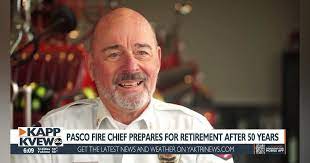
Apr. 10—Bob Gear has spent enough time as a firefighter to last two careers, and in that time he’s changed how fires are fought in the Tri-Cities.
The 67-year-old Pasco fire chief is preparing to close the book on a profession that has lasted nearly 50 years, and has taken him across the country to fight fires.
In that time, he has led both Benton County Fire District 1 and the Pasco Fire Department. He’s seen the counties move to a singular dispatch center based in Richland, and the various fire agencies cooperate more in unison.
He was one of dozens of firefighters who traveled to New York City to respond to the terrorist attacks on Sept. 11, 2001, and was named chief of the year by the Washington Association of Fire Chiefs.
He’s also helped fight some of the worst fires Benton and Franklin counties have seen, including fires in 1984 and 2000 that started on the Hanford nuclear site and burned hundreds of thousands of acres.
Gear has remained a steady presence leading firefighting efforts. His knowledge of how fire behaves in the region helped stop several other major blazes from getting worse.
Retired Richland Fire Chief Grant Baynes said working with Gear was one of the highlights of his career.
“Operationally, he was really strong,” he said. “He had a lot of experience to apply to incidents. He was also a really good listener.”
Gear changed how wildland fires were fought in the region and helped shape response across the state, said Franklin County Fire District 3 Chief Mike Harris.
“He’s always been an agent of change. He shaped Benton 1, shaped the surrounding area and then went to Pasco,” Harris said.
The city of Pasco announced that Gear is planning to retire on May 31, after he helps find his replacement.
“There is a lot happening in the city, and … it’s time for some new blood. This is the start of year 15 for me,” he said. “I had told the firefighters that I wasn’t going to leave until we had a new chief because I want to be involved in that process.”
A real job
Gear still keeps a framed newspaper clipping photo of himself as a child touring a fire station. Above the picture someone later added the words: “It all began on a kindergarten field trip…”
While it may seem like Gear was destined to end up as a firefighter, it wasn’t at all certain, he said.
Gear was born in Port Townsend and then his family moved to Edmonds, growing up in a family that worked in construction.
When he was in high school, he was part of Snohomish County Search and Rescue, but hadn’t decided to pursue firefighting permanently.
The summer after graduating high school, he was working in logging when he was told by his grandfather that he “needed to find a real job.”
After returning to Edmonds, he heard from a friend about Bates Technical College’s fire service program.
“I went down there and went to school, got accepted into school, moved into a fire station in September 1974 and lived in fire stations until I got married in July 1977,” he said.
He was offered a chance to attend an operating engineers apprenticeship school on the same day in 1976 that he was offered a job at King County Fire District 43 in Maple Valley.
But he took the firefighting job and over the next eight years worked his way up to assistant chief. Maple Valley, which includes Highway 18, was a hard area to work at the time, he said.
He described one close call in the 70s when he was responding to an emergency call with a Washington State Patrol trooper on the highway. They were called to check on a driver who appeared to be sleeping on the side of the road.
They were talking with the man and the trooper was leaning over to ask the man for his driver’s license.
“The guy had just started to move, and the trooper grabbed him and pulled him out of the car,” Gear said. “He yells, ‘Get my cuffs!’ … We got this guy cuffed, took him over, threw him in the car and shut the door, and I’m like, ‘What the hell happened?'”
The trooper took Gear back over to the car, and pointed out where the man’s wallet was on the passenger seat.
“He said, ‘When I asked him for his license, he didn’t reach for his wallet. He started to reach under the car seat. Let’s see what’s under there?'” Gear recalled. “So he reached down and pulled the pistol out.”
Another time, Gear was held hostage for four hours while responding to a medical call in King County. Finally a SWAT negotiator convinced the man to swap Gear for the officer.
Eventually, as Gear moved up in the ranks from field work into administration, he heard about a job in Benton County and decided it would be a new challenge to fight fires in rural areas of Eastern Washington.
He took over as chief for Benton County Fire District 1 in 1984.
Changing fire response
Chief Harris was just starting in firefighting near the Plymouth area in southern Benton County in 1984 when Gear came to the Tri-Cities area. At the time, Harris said firefighters would spend days chasing down brush fires.
He described it like watching a children’s soccer game where all of the kids were chasing the ball, but none are defending the goal.
It was the same year when a large wild fire burned 200,000 acres from Sunnyside into the Hanford area.
“Bob took this 30,000-foot view of wildland fires because we do so many of them,” Harris said. “He said, ‘There’s got to be a better way to do these fires instead of chasing them.'”
Gear began studying techniques used by other agencies to manage wild fires, and brought those back to Benton County and the Tri-Cities. The idea was to stop its advance rather than spend days chasing after the blaze.
Gear also was instrumental in putting together local and statewide incident response teams for wildland fires. That allowed a consistent planned response so firefighters didn’t need to worry about where they would rest or what they would eat.
He also participated in responses on a regional and national level as well, he said. Getting out of the community is a necessary step to become better at the job, he said.
“You can’t stay in one community your whole life and be ready for that one really bad day on your shift,” he said. “If you don’t get out and see what happened to somebody else and digest that and learn from that, then you have your one bad day as a battalion chief and it’s going to be a bad day.”
He said those experiences have taught him how to take a step back and make the decisions necessary to organize firefighters.
He also pushed for automatic aid agreements between the Benton County fire districts and Kennewick and Richland fire Departments. This agreement meant the neighbors wouldn’t need to call for help.
That change meant they wouldn’t need to wait until they were in trouble to ask for help. Instead, resources are moved to where they’re needed before any single fire department was overwhelmed, Gear said.
The Benton County Fire District 1 chief at the time also had to merge what was four separately operating fire stations into one department, Gear said.
“It was a lot of good people and a good department, but the challenge was to try and get that into being a single larger organization,” he said. “And it took a long time.”
After 24 years with the fire district, many firefighters would be eyeing retirement, but Gear was ready for a new challenge.
This time across the river in Pasco.
Moving to Pasco
The transition of moving from a somewhat rural fire district to a city’s fire department in 2009 was easier than it would have been the other way around, Gear said. At the district he needed to be able to do human services, billing and planning, among other tasks.
The city had departments and people to take care of those tasks, he said.
“It’s interesting in that you really have time to focus more on, your individual department, where in a fire district, you’ve got to kind of know it all, because you don’t have a whole lot of staff,” he said.
At the city, he continued to work on getting the Tri-Cities fire departments to work closer. That included working to include Pasco in the automatic aid agreements in 2009.
He also championed moving to a single emergency dispatching center for the two counties. Before 2018, Franklin and Benton counties would each take 911 calls for their areas.
Bringing it under one roof meant less confusion, especially in the age of cellphones where callers in one city would show in another because of a cell tower’s location.
The department also expanded the number of stations. Even after his retirement, Gear plans to still be involved in the construction of the newest fire station on Road 100.
He continued to work on large wildland fires as well. In all, he’s helped on fires in all of the western states, as well as Virginia and Florida. He said no matter where the fire is, it continues to behave the same way.
“There is no such thing as unexpected fire behavior,” he said. “Fire is going to burn downwind or uphill. … We know what it’s going to do, and we have really good forecasting, and we have really good fire behavior analysts.”
He said heading the department really gives him the chance to have the best of both worlds. He doesn’t need to get out of bed at 2 a.m. to respond to calls unless it’s a big fire.
“I think it’s the best job in the fire department,” he said.
When Harris thinks about Gear’s career, he remembers a Henry Ford quote that Gear had in his office.
“It says, ‘Coming together is the beginning. Keeping together is progress and working together is success,'” Harris said.
Retirement
Gear, a grandfather of five, isn’t sure he’d be retiring if he didn’t have some hard work to look forward to.
He said his son is the one who convinced Gear’s wife that they should buy 85 acres of forest land in the Blue Mountains.
“It was my son who said, ‘If you ever expect dad to retire, he’s got to have something else to do. He’s not going to sleep until 10 and go grocery shopping with you at noon,” Gear recalled.
“I have an excavator and a track loader and a dozer and dump truck and two sawmills,” he said. “So I got plenty to do the day I walk out of here. I got lots to do on my timber property. There’s always stuff to do there.”
Getting a call in the middle of the night comes with being a firefighter.
For an Indiana crew, that unwelcome wake-up call earlier this month saved their lives
Whiteland Chief Eric Funkhouser told WTHR moments after they left, the bunkroom ceiling came crashing down as the station was hit by an EF3 tornado.
“…This is where all the firefighters beds are. Some of the bed frames have been damaged. All of the ceiling collapsed down on top of them. The roof collapsed down. The trusses, everything, fell into that room.”
The day room also took a hit and now features “a new open concept.”
“It picked up all kinds of debris. It ripped the roof off the front side. Really peeled it off.”
The bay area was the least damaged area but the station is still open to the elements.
Crews have relocated to the New Whiteland firehouse about a mile away. It’s cramped, but the chief said it’s only temporary.
Insurance investigators are checking out the station to determine what’s next.
The chief said the storm uncovered a few things as well. The metal station — built more than 20 years ago — has no bricks or concrete.
“So this kind of brings to light a whole other thing for us to be looking at as we’re designing stations or building stations in the future…Back then, it probably wasn’t at the forefront of our minds. You know, we’re used to going out and helping people and this time it comes through and hits our station.”
The patriarch of one of the FDNY’s largest Black legacy families is calling it a career.
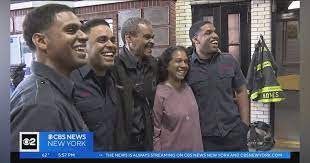
Firefighter Robert Thomas will be marking his last tour at Engine Co. 205 in Brooklyn Heights on Monday when he reaches 65, the department’s mandatory retirement age.
“I wanted to make sure I gave them everything I could,” Thomas joked. “It’s been an incredible experience. I just can’t believe that 40 years went by so quickly.”
But the Bravest never leave the Fire Department, especially if they have family members still on the job. Thomas’ three sons, all Brooklyn firefighters, will be keeping him abreast of what’s happening.
They’ll also be riding in the firetruck with him on his last tour.
“He really loves [being a firefighter],” his eldest son Jason Thomas, 32, told the Daily News. “He’s definitely going to miss it. That’s for sure.”
Thomas took the test for the FDNY in 1982. When he got accepted, he first turned it down, deciding instead to take a job with an insurance company on Wall Street, the Brownsville native remembered.
But members of the Vulcan Society, a fraternal group of Black firefighters, encouraged him to join the academy — and he’s never looked back, he said.
“It’s been an incredible career,” he said. “I’m more than thankful for the FDNY and what they have done for me and my family.
“I had no idea what I was turning down the first time, but I know I wouldn’t do it again!” he joked.
But being a Black New York City firefighter in the 1980s, when the FDNY was almost exclusively white, wasn’t easy.
“It was tough coming in from Brownsville to the Fire Department, it was a completely different culture,” he told the Daily News in a 2020 interview. “It was a challenge going in, but I think I changed a lot of hearts and minds by doing the job and they helped me become a better firefighter. A level of respect grew between us.”
The number of Blacks in the FDNY never rose above 650 in a force of about 11,000 until about 2002, when the Vulcan Society filed a landmark lawsuit charging that Blacks and Latinos were subjected to disparate treatment in the almost all-male and predominantly white department.
The changes have had some positive results with more women and people of color applying for FDNY firefighter jobs, although they are still underrepresented in the department.
As of October, the FDNY had 881 Black firefighters, making up about 10% of the department — out of proportion with the city’s population, which according to the Census Bureau is about 23% Black. There were 1,417 Hispanic firefighters, making up roughly 17% of the city’s firefighting force. About 30% of the city’s population is Hispanic.
Nearly 70% of FDNY firefighters are white, city officials said. The city’s population is about 40% white.
Thomas helped diversify the ranks, although he didn’t intend to: He was over the moon when, all on their own, his sons Jason and Nathan both joined the department in 2014 and trained in the academy together. His third son Stephen, a Navy veteran, became an FDNY firefighter in 2019.
Thomas and his sons now join a growing tradition which started in the 1960s with the Hargetts and the Tylers: Black multigenerational legacy families where grandfather, father and son all wore department patches.
With his last few hours on duty dwindling, memories of the fires he ran on over the years — and all the close calls — washed over him.
“I wouldn’t say I’m a hero, but I know there were times when I almost didn’t make it out of there,” Roberts said about the blazes he fought and the sacrifices his co-workers have made. “The alarm goes off and no one is thinking about their career or their future. All they’re focusing on is the needs of the person they’ve come to help.”
His sons and the firefighters responding to alarms in the years to come share that same intensity and focus, he said.
“[The young firefighters] listen to what you have to say,” he said. “All the experiences we had, we’re passing it along to them and they’re taking it all in. It gives me a great deal of satisfaction.”
Thomas may be leaving the department, but he’s not going to retire. He’ll be dedicating all of his free time on a special passion project.
He’s created Smart Choice Parent, a special community program that will both provide underserved parents with resources that will allow them to take better care of their children.
At the same time, Thomas’ organization will encourage children to pursue careers in sports fitness, nutritional science and the culinary arts.
“You only have one life and you should use it to help someone else,” he said. “You should pass what you can to the next generation.”
The rookie Louisville Metro Police Officer who was shot in the head Monday as he raced toward a gunman in a bank, is also a firefighter and EMT.
Nickolas ‘Nick’ Wilt, 26, graduated from the police academy on March 31, LMPD Interim Chief Jacquelyn Gwinn-Villarroel said during a news conference.
“I just swore him in and his family was there to witness his journey to become a police officer,” Villaroel said.
He was on his fourth shift when he got the call to respond to the incident at the bank. He was shot in the head as he and the other officers rushed toward the active shooter, who was killed.
Five people were killed and eight were injured in the shooting.
“Nick has come out of brain surgery and is in critical but stable condition,” she said, adding that she had been at the hospital with his family.
Wilt is a volunteer with LaGrange Fire & Rescue and worked at Oldham County EMS before following his dream to become a police officer.
Apr. 10—This week, ballots were mailed to registered voters who will determine whether or not to combine Olympia and Tumwater’s city fire departments into a separately governed Regional Fire Authority.
Ballots are due on election day, Tuesday, April 25.
Public forums and community conversations have showcased questions still lingering about the regionalization effort, what it would cost, and exactly how it would work.
Here are some of the key features of the RFA proposal, as well as some sticking points between supporters and opponents.
What is the ballot proposition?
The proposition would form the Olympia Tumwater Fire Authority and adopt a plan to provide both cities with fire protection and basic emergency medical services without jurisdictional boundaries.
The idea is being proposed to create stable and dedicated funding for fire and emergency services, instead of having those services compete for limited funding with other city services and necessities.
The plan proposes funding the RFA with a property tax and a six-year Fire Benefit Charge. The RFA property tax will swap in for property taxes now being collected, and an amount no greater than $1 per $1,000 of assessed property value will go toward the RFA budget.
Right now Tumwater allocates around $15.7 million a year for fire and EMS services, and Olympia spends nearly $19 million a year on the services. The public would be charged for the RFA starting in 2024. According to the RFA 7-year financial plan 0isummary, about $39.9 million would be collected in 2024, with $10.5 million of that coming from the Fire Benefit Charge (FBC).
Collections would rise every year, and by 2030, the RFA would bring in $52.3 million for fire and emergency services, with an estimated $12.9 million coming from the FBC.
What would the RFA fund?
If approved by voters, the RFA would fund the enhancement and expansion of fire and EMS services throughout Olympia and Tumwater. Olympia City Council member Lisa Parshley, who supports the RFA, said services would run more efficiently through an RFA, with a plan to hire two new transport teams with a total of 18 firefighters.
Opponents, who are running the saveourFD.org campaign, contend those 18 firefighters are already being added by the city of Olympia, and are not part of the RFA proposal. They point to administrators that will need to be hired to run the standalone RFA, support staff that the cities now provide.
Supporters also point to three new positions in the Community Assistance Referrals and Education Services, or CARES, program will be added to help with non-urgent situations that don’t require traditional emergency response. It would create a behavioral health unit of emergency services, composed of social workers and behavioral specialists to support people who are in crisis. However, the CARES program is grant-funded, and not part of the RFA financing structure, opponents contend.
The Olympia Fire Department has had plans to hire more firefighters to assist in transport services for some time now, and also is administering the CARES program. However, Parshley said the city doesn’t have the funding to pay for these new positions long term, or to pay for new equipment such as fire trucks or ambulances. She said an RFA sets up a loan repayment program with the two cities, which would provide funds to get the RFA off the ground before tax and FBC charges are collected.
The city of Olympia would loan $8 million and Tumwater would loan $2.2 million.
How would it be governed?
The RFA would initially be controlled by a commission of council members from both cities. Council members would slowly be phased out over five years and replaced with commissioners elected by the public. In the end, it would be governed by five elected members and one council member from each city.
Parshley said the commission would oversee the RFA’s budget. She contends there’s not much transparency now with how money is or can be spent within the city’s budget. She said the public would be able to see what every penny is spent on within a regional fire authority budget.
Parshley said by combining services under one command structure, the cities can ensure there are no gaps in service and ensure firefighters and EMTs are deployed efficiently. It makes calling for mutual aid simpler, which is done daily. Now, Parshley said Olympia firefighters have to wait until all local units available are at the scene before they can call for help from another jurisdiction such as Tumwater or Lacey.
That issue could disappear with an RFA, given the increase in employees in the joint department and fewer bureaucratic hoops to jump through. She said it could make the fire departments’ goals of 6- to 7-minute response times down from 8 minutes more attainable.
And if more fire departments are needed as the population continues to grow, the two cities could locate one new regional station in the place that makes sense within the larger boundaries.
One argument against the RFA is fear that the two cities and their fire departments are losing their unique identities. Former Tumwater mayor Pete Kmet said the two departments already train together and often work together on larger calls, so the boundaries are already disappearing.
The FBC argument
Council members from both cities have spoken out in previous meetings about just how equitable the FBC is. Opponents, however, contend it charges the smallest homes more per square foot than the largest homes, and takes into account the size of the building that needs service, not the assessed value of it.
Therefore, if two houses that were the same size sat side by side and were both on fire, they would require the same level of response and number of personnel on scene. According to previous reporting from The Olympian, an average-sized single-family home would pay anywhere from $380 to $450 a year.
Kmet said he calculated how much different apartments around Tumwater would have to pay for the FBC. He said most hover around $60 a year, or $5 a month. That number fluctuates depending on the type of apartment and if the apartment is in a larger building.
Residents of Olympia and Tumwater can calculate what the FBC would be for their homes using the online tool on the City of Tumwater’s website. All you need is the parcel number for the property your home is on, which is on tax records or can be looked up on the county assessor’s website.
The FBC can cover a maximum of 60% of the RFA’s budget, but Parshley said the majority of models they looked at only charge residents enough to have the FBC cover 20-30% of the overall budget. She said the amount the FBC charges people is ultimately up to the voters and commission and is subject to change in the future, if the RFA is approved.
Salary increases
Olympia firefighter Steven Busz, a former president of the IAFF Union Local 468, served on the RFA planning committee. He said salaries and benefits for union members are based on contract negotiations that are done every three years. Unions salaries are negotiated based on the size of the population they’re serving, as well as the assessed value of all buildings in the jurisdiction.
Under those terms, that means if Olympia and Tumwater join forces in an RFA, union members will be negotiating for raises because the RFA would be much larger than the individual fire departments. It wouldn’t happen immediately, Busz said, because a steady stream of funding has to be there first. Therefore, Tumwater employees would continue to be paid less than their Olympia counterparts for some time.
Busz said according to 2022 numbers, salaries and benefits for an Olympia employee of at least five years was $102,660 a year. In Tumwater it was $98,290 a year. For 2023, Olympia’s is $107,700 a year, and Tumwater’s is $103,464 a year.
Under an RFA, and using 2022 numbers, the planning committee suggested a salary of $106,340 for all employees. That would make the RFA salaries more competitive with Lacey Fire District 3.
If not approved, then what?
Without the RFA, fire departments in both cities will continue to compete with other services for funding, which could potentially put all services the cities pay for at risk. More firefighters, crisis workers and equipment are needed, but there’s currently no long-term funding for them without taking away from other services, RFA supporters say.
Busz said if the RFA doesn’t pass, services the two departments currently provide will start to dwindle, despite population growth. He said the cities will need to find a new funding plan.
Larry Dzieza, a former budget director who has spoken against the RFA, has proposed a property tax levy lid lift in the two cities to fund the city fire departments with their existing structures. He said it would raise enough money without making people pay a Fire Benefit Charge, and it’s much simpler.
Kmet argued raising property taxes could be harmful to low-income residents.
This story was originally published April 7, 2023, 5:00 AM.
Rushing to battle the blaze, the fire crew ran its hose through the front windows of the Nissan. The fire department did not specify whether the windows had to be broken or if they were down.
The firefighters were then able to run the hose from the hydrant, through the car and up to the third story.
The fire department said the fire was contained to the kitchen space in the apartment and was started as an accidental cooking incident.
All residents of the building evacuated safely, but seven tenants, including children, were displaced by the fire, the department said.
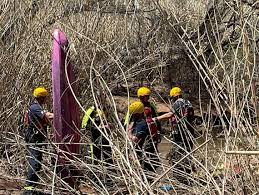
Firefighters rescued a woman found clinging to logs in the Verde River after her kayak flipped, Arizona officials reported.
Firefighters from the Verde Valley Fire District were able to rescue the woman and her kayak near Cottonwood on Sunday, April 9, officials said in a news release.
She became trapped against the logs after her kayak overturned, the release said.
“She was being pushed by the water into those logs and was holding on as long as she could,” Fire Chief Danny Johnson told KNXV. “She was able to get her cell phone and was able to get it working with a little bit of water damage.”
The woman’s 911 call helped rescuers pinpoint her location, the news outlet reported.
“Please be safe on our river and don’t kayak alone,” firefighters said in the release.
Cottonwood is a city of 6,200 people about 100 miles north of Phoenix.