
By MES Dispatch Staff
The Briefing
- Lexipol’s 2026 State of Readiness in Public Safety survey found agencies report far greater preparedness for routine calls than for major disruptions or regulatory changes.
- The survey collected responses from 915 law enforcement, fire, EMS and corrections professionals, 74% of whom hold command- or chief-level positions.
- Staffing shortages were cited by 65% of respondents as a factor limiting readiness, with only 17% saying their agencies are extremely or very prepared for staffing shortages.
- Training barriers included scheduling and time constraints, cited by 83% of respondents, and budget constraints, cited by 57%.
- Lexipol is the parent company of FireRescue1, Police1, EMS1 and Corrections1, which is disclosed in the original report.
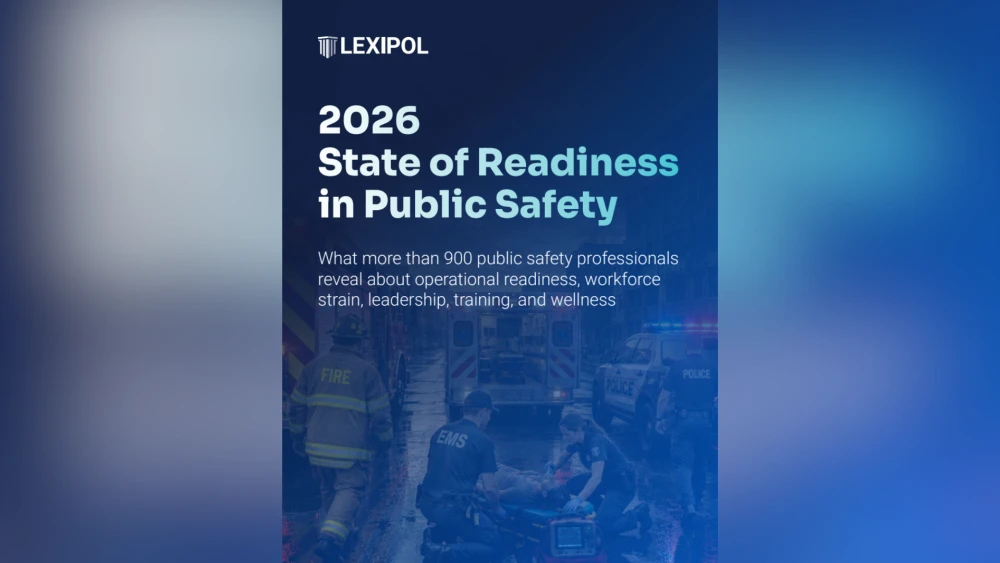
DALLAS — Public safety agencies report being substantially better prepared for routine calls than for major disruptions, regulatory changes and staffing shortages, according to Lexipol’s 2026 State of Readiness in Public Safety survey.
The survey collected responses from 915 law enforcement, fire, EMS and corrections professionals, 74% of whom hold command- or chief-level positions. Among its findings is a wide gap between preparedness for day-to-day events and so-called “disrupter” events: 78% of respondents said their agencies are prepared for typical calls, compared with 38% who reported preparedness for legal or regulatory changes and 22% for major operational disruptions. Only 8% said they were extremely confident in their agency’s ability to respond to evolving challenges such as emerging incident types and new risks.
Staffing emerged as a particular concern. Just 17% of respondents said their agencies are extremely or very prepared for staffing shortages, and 40% said recruitment is more difficult than it was two years ago. Staffing shortages were cited by 65% of respondents as a factor limiting readiness, followed by recruitment challenges at 39%.
The survey also found an association between leadership preparedness and other measures of agency readiness, including training effectiveness, retention, wellness support, policy quality and data use, though only 19% of respondents rated their agencies as very or extremely effective at developing future leaders. On training, time and scheduling were the most frequently cited barriers, reported by 83% of respondents, followed by budget constraints at 57%; 45% rated their agencies’ training as very or extremely effective, while 34% said effectiveness is not consistently measured.
Nearly half of respondents, 48%, rated their agencies’ personnel wellness support as strong or comprehensive; among those agencies, 44% rated personnel retention as very or extremely effective, compared with 10% at agencies reporting low wellness support. On policy maintenance, 60% of respondents said their agencies review policies continuously or at least annually, and 59% rated their policies as mostly or fully current and aligned with laws and best practices.
Overall, 58% of respondents said their agency’s readiness is stronger than it was two years ago, 49% expressed concern about the current state of public safety, and 44% said they were somewhat or very optimistic about the field’s outlook over the next two to three years.